
Lieferung heute & morgen

Qualitätsgarantie

Willkommens-Angebote freischalten: KOSTENLOSE Lieferung | Bis zu 80 % RABATT | Kostenlose 30-Tage-JoyPlus-Testphase
App herunterladen
A 1/2-inch socket set is suitable for a wide range of jobs on vehicles, machinery and heavy-duty fastenings. But not every set is automatically the right choice. Details such as the material, drive size, range of sizes and how force is applied can all determine whether a tool is practical for everyday use.
Figures such as 780 Nm or 1,000 Nm may look impressive at first. However, they don’t always describe the same function. With a flexi-head handle or breaker bar, the figure relates to manual force. A 1,000 Nm cordless impact wrench, on the other hand, uses a powered impact mechanism. A high loosening torque also shouldn’t be confused with precise tightening torque.
For safety-critical fastenings, such as those on the suspension, you’ll need a suitable torque wrench. A 1/2-inch flexi-head handle or wheel nut wrench is not a substitute for this measuring tool.
A 21-piece socket set may be enough for many jobs, but it won’t necessarily include every socket size you need. Before buying, check that the included sockets fit the common fasteners on your vehicle or project. Wheel nuts, for example, often require 17, 19, 21 or 22 mm sockets. Older vehicles, machinery and specialist fastenings may need other sizes.
Standard sockets aren’t necessarily designed to withstand heavy impact loads. For an impact wrench, use impact sockets or sockets specifically designed for power tools. Thin-walled or unsuitable sockets can be damaged and may affect the connection between the tool and the fastener.
The 1/2-inch square drive is a common size for medium to heavy-duty work on cars. It’s compatible with many ratchets, flexi-head handles, extensions and sockets. If you’re working in a confined space, a small ratchet swing arc can make all the difference.
According to the product description for each model, a 72-tooth ratchet needs less swing arc to reset than a coarse-toothed version. This makes it easier to work in tight spaces. With a long breaker bar, on the other hand, the key factor is leverage: a 600 mm handle offers more leverage than a short handle, but needs more room to move.
If sockets are made from chrome vanadium steel, the product description should specify this. Chrome vanadium steel, often abbreviated to CR-V, is used in many hand tools. For impact wrench accessories, it’s also important to check that they’re suitable for impact loads.
A chrome-plated finish can make cleaning easier and help resist corrosion. But on its own, it doesn’t tell you whether a socket is suitable for a powered impact wrench. Store your tools in a dry place and wipe away dirt or moisture after use.
When choosing a 1/2-inch socket set, don’t judge it by the number of pieces alone. Check whether it includes a ratchet, extension, adapter and the socket sizes you actually need. A sturdy case makes it easier to check that everything is there and helps prevent individual pieces from getting lost in the workshop.
A car repair tool set should also have:
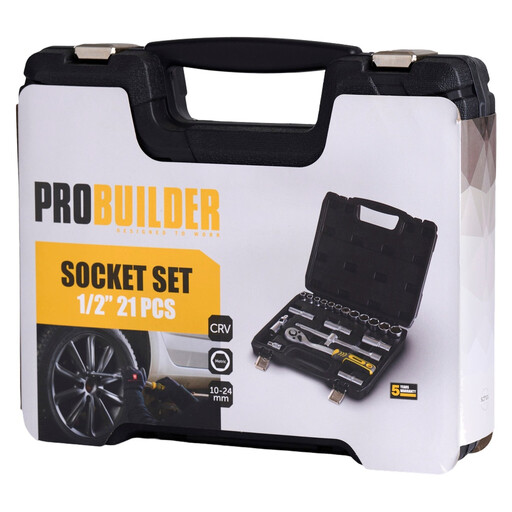
Why it suits this type of user: This 21-piece set is a straightforward choice for DIY, car care and general assembly work. According to the product description, the sockets are made from CR-V steel and come in a case.
The number of pieces and the 1/2-inch drive are clearly stated, so you can check before buying whether the set covers the jobs you have in mind.
21 pieces, CR-V steel and storage case; suitable for hand tools and everyday assembly jobs.
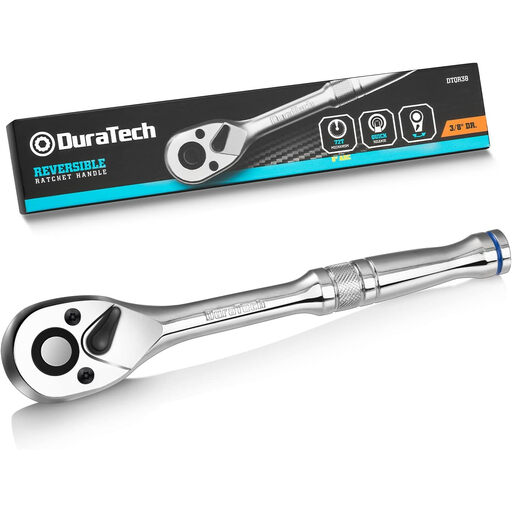
Why it suits this type of user: According to the product description, this handle combines 1/4-, 3/8- and 1/2-inch drives. It’s a practical choice for workshops where sockets in different sizes are used.
The maximum torque ratings are listed for each drive size, making it easier to match the load to the tool.
72-tooth mechanism, reversing lever and three drive sizes for a range of assembly jobs.
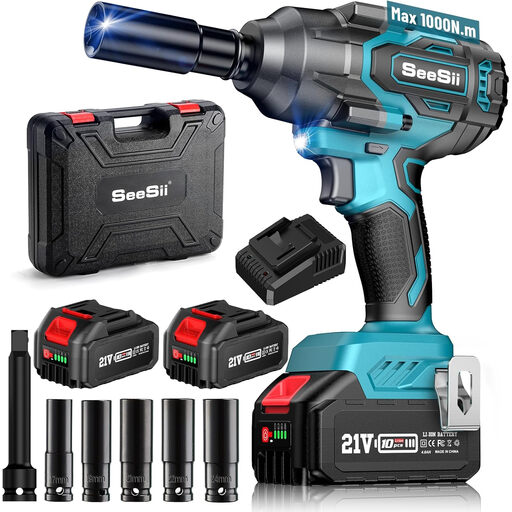
Why it suits this type of user: According to the product description, this cordless impact wrench has a 1/2-inch drive, two 21 V 4.0 Ah batteries and five sockets in sizes 17, 19, 21, 22 and 24 mm.
Torque, speed settings, battery capacity and accessories are listed separately. When tightening fasteners, you should still check the actual force applied and use a torque wrench if needed.
Powered drive, three speed settings, two batteries and five included sockets.
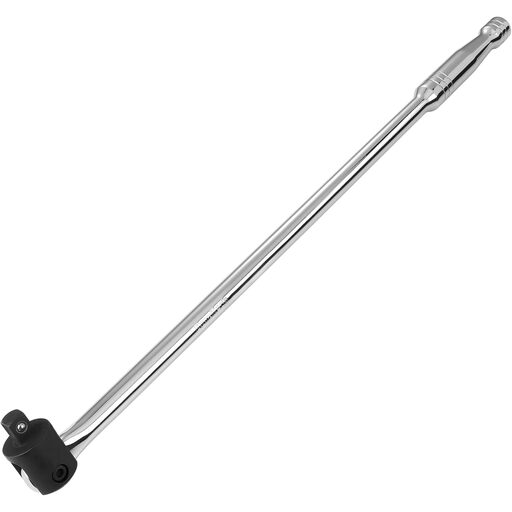
Why it suits this type of user: This 600 mm flexi-head handle is designed for manually loosening and tightening fasteners. Its head swivels up to 240 degrees, which can be useful when working at different angles.
This tool is described as a breaker bar, not a torque wrench. That makes it clear that it’s for applying leverage, not measuring torque accurately.
600 mm of leverage, a flexible head and a 1/2-inch drive for manual work on bolts and wheel nuts.
We’ve put together a complete, regularly updated list of products that meet these strict selection criteria and fully comply with the safety regulations in force in the EU.
For many car maintenance jobs, sizes between around 17 and 24 mm are often useful. The exact sizes you need depend on the vehicle, machinery and job. Check the fasteners you’ll be working on and what’s included before buying.
Only if the sockets are specifically designed for use with impact wrenches. Standard hand-tool sockets can be damaged by impact loads. Check the manufacturer’s information and, if in doubt, use suitable impact sockets.
A torque wrench is useful for many assembly jobs, particularly when working on wheel bolts and other safety-critical fastenings. A wheel nut wrench or long breaker bar can help you loosen fasteners, but it doesn’t measure tightening torque. The two types of tool shouldn’t be treated as interchangeable.