
Lieferung heute & morgen

Qualitätsgarantie

Willkommens-Angebote freischalten: KOSTENLOSE Lieferung | Bis zu 80 % RABATT | Kostenlose 30-Tage-JoyPlus-Testphase
App herunterladen
A 1:24 4WD RC drift car combines compact dimensions with four-wheel drive, controllable cornering and realistic styling. But whether you’re a beginner, a teenager using one under supervision or an experienced RC driver, top speed and eye-catching LED lights aren’t the only things that matter. A suitable control system, the right tyres and a design that matches how you plan to use the car are more important.
A car with only one speed setting can quickly overwhelm beginners. On smooth floors in particular, sudden acceleration can lead to uncontrolled spins or collisions. An RC car with two speed settings is more practical: the lower setting makes it easier to practise, while the higher one can be used by experienced drivers and for racing.
An RC car with a gyroscope can help stabilise its direction while drifting. However, the system can’t fully compensate for an unsuitable surface, the wrong tyres or jerky steering. Buyers should therefore check whether the gyro sensitivity can be adjusted and whether throttle and steering inputs are transmitted proportionally.
Drift tyres and racing tyres serve different purposes. Smooth drift tyres make it easier to control the rear end sliding on suitable surfaces. Tyres with more grip are better for acceleration and cornering. An RC drift car with interchangeable tyres can therefore be adapted to different driving styles without the need to buy a second car.
The 1:24 scale describes a compact model that’s particularly well suited to indoor use, garages, smooth patios and smaller courses. Outdoors, the surface should be as level as possible and free from coarse dirt. A 4WD RC car sends power to all four wheels. This can help distribute power more evenly during drifts and changes of direction.
Four-wheel drive doesn’t automatically make the car suitable for off-road use, though. Small wheels and limited ground clearance can still make carpet edges, gravel and long grass difficult to tackle.
A proportional RC controller responds in graduated increments to throttle and steering inputs. This lets you set off more slowly, make gentler corrections and steer more precisely through a slalom. Simple on/off control is sufficient for basic play, but offers less control when practising drifts.
Also look for:
An RC car with a lithium battery should come with a suitable charger and safety features. According to the product description, the model featured here has a lithium battery with overcharge and over-discharge protection. Even so, charge the battery only as instructed, don’t open it, and keep it away from heat and moisture.
An ABS plastic body can be beneficial for withstanding everyday bumps and frequent use. It won’t protect the internal components from every kind of damage, however. After a collision, check the wheels, steering, gearbox and bodywork for loose parts. A complete accessory pack with two types of tyres makes it easier to switch between drifting and racing.
The cards below relate to the 1:24 model listed in the product details. Since what you need from an RC drift car varies depending on your experience and how you plan to use it, we’ve looked at the same car from three different everyday perspectives.
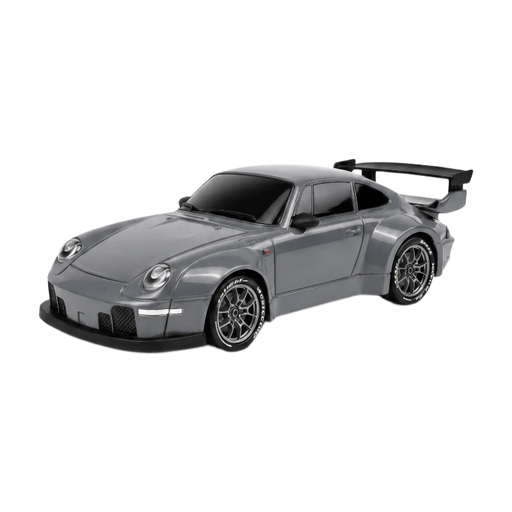
Why this product suits this type of user: The low-speed setting, proportional controller and adjustable gyro assistance make it easier to practise for the first time on suitable smooth surfaces.
Two speed settings mean beginners don’t have to start out at full power. The gyroscope is also adjustable, rather than being limited to fixed assistance.
1:24 scale, 4WD, proportional controller and lithium battery with stated overcharge and over-discharge protection.
Why this product suits this type of user: If you value adaptable handling, you can switch between drift and racing tyres and adjust the gyro assistance to suit your driving style.
The two types of tyres mean you don’t have to rely on a single tread pattern for every surface. According to the product description, the ABS body is designed to resist impacts and abrasion.
Interchangeable drift and racing tyres, 4WD gearbox, suspension, LED lights, and adjustable speed and gyro settings.
Why this product suits this type of user: For regular slalom practice, point drifts and small multiplayer races, this model offers several adjustable driving features and remote-controlled LED lights.
You’re not limited to just one type of driving. Changing the tyres, choosing between two speed settings and adjusting the gyro allow you to try a range of exercises.
Front and rear LED lights, 2.4 GHz control, servo steering, and accessories for drifting and racing.
We’ve put together a complete, regularly updated list of products that meet these strict selection criteria and fully comply with the safety regulations in force in the EU.
To help your car last longer, remove dust and hair after every run. Pay particular attention to the wheel mounts and gearbox. Don’t store the battery fully discharged, and only use the charger supplied for it. Children and teenagers should use the car under supervision, especially at higher speeds, near furniture or when racing with several cars.
Yes, provided the model has a low-speed setting, proportional control and adjustable stabilisation. A smooth, open practice area makes it easier to get started. For children, check the age recommendation for the specific product and make sure an adult supervises them.
Actual running time depends on battery capacity, speed, surface and driving style. Product descriptions don’t always give a guaranteed running time. Plan for charging breaks, and stop using the battery if it’s damaged, unusually hot or swollen.
Dry, level surfaces such as smooth patios, garage driveways or tarmac are suitable. Gravel, wet grass, deep cracks and coarse dirt can put strain on the wheels and drive system. Before buying, make sure the scale, ground clearance and tyre tread suit the surface you plan to use.