
Lieferung heute & morgen

Qualitätsgarantie

Willkommens-Angebote freischalten: KOSTENLOSE Lieferung | Bis zu 80 % RABATT | Kostenlose 30-Tage-JoyPlus-Testphase
App herunterladen
A 1.7-litre kettle is ideal for families, making several cups of tea or coffee, or quickly boiling water for cooking. But having plenty of models to choose from doesn’t necessarily make the decision any easier. Wattage, glass bodies, temperature settings and safety features are often prominently advertised, but on their own they tell you little about how practical a kettle is for everyday use.
Three common buying misconceptions are worth bearing in mind:
A 1.7-litre kettle makes roughly six to seven servings, depending on the size of your cups. A smaller model may be more economical for a two-person household, while families can benefit from the larger capacity. Look for an easy-to-read water level indicator, ideally visible from both sides.
For power, 1,850 to 2,200 watts is a common range on the German electricity supply. A 2,200-watt kettle can heat a larger volume of water quickly. However, the actual time depends on whether the kettle is full and how cold the water is to start with. So if you only need one cup, don’t fill the kettle with more water than you need.
A glass kettle lets you see the water level and watch the water boil. Even heat-resistant safety glass needs careful handling, as knocks and sudden changes in temperature should be avoided. An stainless steel kettle is usually opaque, but may have a double-walled design and a durable inner surface.
When it comes to materials that come into contact with water, check the manufacturer’s specific information. Several models in our selection are described as BPA-free kettles. That doesn’t mean every plastic component has been eliminated, so check which parts actually come into contact with the water.
If you live in a hard-water area, a removable limescale filter, a wide opening for filling and a concealed heating element are useful features. A narrow jug may look smart, but can be harder to clean.
A kettle with automatic shut-off stops heating once it reaches the selected temperature or boiling point. A kettle with overheat protection or boil-dry protection is designed to stop heating if there isn’t enough water. These features don’t replace correct use, however.
Also look for:
A keep-warm function is only useful if you need water to stay at a particular temperature for a while. It can make the kettle more convenient, but it also keeps it running for longer and uses extra electricity.
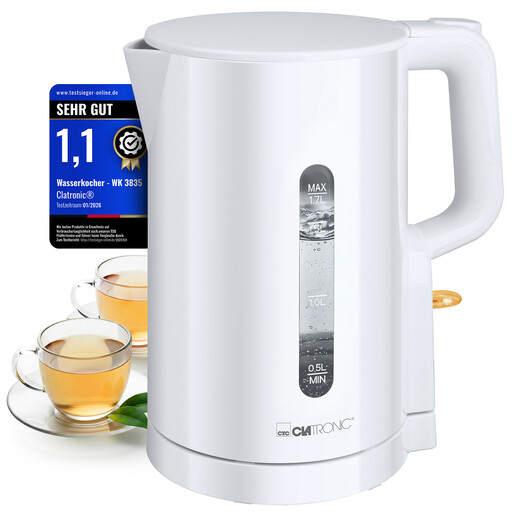
Why this product suits this type of buyer: With a 1.7-litre capacity, 1,850–2,200 watts, one-handed operation and water level indicators, it covers everyday household needs without relying on extra temperature settings.
The product details list automatic and manual shut-off, boil-dry and overheat protection, and a removable limescale filter.
Described as BPA-free in the product details, cordless use on the base and two external water level indicators.
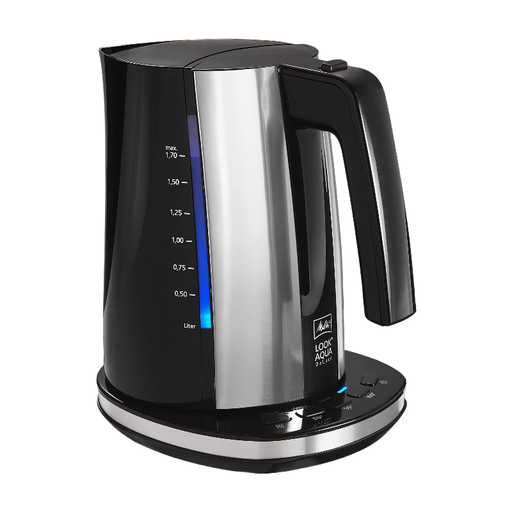
Why this product suits this type of buyer: Choose from three temperatures — 80, 95 and 100 °C — and keep water warm for up to 30 minutes. Ideal for tea, coffee and different brewing methods.
Temperature control means you don’t have to boil water for every use. The limescale filter is removable.
1.7-litre capacity, 2,400 watts, described as BPA-free in the product description, and automatic shut-off with boil-dry protection.
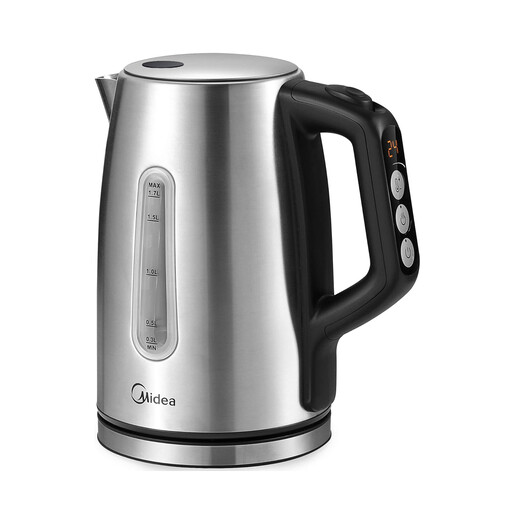
Why this product suits this type of buyer: Six temperature settings from 40 to 100 °C and a keep-warm function for up to 60 minutes make it well suited to frequent tea, coffee and hot water preparation.
Digital temperature control helps avoid unnecessary boiling. The product details list automatic shut-off, boil-dry protection and a limescale filter.
Six temperature settings, described as BPA-free in the product description, 2,200 watts and a 1.7-litre capacity.
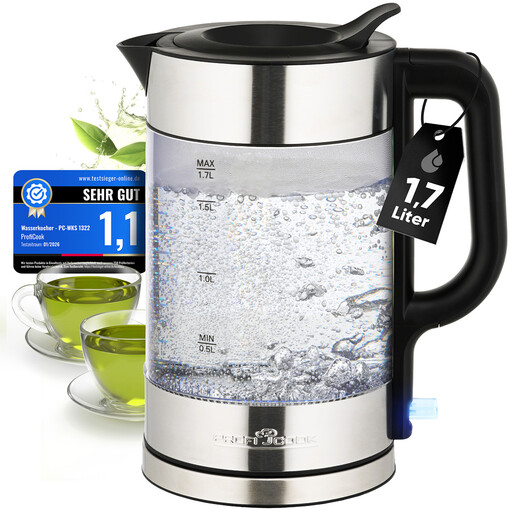
Why this product suits this type of buyer: The safety glass makes it easy to see the water level. Its illuminated design and stainless steel housing combine practicality with a clean, modern look in the kitchen.
The water level indicator, concealed heating element, and boil-dry and overheat protection help address common operating and cleaning issues.
Heat-resistant safety glass, 1.7 litres, 1,850–2,200 watts, described as BPA-free in the product description, and a 360° connector.
We’ve put together a complete, regularly updated list of products that meet these strict selection criteria and fully comply with the safety regulations in force in the EU.
Costs depend mainly on wattage, heating time and how often you use the kettle. A 2,200-watt model running for ten minutes would theoretically use around 0.37 kWh. In practice, you’ll usually heat less water for less time. The amount of water you fill the kettle with therefore matters more to your electricity bill than wattage alone.
For everyday care:
Only fill it with the amount you need, and always follow the minimum and maximum fill markings. If the water level is below the minimum mark, the boil-dry protection may activate; filling it above the maximum mark risks hot water or steam escaping.
Its lifespan depends on the materials, how often it’s used, water hardness, cleaning and the condition of the cable and base. Regular descaling, keeping it in a dry place and following the instructions can help it work well for longer. Stop using the kettle if it develops cracks, has a damaged cable or becomes unusually hot.
It depends on how you use your kettle. If you’re making several drinks over a longer period, the function can save you from boiling the water again. If you use the water straight after boiling, you probably won’t need it, and shorter running times can help limit energy use.