
Lieferung heute & morgen

Qualitätsgarantie

Willkommens-Angebote freischalten: KOSTENLOSE Lieferung | Bis zu 80 % RABATT | Kostenlose 30-Tage-JoyPlus-Testphase
App herunterladen
As your Joybuy Product Recommendation Officer, I see the selection of 3D printing materials grow every day. The search for the right 1.75mm PLA filament can quickly become overwhelming. Many users invest in a high-quality printer, only to cut corners on filament and then wonder about failed prints, clogged nozzles, and poor surface finishes.
This guide is designed to help you avoid the common pitfalls. We'll focus on the objective criteria that truly matter, ensuring your next project succeeds from the start and you don't waste money on unusable material.
Before you buy 3D printer filament, you should critically examine the marketing claims. Three issues in particular often lead to frustration:
To avoid these pitfalls, you should focus on three verifiable parameters. These form the foundation for reliable and repeatable printing results.
The standard diameter for most desktop printers is 1.75mm. However, the consistency of this diameter is crucial. A tight tolerance of ±0.02 mm is a clear indicator of quality. It ensures that the extruder can feed a consistent amount of material. The result is clean layers, precise details, and a significantly lower probability of nozzle clogs. Look specifically for this specification when selecting a product.
Not all PLA is created equal. The choice of the right type depends on your project:
Clean, machine-based winding prevents the filament from tangling on the spool. Reputable manufacturers place great importance on this. The most common size is the 1kg PLA spool, which offers a good balance between quantity and manageability. You can recognize a well-wound spool by its tightly and parallel-wound strands with no visible crossovers.
Based on the quality criteria mentioned, we have selected a few products from our range that are suitable for specific user groups.
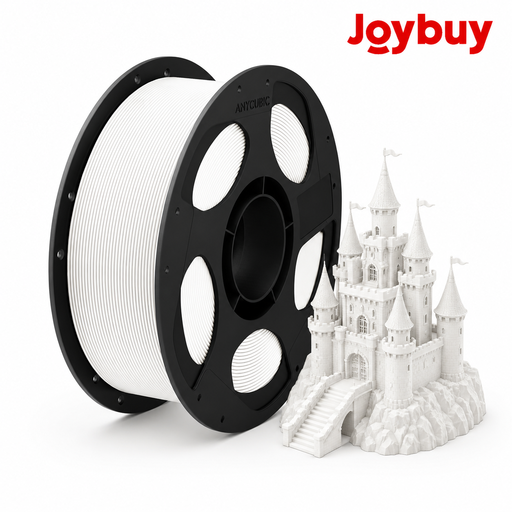
Why it fits the profile: This filament is a reliable all-rounder. It's ideal for first prints, functional prototypes, and everyday projects where consistency and great value for money are key.
With a specified diameter tolerance of ±0.02 mm, this Anycubic PLA filament directly addresses the pitfall of uneven extrusion and minimizes the risk of nozzle clogs.
High dimensional accuracy and easy printability on most common FDM printers. The clean winding ensures a smooth, trouble-free process.
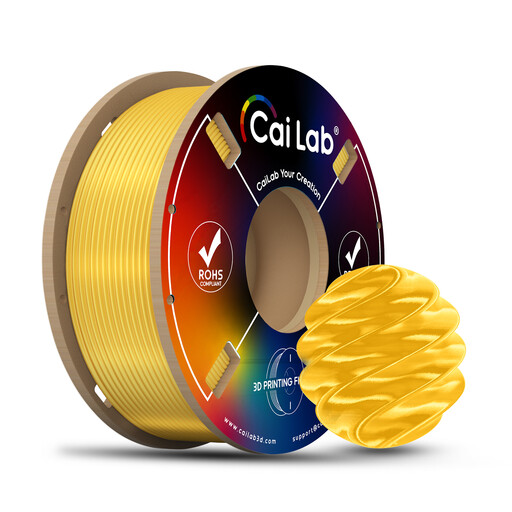
Why it fits the profile: Perfect for users who want to create visually stunning objects. The intense shine and smooth surface make it the first choice for decoration, art, and models with a "wow" factor.
Unlike many special-effect filaments that are prone to clogging, this Silk PLA is easy to process with standard PLA settings and is neatly wound, which prevents print failures from material jams.
It produces an exceptional, silky-gloss finish that masks layer lines and gives objects a high-end appearance.
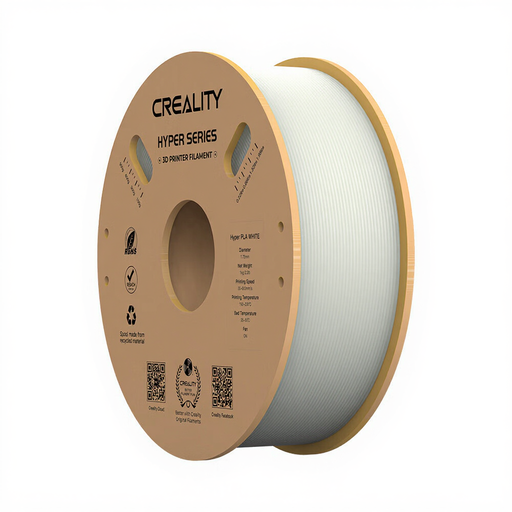
Why it fits the profile: Designed for users who need rapid iterations. It's ideal for engineers and makers working with new-generation printers who want to drastically reduce prototyping print times.
This Creality Hyper PLA bypasses the pitfall of vague "high-speed" promises. According to the manufacturer, it is specially formulated for high speeds (up to 600 mm/s) and optimized for their in-house printers.
It allows for a significant reduction in print time on compatible printers without compromising dimensional accuracy (±0.02 mm) or the stability of the printed object.
We have compiled a complete, up-to-date list of products that fully meet these strict selection criteria and applicable standards.
PLA is hygroscopic, meaning it absorbs moisture from the air. Damp filament leads to brittle prints, bubbling (steam), and poor surface quality. Therefore, always store your spools in an airtight bag or box, ideally with a packet of silica gel desiccant. A cool, dry, and dark place is optimal.
Yes, PLA is one of the most universal materials and is compatible with almost any FDM printer. The only important thing is to choose the correct diameter for your printer (usually 1.75mm, less commonly 2.85mm). Also, check the filament manufacturer's temperature recommendations and adjust the settings in your slicer accordingly.
The main difference lies in the chemical composition. High-speed PLA is modified to have a lower viscosity (higher flowability) at higher temperatures and to solidify faster. This allows the printer to extrude and cool the material more quickly, which is critical for good layer adhesion at high speeds. Standard PLA would lead to messy, unstable prints at the same pace.