
Lieferung heute & morgen

Qualitätsgarantie

Willkommens-Angebote freischalten: KOSTENLOSE Lieferung | Bis zu 80 % RABATT | Kostenlose 30-Tage-JoyPlus-Testphase
App herunterladen
A 1-litre carafe fits in many fridge doors, holds several glasses and is suitable for water, juice, lemonade or iced tea. Even so, models vary considerably in terms of material, stability, closure and cleaning. If you choose based solely on appearance or a low price, you may only discover important limitations in everyday use.
Three common buying misconceptions are particularly widespread:
The right choice therefore depends less on a single design feature and more on how you intend to use it.
A 1-litre glass carafe is taste-neutral and lets you see the contents immediately. This is practical for fruit-infused water, homemade lemonade or brightly coloured juices. However, glass can break if dropped and may be sensitive to sudden changes in temperature. The glass models described here are explicitly intended for use with cold or room-temperature drinks.
If you want to serve tea, coffee or other hot drinks, you should choose a 1-litre vacuum flask or insulated carafe instead. According to the manufacturer, the Emsa Mambo keeps drinks hot for up to 12 hours and cold for up to 24 hours. Such figures depend, among other things, on the fill level, the starting temperature and how often the carafe is opened.
A carafe with a closure protects the contents from dust and can give you better control when pouring. For picnics or storing in the fridge, it is important to check whether the stopper fits securely and how the carafe can be carried. A slender neck makes pouring easier, but may mean that you need a brush for cleaning.
When choosing a lemonade carafe, you should also check whether the closure is suitable for carbonated drinks. Unless this is explicitly stated, the carafe should not be treated as a pressure vessel. For water, juice and still lemonade, a securely fitted cover stopper is generally sufficient.
The description dishwasher-safe carafe is a useful indication, but it does not replace checking the shape and opening. A tall, narrow drinks carafe may save space, but could take up considerable height in the top dishwasher rack. The footprint also matters: a model measuring only around 8 to 9 centimetres in diameter will often fit more easily in a fridge door than a wide 1-litre water jug.
With a 1-litre decanter with a long neck, check how easy it is to see the pouring spout and interior surfaces. Residue from juice or syrup may be more noticeable there than in a carafe with a wide opening. For models with decorative finishes, the product details sometimes recommend hand washing, even though the glass itself is described as dishwasher-safe.
The following models meet different requirements, from a simple everyday vessel to an insulated carafe and a decorative carafe set with glasses.
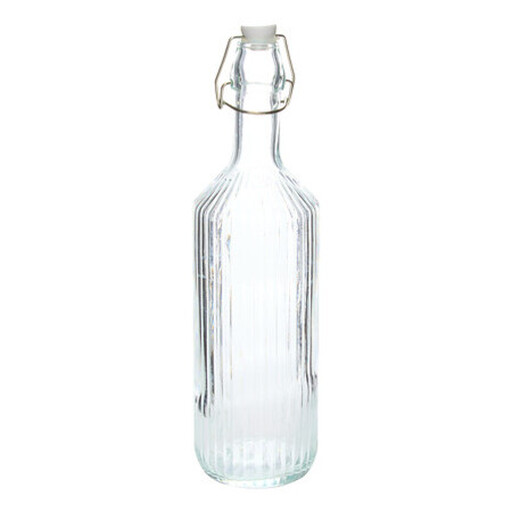
Why this product suits this profile: The transparent glass bottle holds 1 litre and is suitable for water, juice, lemonade and infused water for everyday use.
The product details explicitly state that it is dishwasher-safe, includes a stopper and is suitable for cold or room-temperature drinks.
1.0-litre capacity, glass construction, transparent design and dishwasher-safe according to the product details.
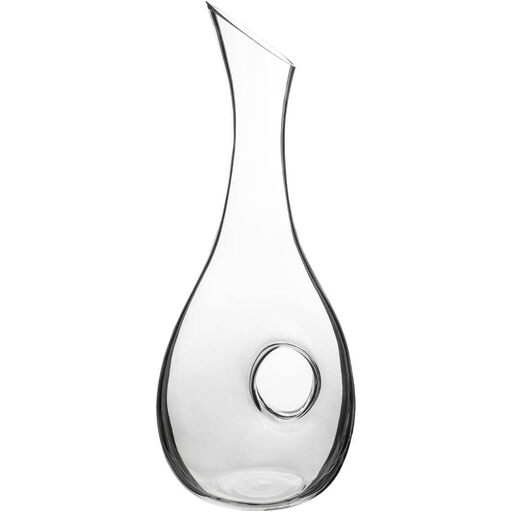
Why this product suits this profile: Its slender shape and tapered neck are designed for serving wine, water and cold juices.
The product description clearly specifies the capacity, material, pouring spout and dishwasher suitability, rather than promoting only its decorative shape.
1-litre capacity, glass construction, pouring spout and dishwasher-safe according to the product details; height: 37 cm.
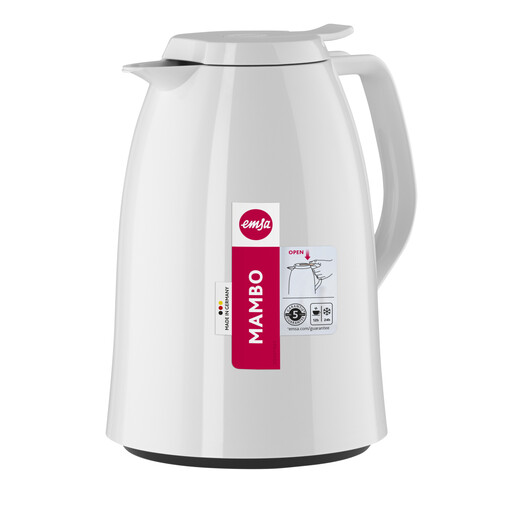
Why this product suits this profile: This insulated jug is designed for households and frequent users who want to serve hot or cold drinks over an extended period.
It is not limited to cold drinks. According to the manufacturer, the jug features a Quick-Press closure and a leak-proof lid.
1.0-litre capacity, wide opening for filling and cleaning, plus up to 12 hours hot and 24 hours cold according to the manufacturer.
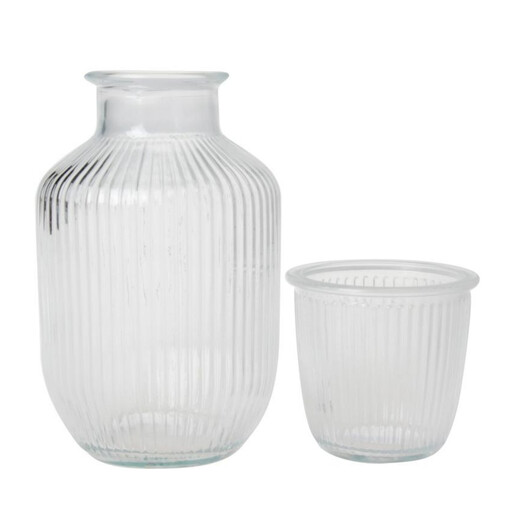
Why this product suits this profile: Two sets, each comprising a 1,000 ml jug and a 270 ml glass, are ideal for brunches, family gatherings or serving several drinks at once.
The contents of the package are specified precisely, including the number of jugs and glasses. The product details also explicitly state that it is intended for cold drinks and should not be exposed to sudden changes in temperature.
Two jugs of 1,000 ml each, four glasses of 270 ml each, ridged glass and dishwasher-safe according to the product details.
We have put together a complete, regularly updated list of products that fully meet these strict selection criteria and the safety regulations applicable in the EU.
Not every model fits equally well. The key factors are the diameter, height and shape of the door shelf. Tall decanters may take up more space than a compact 1-litre water jug. Before buying, compare the product dimensions with the available shelf space.
Its lifespan depends mainly on drops, thermal shocks and cleaning. Glass can be used for a long time if handled carefully, but it remains vulnerable to breakage. A carafe should not be lifted by the opening when it is full. With closures and seals, replacement or wear parts may limit the practical service life.
For hot drinks, an explicitly designed insulated carafe or 1-litre vacuum flask is a better choice than an ordinary glass carafe. With glass models, only fill them with hot drinks if the manufacturer clearly permits this. Otherwise, the change in temperature creates a risk of breakage.