
Lieferung heute & morgen

Qualitätsgarantie

Willkommens-Angebote freischalten: KOSTENLOSE Lieferung | Bis zu 80 % RABATT | Kostenlose 30-Tage-JoyPlus-Testphase
App herunterladen
A 1-litre French press coffee maker is ideal for households, offices and visits from several people. However, product images, cup measurements and material claims can often lead to unsuitable purchases. As a Joybuy Product Recommendation Officer, I explain the key selection criteria objectively, so you can choose the right 1-litre coffee press based on clear, verifiable features.
The French press 8 cups measurement usually refers to smaller serving sizes. Depending on the cup size, a 1-litre model produces around four to eight servings. Its capacity may therefore not be sufficient for eight large mugs of coffee. Always check the actual capacity in litres or millilitres before buying.
A borosilicate glass coffee maker can withstand changes in temperature better than ordinary glass. Nevertheless, the carafe remains vulnerable to knocks, hard surfaces and sudden contact with very cold surfaces. A metal frame can provide additional support, but it does not replace careful handling.
With stainless-steel models, less of the glass is visible, but cleaning the filter may be more involved. The decisive factors are therefore not just the appearance and brand name, but also the specifications for the glass type, frame, filter and care requirements.
A French press uses a mesh filter rather than a paper filter. Coarsely ground coffee is recommended for brewing. Coffee that is ground too finely can pass through the filter mesh or block the plunger when it is pressed down. If resistance occurs, do not force the plunger. Pull it back slightly and continue slowly.
With a 1-litre cafetière, the stated volume should be clearly specified. Also bear in mind that the pot should not be filled right to the brim. A secure spout, sturdy handle and lid that stays in place while pouring are important for everyday use.
A 1-litre model is practical for a household with several coffee drinkers or a small office. If you mainly drink coffee alone, a 350- or 500-millilitre model lets you prepare less coffee at once and store the pot more easily.
Borosilicate glass is odourless and does not alter the taste of the coffee. The transparent carafe allows you to watch the brewing process. A stainless-steel frame can protect the glass when holding and pouring. Plastic components such as the handle or lid should be stated as BPA-free where this information is provided by the supplier.
Stainless steel offers an opaque alternative and can be useful for transport or outdoor use. Check whether the product is dishwasher-safe. Some models are designed for hand washing only.
A reusable stainless-steel filter does not require paper filters and creates less consumable waste with regular use. A three-part filter system can generally be dismantled so that coffee residue can be removed. Pay attention to the cleaning method specified by the manufacturer:
For a manual coffee maker, coarsely ground beans, water at around 92 to 96 °C and a steeping time of approximately four minutes are often recommended. These values are starting points and can be adjusted according to the type of beans, grind size and desired strength. After pressing down the plunger, serve the coffee as soon as possible so that it does not continue extracting over the coffee grounds.
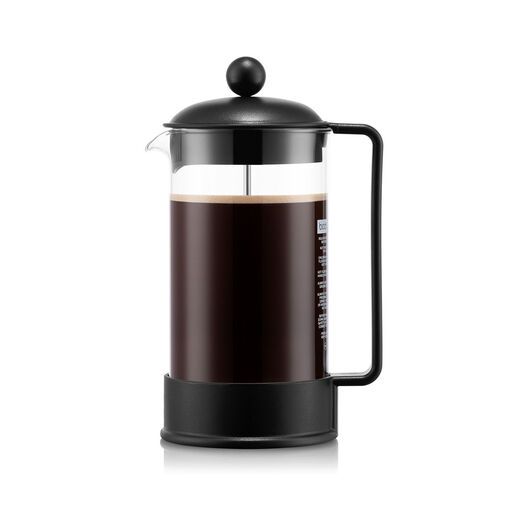
Why this product suits this profile: The 1-litre capacity is suitable for several servings at home or in the office. Its classic design is aimed at buyers looking for a straightforward French press without electrical components.
The product description states the 1-litre volume, a heat-resistant glass body and a three-part stainless-steel plunger. This makes the key purchasing information easy to verify.
1-litre volume, reusable stainless-steel filter and components that are dishwasher-safe according to the product information.
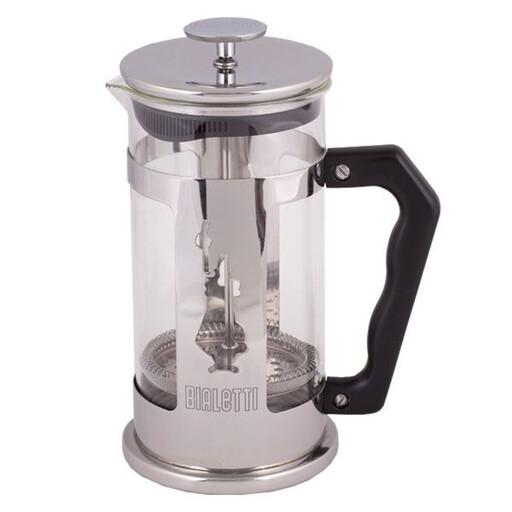
Why this product suits this profile: The combination of 18/10 stainless steel, borosilicate glass and plastic appeals to buyers who value detailed material specifications and clear care instructions.
The specifications state both the capacity and a maximum temperature of 120 °C, as well as dishwasher suitability. This information helps you use the product realistically.
1-litre volume, stainless-steel housing, borosilicate glass and dishwasher suitability according to the product description.
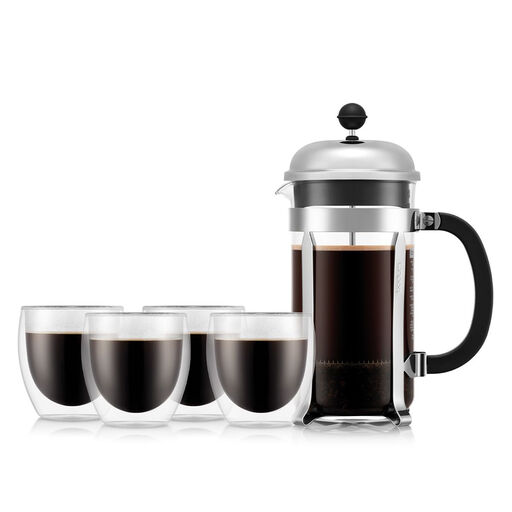
Why this product suits this profile: The set combines a 1-litre coffee maker with four 250-ml glasses, making it ideal for serving coffee together.
Rather than focusing solely on a decorative pot, the contents are clearly described: a coffee press plus four glasses. This makes it easier to assess its suitability for guests and offices.
1-litre capacity, three-part stainless-steel filter and four supplied 250-ml borosilicate-glass glasses.
We have put together a complete, regularly updated list of products that fully meet these strict selection criteria and the safety regulations applicable in the EU.
Do not leave a glass pot containing hot liquid on a cold stone surface. Before every use, check that the glass, handle, lid and filter are undamaged. If you notice any visible cracks, stop using the coffee maker.
As a starting point, use around 60 grams of coarsely ground coffee per litre of water. The amount can be adjusted according to the type of beans, grind size and personal preferences. Kitchen scales help you achieve consistent results.
Its service life depends on the material, how often it is used and how well it is cared for. Stainless-steel frames and filters can remain usable for a long time with proper handling. With glass models, knocks, thermal shock and damaged filter components are common reasons for replacement. Regularly checking the carafe and plunger is therefore advisable.
Yes, if several people drink coffee and manual preparation is preferred. However, bear in mind that the coffee will not be kept warm automatically after brewing. For individual users or short breaks, a 350- or 500-ml pot may be more practical. The key factors are the actual number of people, the available surface space and your preferred cleaning routine.