
当日/次日达

品质保障

开启新人专享福利: 全场免邮 | 低至 2 折 | 免费试用 30 天 JoyPlus 会员
下载 Joybuy
100% orange juice 6x1L is a practical choice for households where juice is regularly served at breakfast, several people need to be catered for, or larger quantities are needed for smoothies and recipes. However, the pack size alone says little about the product’s actual composition. There are clear differences between 100% orange juice, nectar and fruit juice drinks.
The following points will help you assess marketing claims correctly and choose a suitable orange juice multipack for everyday life in Germany.
Products with orange in their name can have very different compositions. A fruit juice drink, for example, may contain only a limited proportion of juice, while orange nectar contains at least a specified amount of fruit but may also include water and, where applicable, sugar.
If you are specifically looking for 100% orange juice, check for the terms “fruit juice” or “100% fruit content” on the product page and packaging. The ingredients list is more informative than an attractive, image-heavy front label.
Oranges naturally contain sugar. A product can therefore be orange juice with no added sugar and still list around 8 to 10 grams of sugar per 100 millilitres. What matters is whether sugar, syrup or sweeteners have been added separately.
With juice made from orange juice concentrate, the juice is first concentrated and later diluted with water back to its original strength. This does not mean it is an artificially sweetened drink. The ingredients list remains the deciding factor.
Orange juice in a multipack often reduces the effort involved in restocking. For a fair price comparison, however, you should check the price per litre. You should also consider how much fridge space is required and how quickly your household will get through six litres.
Once opened, orange juice generally needs to be refrigerated and consumed within a few days. For individuals, a 6x1L pack may therefore be less suitable than smaller individual packs.
For a classic 100% orange juice, the ingredients list should be as clear as possible, for example: orange juice from orange juice concentrate. Water is used when the concentrate is reconstituted and does not have to appear as a separate ingredient in the same way as it would for a nectar.
For comparison:
The nutrition table allows for an objective comparison. For the 100% juices considered here, the stated values are approximately 42 to 45 kcal per 100 millilitres and around 9 to 9.4 grams of sugar, which may be naturally occurring sugar.
Fibre content and acidity may also be relevant to your personal choice. However, they should not be assessed in isolation. The binding information on the relevant product label takes priority, as recipes and labelling may change.
Six one-litre packs make a total of 6 litres of orange juice. This is suitable for families, shared households, offices or regular breakfast use. Before buying, check:
For the products mentioned, the general recommendation is to refrigerate the juice after opening and consume it within approximately three to four days. Before opening, storage is possible depending on the product in a dry, cool place protected from heat and direct sunlight. The specific information on the packaging is decisive.
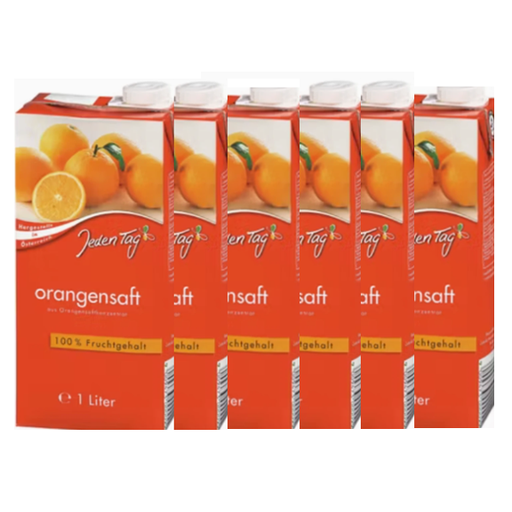
Why this product suits this profile: The six-pack contains 6 litres of pure orange juice made from orange juice concentrate, making it suitable for regular consumption at breakfast or with meals.
The product description states 100% fruit content and lists orange juice from orange juice concentrate as the ingredient, rather than a lower juice content.
6 x 1 litre, approximately 45 kcal and 9.4 g of sugar per 100 ml according to the product information; consume within three days of opening.
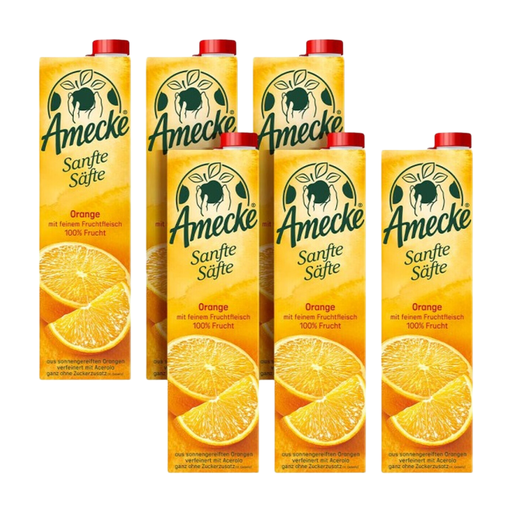
Why this product suits this profile: This 6x1L format combines 100% orange juice with a clearly stated ingredients list and is designed for households that regularly consume juice.
The “100% Orange Juice” statement distinguishes the product from nectars and drinks with a lower fruit content. No added sugar is listed in the ingredients.
6 x 1 litre, vegan according to the product information, with 42 kcal and 9 g of sugar per 100 ml. Refrigerate after opening and consume within three to four days.
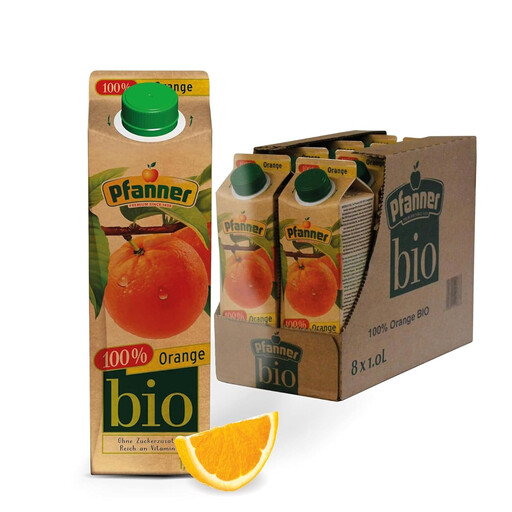
Why this product suits this profile: The larger multipack with eight one-litre packs is aimed at high-volume users and households that regularly need juice for breakfast, smoothies or cooking.
The stated fruit content is 100%; the description specifies organic orange juice from orange juice concentrate and no added sugar.
8 x 1 litre, organic quality according to the product information, with approximately 43 kcal and 9 g of sugar per 100 ml; refrigerate after opening and consume within three days.
We have put together a complete, regularly updated list of products that fully meet these strict selection criteria and the safety regulations applicable in the EU.
Before opening, the juice should be stored according to the manufacturer’s instructions in a dry, cool place protected from heat. A quick check of the best-before date helps prevent unnecessary purchases with too little time left.
Many juices settle slightly during storage. Shake gently before opening to redistribute the natural components evenly. Once opened, the pack belongs in the fridge and should be consumed within the stated period.
Orange juice is ideal for breakfast, as an ingredient in smoothies or as part of desserts. If you follow a vegan diet, check the relevant ingredients list or product labelling. The term “vegan” refers to the recipe and says nothing about the sugar or calorie content.
Yes. When orange juice is made from concentrate, water is initially removed from the juice. It is later restored to the original concentration. A product labelled 100% orange juice can therefore be made from concentrate. The fruit content and ingredients list are what matter.
This depends on the individual product. For the juices mentioned, refrigerated storage and consumption within three to four days are generally recommended. The specific manufacturer’s information on the carton or bottle is authoritative. If the smell or taste has changed, or the packaging is damaged, the juice should not be consumed.
That depends on consumption and the storage space available. Families and regular users can benefit from an orange juice multipack. Individuals should compare their weekly consumption with the recommended shelf life after opening. The price per litre should not be the only selection criterion.