
Lieferung heute & morgen

Qualitätsgarantie

Willkommens-Angebote freischalten: KOSTENLOSE Lieferung | Bis zu 80 % RABATT | Kostenlose 30-Tage-JoyPlus-Testphase
App herunterladen
The search for a new 100W USB-C charging cable can quickly become overwhelming. The market is flooded with promises of ultra-fast charging and unmatched durability. However, not every cable delivers on its promise. Incorrect specifications or poor construction often lead to the new cable throttling your device's performance or showing signs of wear after just a few months. This guide will help you identify the essential features and make an informed decision.
Before we dive into the technical details, it's important to be aware of three common marketing traps that often lead to a bad purchase.
To ensure your new cable delivers full performance for your MacBook charging cable or your charging cable for iPhone 15, you should focus on the following three core features.
For charging power above 60W (20V/3A), an integrated E-Marker chip (Electronic Marker) in the cable is mandatory. This chip actively communicates with the power adapter and the end device to safely negotiate the correct voltage and current. A Power Delivery cable without an E-Marker will be limited to a maximum of 60W by an intelligent charger for safety reasons, even if it is designed for 100W. Therefore, explicitly look for "E-Marker" or "PD 3.0/3.1 support up to 100W/240W" in the product details.
The longevity of a cable depends largely on the quality of the connectors and the strain relief.
Consider what you will primarily use the cable for.
Here are some recommendations tailored to different user profiles that take the above criteria into account.
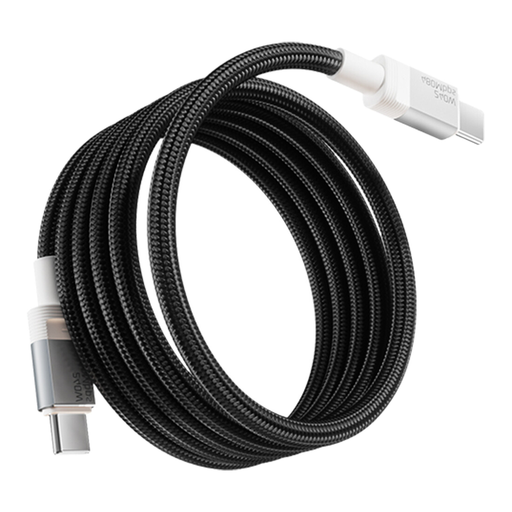
Why This Fits Their Persona: Ideal for users who want a single, extremely powerful solution for all their devices, from a MacBook Pro to the latest smartphone. The 240W support makes it a future-proof investment for upcoming device standards.
Thanks to the integrated E-Marker Pro Chip, power is managed safely and intelligently. The aluminium alloy construction and a 48-strand braided jacket address durability far beyond a simple nylon sheath.
Supports the new PD 3.1 standard up to 240W. Robust build with metal connectors for superior longevity.
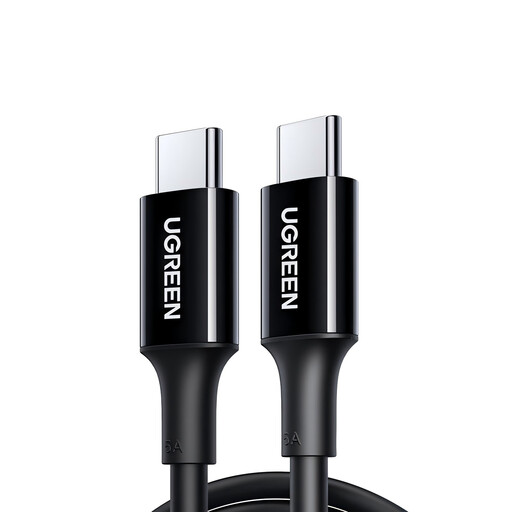
Why This Fits Their Persona: Perfect for daily use at a desk or on the sofa. The 2-metre length offers flexibility, while the 100W power is sufficient to charge laptops and tablets efficiently. A pragmatic choice for reliability.
This cable clearly communicates its specifications: 100W charging power and a USB 2.0 data rate. It avoids the trap of implying high data speeds. The construction with multiple internal shields ensures stable performance.
Supports 100W Power Delivery (PD 3.0). The practical 2m length significantly enhances everyday convenience.
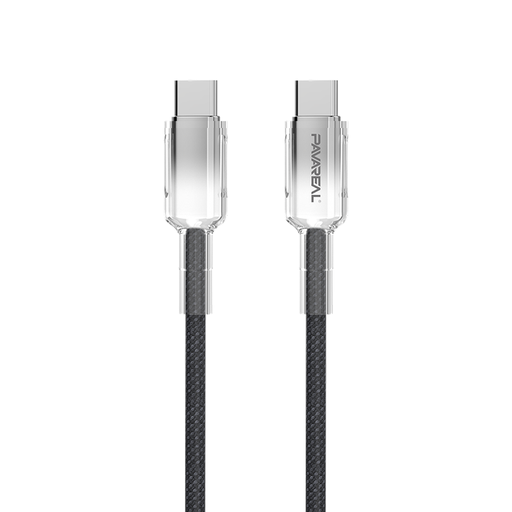
Why This Fits Their Persona: A solid choice for anyone who needs a functional and powerful 100W cable without extra premium features. It reliably meets the core requirement—fast charging—at an attractive price point.
This cable focuses on the essentials: 100W charging power. The zinc alloy and nylon braid construction provides good baseline durability, avoiding the trap of cheap plastic cables that fail quickly.
Full 100W compatibility thanks to an integrated chip. The zinc alloy connector housings are a clear plus for stability in this price range.
We've compiled a complete, real-time updated list of products that fully meet these strict selection criteria and safety regulations.
Not necessarily, but it's a future-proof choice. A high-quality USB-C to USB-C cable with 100W and an E-Marker chip will communicate with your device and power adapter to safely deliver only the required 30W. There is no risk of damage. If you plan to purchase more powerful devices in the future, you'll already be prepared.
Check the USB standard listed in the product specifications. Most high-power charging cables use the USB 2.0 standard, which is limited to 480 Mbit/s. For fast data transfer, such as between a laptop and an external SSD, you should look for cables explicitly labelled as USB 3.1 (5 or 10 Gbit/s) or USB4 (up to 40 Gbit/s).
For certified and well-constructed cables, a length of up to 2 metres has no significant negative impact on 100W charging performance. However, with very long (over 3 metres) or low-quality cables, a voltage drop can occur, which may slightly reduce the charging speed. For high-performance applications, it is advisable to stick to standard lengths of 1 to 2 metres from established manufacturers.