
Lieferung heute & morgen

Qualitätsgarantie

Willkommens-Angebote freischalten: KOSTENLOSE Lieferung | Bis zu 80 % RABATT | Kostenlose 30-Tage-JoyPlus-Testphase
App herunterladen
As an electric car owner, you face the challenge of finding a reliable and flexible charging solution. For renters or apartment owners without the option of a permanently installed wallbox, choosing a mobile charger can be complex. The market offers many options, but not all live up to their promises. This guide will help you avoid common pitfalls and identify a suitable portable EV charger.
The three most common mistakes when buying are:
To make an informed decision, you should carefully examine the following technical features. These determine not only the charging performance but also the safety and user convenience of your mobile charger.
The maximum charging power depends directly on the type of power connection used. It is crucial to understand the differences:
Schuko to Type 2 charging cable delivers single-phase charging power of up to 3.7 kW (at 16 A). This solution is practical and universally applicable but is primarily suited for overnight charging or for plug-in hybrids with smaller batteries.11kW charging brick offers. This option is ideal for fast charging at home, provided the necessary infrastructure is in place. Before purchasing, check whether such a connection is available or can be installed by an electrician.A high-quality mobile Type 2 charging cable must integrate comprehensive safety features. Look for the following characteristics:
An EV charging cable with an app offers much more than just basic charging. It enables intelligent control of the charging process, leading to significant cost savings and greater convenience:
Based on the criteria mentioned, we have compiled some products for different user profiles.
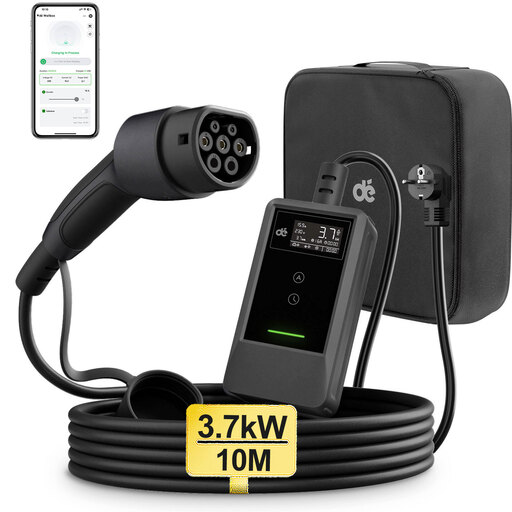
Why This Fits Their Persona: Ideal for users who rely on existing Schuko sockets. The 10-metre cable offers maximum flexibility for parking, and the app control allows for charging during off-peak electricity tariffs—perfect for cost-conscious renters.
This charger is clearly designed for a Schuko connection with 3.7 kW. It doesn't create false expectations of 11 kW performance and instead focuses on reliable and smart charging at any standard socket.
Long cable reach (10 m) for difficult parking situations. App control for current and schedule planning.
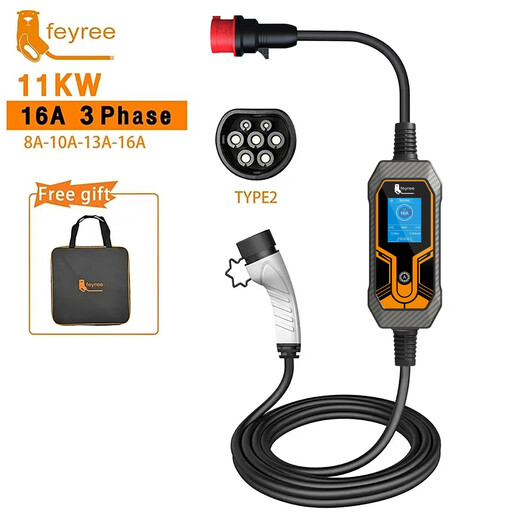
Why This Fits Their Persona: Perfect for EV owners with access to a CEE high-power connection who want to minimise charging time. This device utilises the full 11 kW and charges a vehicle significantly faster than a Schuko solution.
This charger explicitly requires a CEE industrial plug. This avoids the pitfall of buying an 11 kW device without having the appropriate infrastructure. The performance is tied to the correct connection type.
Full 11 kW charging power for rapid charging. Comprehensive safety features (including overcurrent, overvoltage, and overheating protection) and a high protection rating (IP65).
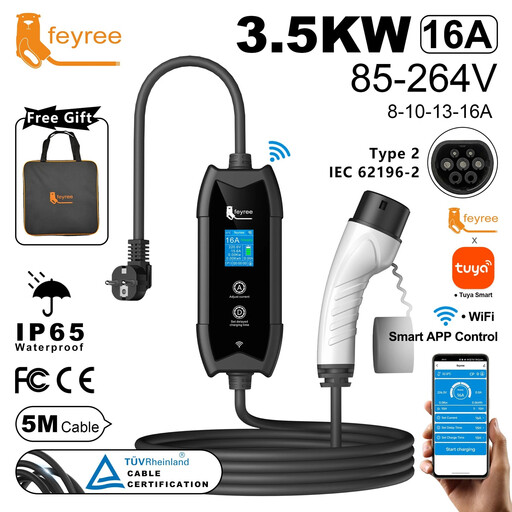
Why This Fits Their Persona: This solution combines an attractive price with the benefits of smart control. Users can schedule charging times and adjust the current to optimise their electricity bill without sacrificing the convenience of an app.
The product name clearly states the power output is 3.5 kW and is designed for Schuko operation. The app functionality actively helps to reduce running costs, thus avoiding the cost trap of high electricity bills.
Smart app control for charge scheduling and cost management. Excellent value for a smart charger.
We have compiled a complete, up-to-date list of products that fully meet these strict selection criteria and European safety regulations.
No, that is not possible. A mobile wallbox with 11 kW requires a three-phase CEE industrial power connection (high-power current) for operation. A conventional Schuko household socket is only designed for a maximum charging power of about 3.7 kW. Connecting an 11 kW charger to a Schuko socket will automatically throttle the power down to this lower level.
A high-quality portable EV charger is very safe when used correctly. Ensure that the product has all the necessary safety certifications (e.g., CE, T?V) and protective mechanisms. These include an integrated Residual Current Device (RCD), overheating protection, and protection against overvoltage and undervoltage. Safety largely depends on the quality of the product and its correct use with a properly installed socket.
Yes, in most cases, it is. An EV charging cable with an app allows you to schedule charging sessions specifically for times with cheaper electricity tariffs (e.g., at night). You can also adjust the charging current and monitor the charging progress remotely. These features not only help reduce operating costs but also significantly increase convenience and control.