
Lieferung heute & morgen

Qualitätsgarantie

Willkommens-Angebote freischalten: KOSTENLOSE Lieferung | Bis zu 80 % RABATT | Kostenlose 30-Tage-JoyPlus-Testphase
App herunterladen
You've decided on an electric vehicle, but that's just the first step. Now the search begins for the optimal charging solution for your home. The range of available models is vast, and the technical specifications can seem complex at first glance. For most households, an 11kW wallbox represents the ideal balance of charging speed, installation effort, and cost.
This article serves as your guide. We'll highlight the crucial criteria you should consider when choosing an EV charging station for your home and present a selection of models with different strengths. Our goal is to provide you with an informed basis for your decision, grounded in objective features.
To find the right charging station, it's helpful to match your personal requirements with the available technical options. The following three points are key.
The charging power determines how quickly your vehicle's battery is charged.
Modern wallboxes are more than just power sources. Intelligent features offer convenience and help reduce costs.
Safety is the top priority. A wallbox must have protective mechanisms against fault currents. Protection against DC fault currents is legally required. Some wallboxes have DC fault current detection (e.g., 6 mA) already integrated. In this case, a less expensive external Type A RCD (Residual Current Device) is sufficient. If not, a more expensive Type B RCD is required.
To prevent unauthorised use, a wallbox with RFID is recommended. An RFID card allows only authorised individuals to start a charging session. This is particularly relevant for freely accessible parking spaces or carports.
Based on the criteria above, we have compiled a selection of charging stations that cater to different needs.
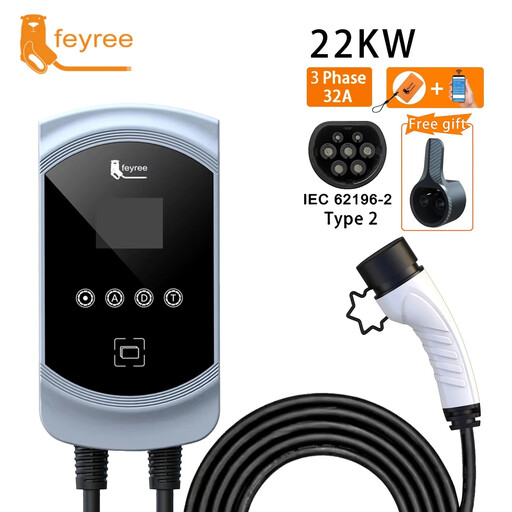
Why it stands out: This model offers great flexibility with its adjustable charging power of up to 22kW and seamless integration into the popular Tuya smart home ecosystem.
Advantages:
Who it's for: Users who want maximum power flexibility and wish to integrate their charging station into an existing or planned Tuya smart home system.

Why it stands out: The Pulsar Max specialises in efficiency and intelligent energy management, particularly for households with photovoltaic systems and a need for load management.
Advantages:
Who it's for: Ideal for photovoltaic system owners looking to maximise their self-consumption, as well as for locations (e.g., apartment buildings) where multiple electric vehicles need to be charged simultaneously.
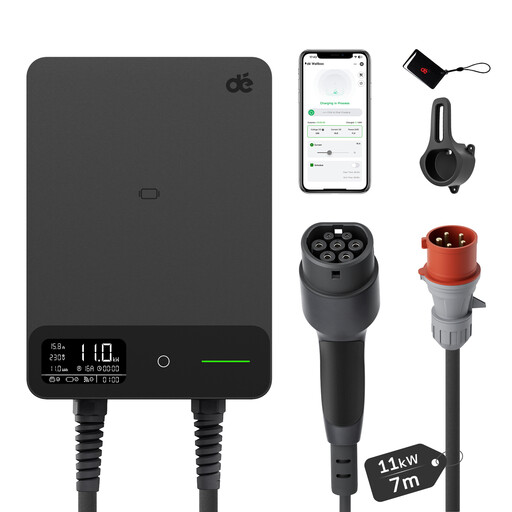
Why it stands out: This model focuses on safety and ease of installation, thanks to its integrated all-current sensitive RCD and an extra-long charging cable.
Advantages:
Who it's for: Users who prefer a straightforward and secure solution with fully integrated safety features and a long cable for maximum reach in their garage or driveway.
In addition to choosing the right EV charging station for your home, having the right accessories is also crucial. A separate Type 2 wallbox cable is essential, especially if your wallbox doesn't have a tethered cable or if you need an extra one for public charging stations.
Discover our selection of high-quality EV Type 2 Cables to complete your charging setup.
Yes, for the vast majority of residential users, an 11kW wallbox is perfectly adequate. A vehicle with a 60 kWh battery can be fully charged in under six hours. This charging process can conveniently take place overnight, ensuring your vehicle is ready with a full range the next morning.
The primary difference lies in the charging speed and regulatory requirements. A 22kW wallbox charges twice as fast as an 11kW model. In many regions, an 11kW wallbox only needs to be registered with the grid operator (notification requirement). In contrast, a 22kW wallbox requires prior approval from the grid operator (approval requirement), who may also deny the installation or throttle the power to stabilise the electrical grid.
Every wallbox installation requires protection against fault currents. The key question is what type of protection is needed. Regulations mandate protection against DC fault currents, which can occur with EVs. Some wallboxes, like the model from dé, have this DC fault current detection already integrated. In this case, only a less expensive external Type A RCD is needed. For models without this integrated feature, a significantly more expensive Type B RCD must be installed. This is an important cost factor in the overall installation.