
Lieferung heute & morgen

Qualitätsgarantie

Willkommens-Angebote freischalten: KOSTENLOSE Lieferung | Bis zu 80 % RABATT | Kostenlose 30-Tage-JoyPlus-Testphase
App herunterladen
Purchasing a private charging station is a crucial step for any electric car owner. An 11kW wallbox promises fast, safe, and convenient charging right at home. However, the market is filled with options whose technical differences are difficult to spot at first glance. It's easy to fall into cost traps or choose a model that won't meet your long-term needs. This guide will show you which critical features to look for and how to find the right charging station for your EV.
Before we dive into the technical details, it's important to know the most common pitfalls. Many buyers regret their decision because they fell for exaggerated advertising claims or seemingly cheap deals that later proved to be impractical or expensive.
To make an informed decision, you should carefully examine three core technical areas. These determine not only the performance but also the safety and future-proofing of your investment.
For most home users, an 11kW EV charging station represents the optimal balance between charging speed and installation effort. It allows most EV batteries to be fully charged overnight. Technically, this power is achieved through a 16A 3-phase connection, which ensures a balanced load on the power grid. The Type 2 EV charger plug, which is standard in Europe, guarantees compatibility with almost all current electric vehicles and plug-in hybrids. While 22 kW wallboxes offer even faster charging, they require a permit in Germany and often necessitate more costly upgrades to the home's electrical system. An 11 kW wallbox, by contrast, only needs to be registered.
A wallbox's intelligence is demonstrated by its ability to optimise the charging process.
Controlling who can use your wallbox is an important consideration. A Wallbox with RFID function is a simple and secure solution for this. Authorised users receive an RFID card or fob to activate the charging station. This prevents unauthorised use and also allows for separate billing for different users if needed.
Based on the criteria above, we have identified a few models that are well-suited for different user profiles.
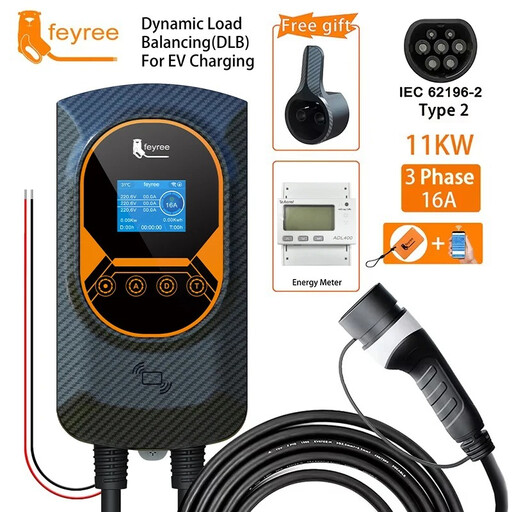
Why This Fits Their Persona: Ideal for homeowners who want seamless integration into their home's energy management system. The dynamic load balancing ensures stable operation, even when other major appliances like heat pumps or air conditioners are running.
Directly addresses the risk of grid overload with its integrated dynamic load balancing (DLB). It intelligently adjusts charging power and prevents costly problems with the home's electrical system.
Full control and monitoring via app; RFID function for access control; comprehensive safety protocols (over-voltage, over-heat protection).
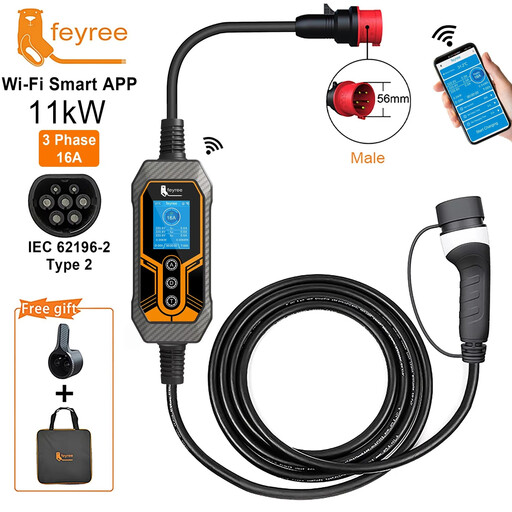
Why This Fits Their Persona: Perfect for renters or anyone who doesn't want a permanent installation, or who needs a charging solution for multiple locations (e.g., home and a holiday house). Connecting via a CEE socket offers great flexibility.
Avoids the "dumb charger" trap by offering full app control. Scheduled charging to take advantage of off-peak rates is easy to program, which lowers operating costs.
Highly portable with no fixed installation; adjustable charging current (8A-16A) via the app for maximum adaptability to different electrical grids.
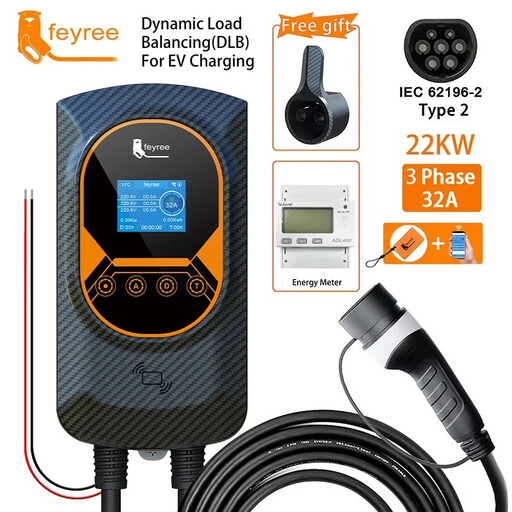
Why This Fits Their Persona: For users seeking maximum performance and future-proofing. This 22 kW model is ready for future vehicles with faster on-board chargers, but can easily be operated at 11 kW until higher power is needed.
Avoids all three pitfalls: it offers advanced dynamic load management, comprehensive app control, and an RFID function. Its high power output prevents the need to buy a new wallbox in just a few years.
Maximum charging power (up to 22 kW, permit required); dynamic load management and RFID function for full control; highly future-proof.
We have compiled a complete, up-to-date list of products that fully meet these strict selection criteria and safety standards.
Does an 11 kW wallbox need to be registered in Germany? Yes, in Germany, according to § 19 of the Low-Voltage Connection Ordinance (NAV), any charging station for electric vehicles up to and including 11 kW must be registered with the local grid operator before it is commissioned. The installation itself must be carried out by a certified electrician. This is a notification requirement, not a permit requirement, which is necessary for wallboxes rated above 11 kW.
How long does it take to charge an EV with an 11 kW wallbox? The charging time depends on your vehicle's battery capacity and its current state of charge. As a rule of thumb, you can calculate the charging time as follows: Battery Capacity (in kWh) / Charging Power (in kW). For a vehicle with a 60 kWh battery, a full charge from 0 to 100% would take approximately 5.5 to 6 hours (60 kWh / 11 kW ≈ 5.45 h). This is ideal for overnight charging.
What is the difference between a single-phase and a 3-phase wallbox? A single-phase wallbox uses only one phase of your home's connection and typically achieves charging speeds of up to 3.7 kW or 4.6 kW. A 3-phase wallbox, such as an 11 kW model, uses all three phases of the power grid. This allows for significantly faster charging (11 kW = 3 phases × 16 A × 230 V) and ensures a symmetrical, or more balanced, load on the grid. For an 11kW EV charging station, a three-phase connection is standard.