
Lieferung heute & morgen

Qualitätsgarantie

Willkommens-Angebote freischalten: KOSTENLOSE Lieferung | Bis zu 80 % RABATT | Kostenlose 30-Tage-JoyPlus-Testphase
App herunterladen
Investing in your own EV charging station is a crucial step to fully leveraging the benefits of electric mobility. An 11kW wallbox offers the sweet spot between charging speed, installation effort, and cost. However, the market is crowded, and many offers come with hidden costs or functional shortcomings. As your Joybuy Product Recommendation Officer, I'll help you navigate the common pitfalls and make an informed decision for your home charging station.
Before we dive into the technical details, let's highlight two common issues that often lead to unexpected costs and frustration after the purchase.
To buy a future-proof home charging station, you should check three core parameters. These determine not only the functionality but also the safety and convenience of your daily use.
An 11kW charging station typically uses a three-phase (400V) power connection, which is common in most German households. A 3-phase wallbox allows the charging power to be distributed across three phases, resulting in stable and fast charging. With 11kW, you can add about 60-70 kilometres of range per hour – enough to fully charge most EVs overnight. Another advantage: In Germany, wallboxes up to and including 11kW only require notification to the grid operator; they are not subject to a formal approval process.
Safety is the top priority. Electric vehicles charge with direct current (DC), which means DC fault currents can occur during the charging process. A conventional Type A RCD, found in most home electrical systems, cannot reliably detect these. Therefore, additional protection is mandatory. You have two options:
Modern wallboxes do more than just charge. A wallbox with app control allows you to start and stop charging sessions remotely, schedule charging times (e.g., to take advantage of off-peak electricity rates), and monitor energy consumption. A wallbox with RFID provides an additional layer of security. Using one or more RFID cards, you can control access to the charging station. This is particularly useful if the wallbox is installed in a freely accessible carport or a shared parking area and you want to prevent unauthorised use.
Based on the criteria mentioned, we have identified some products that are suitable for different requirements and budgets.
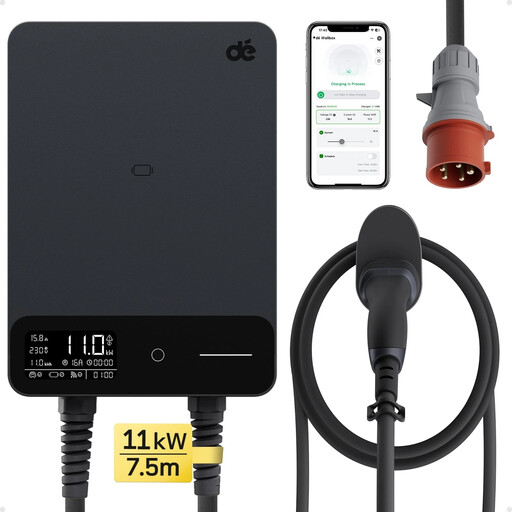
Why This Fits Their Persona: This wallbox offers a cohesive entry-level package. It combines the desired 11kW charging power with convenient app control and a generous 7.5-metre cable length, which is sufficient for most garages and driveways.
It features integrated DC fault current detection (6mA). This avoids the expensive purchase of an external Type B RCD and keeps installation costs manageable.
Great value for money; Smart charging scheduling via app; Integrated cable holder.
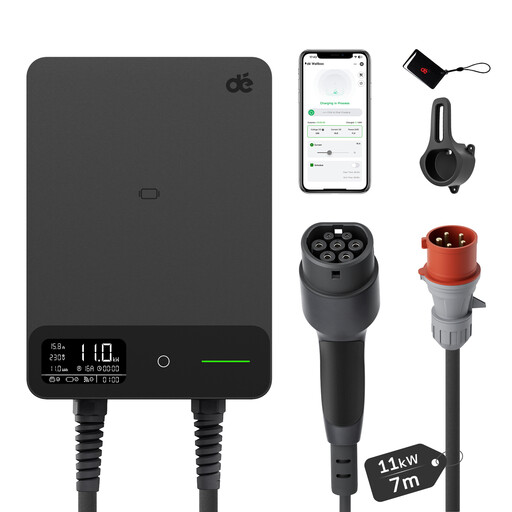
Why This Fits Their Persona: Ideal for users who want no compromises on safety and control. The combination of app control and RFID access control makes it perfect for installations in openly accessible areas like carports or underground garages.
This wallbox has a full-fledged Type B RCD integrated. This provides the highest level of safety and simplifies the electrical installation, as no other external protection components for DC fault currents are needed.
Maximum safety with integrated Type B protection; Access control via RFID cards; Comprehensive control via app.
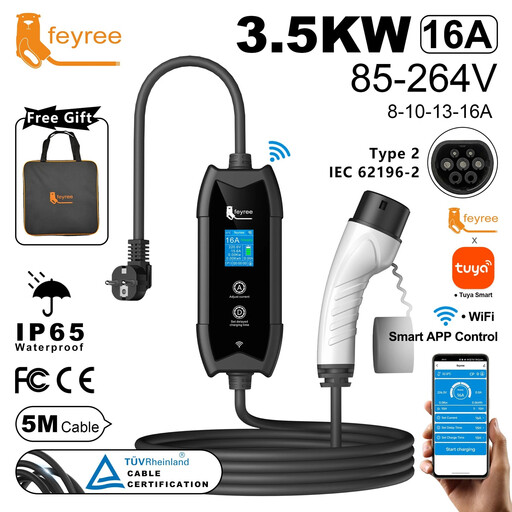
Why This Fits Their Persona: This is not an 11kW wallbox, but a portable charging solution (up to 3.5kW). It's suitable as a supplement for users who regularly need to charge in places without a fixed charging station, e.g., at a holiday home or a friend's house. It offers flexibility and smart features on the go.
As a portable solution, it bypasses the need for a fixed installation. The app control allows for scheduled charging to optimise costs, even when you're not on-site. However, the charging power is limited to 3.5kW (single-phase).
Highly portable; Charges from any standard wall outlet; App control for current and charge scheduling.
We've compiled a complete, up-to-date list of products that fully meet these strict selection criteria and German safety regulations.
1. Does an 11 kW wallbox require approval? No, in Germany, an 11kW wallbox does not require a formal permit or approval. However, it is subject to notification. This means you or your qualified electrician must register the installation with your local grid operator before commissioning. A permit is only required for charging stations with a power output of more than 11 kW.
2. What is the difference between a Type A and a Type B RCD? An RCD (Residual Current Device) protects against dangerous fault currents.
3. Can I install a wallbox myself? No, absolutely not. Installing a wallbox involves modifying your home's electrical system and, for safety and insurance reasons, must be carried out exclusively by a qualified electrician. The electrician will check the existing electrical installation, ensure proper protection, and safely commission the system.