
Lieferung heute & morgen

Qualitätsgarantie

Willkommens-Angebote freischalten: KOSTENLOSE Lieferung | Bis zu 80 % RABATT | Kostenlose 30-Tage-JoyPlus-Testphase
App herunterladen
Purchasing an electric car is a significant step, but its full everyday practicality is only unlocked with the right charging infrastructure. A dedicated EV charging station for your home not only makes charging more convenient but also faster and safer than using a standard domestic outlet. However, given the multitude of models on the market, the choice can be complex. This guide is designed to offer you objective guidance and explain the most important criteria to help you make an informed decision when you buy a wallbox.
Choosing the right charging station depends on your individual living situation, your vehicle, and your usage habits. The following points are of central importance.
The charging power, measured in kilowatts (kW), determines how quickly your vehicle's battery is charged. An 11 kW wallbox is a very popular choice in Germany and many other regions. It typically charges a standard EV fully overnight using a 3-phase power connection.
In comparison, a 22 kW wallbox is twice as powerful but is subject to an approval requirement from the grid operator, which is not always granted. An 11 kW wallbox merely needs to be registered with the grid operator, which significantly simplifies the installation process. For most private use cases, it offers an ideal compromise between charging speed and a straightforward setup.
Modern charging stations are far more than just power sources. A smart wallbox offers features that make the charging process more efficient, cost-effective, and controllable.
In Europe, the Type 2 connector (also known as a Mennekes connector) has established itself as the standard for AC charging. Almost all current electric cars and plug-in hybrids are compatible with it. When buying, ensure that the EV charging station is equipped with this connection. For safety and warranty reasons, the installation of a wallbox, especially one with a 3-phase connection, must be carried out by a qualified electrician.
Based on the criteria mentioned, we have compiled a selection of charging stations with different specialities.

Why it stands out: The Pulsar Max is distinguished by its advanced smart charging features. The Eco-Smart technology enables targeted charging with solar power, while the integrated Power Sharing load management optimises the operation of multiple charging stations on a single connection.
Advantages:
Who it's for: Ideal for homeowners with a photovoltaic system or households with multiple electric vehicles who are looking for a future-proof and highly efficient charging solution with intelligent load management.
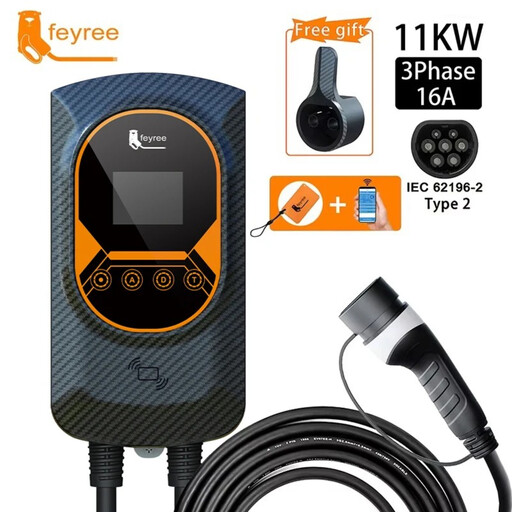
Why it stands out: This wallbox offers great flexibility thanks to its adjustable charging current and integration into the widespread Tuya Smart Home ecosystem. Users can tailor the charging process in detail to their needs via the app.
Advantages:
Who it's for: For tech-savvy users who are looking for a highly customisable smart wallbox and want to control the charging process precisely via an established app control system.
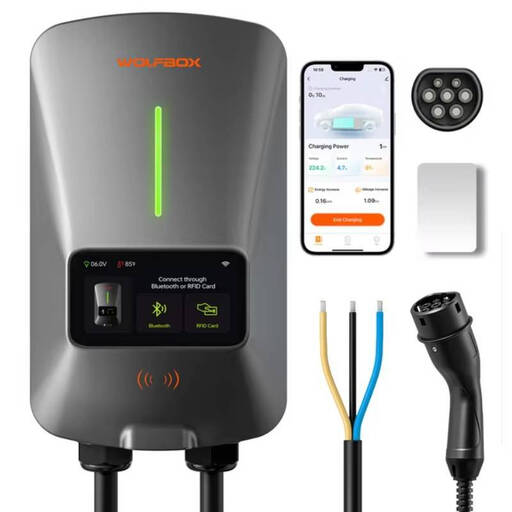
Why it stands out: The WOLFBOX AC07 combines solid charging performance with user-friendly control options. The integrated LCD display provides all important charging data at a glance, while the app and RFID cards ensure secure and flexible use.
Advantages:
Who it's for: For drivers of EVs or plug-in hybrids who need a reliable and easy-to-monitor single-phase charging solution, for instance, if a 3-phase connection is not available.
The models presented here cover common requirement profiles. However, if your search involves more specific needs, such as an extra-long charging cable or certification for billing company car usage, there are numerous other alternatives available.
Browse our entire range to find the charging station that perfectly matches your needs.
Yes, in many regions, including Germany (according to the Low-Voltage Connection Ordinance, NAV § 19), any charging device for electric vehicles with a power rating up to and including 11 kW must be registered with the responsible grid operator before commissioning. This process is usually a mere formality and is often handled by the installing electrical contractor.
The main difference lies in the maximum charging power and the regulatory requirements. A 22 kW wallbox can theoretically charge a vehicle twice as fast as an 11 kW model. However, a 22 kW station must not only be registered but also approved by the grid operator, which is not always granted. Furthermore, many EVs can only charge at a maximum of 11 kW via alternating current (AC) on the vehicle's side, so a 22 kW wallbox would offer no speed advantage.
No, the installation of a wallbox is a job that must be carried out exclusively by a qualified electrician. Connecting to the home's electrical system, especially with three-phase power, requires expert knowledge and special tools to ensure the safety of the system and the building. Improper installation can lead to severe damage and may void your insurance coverage.