
Lieferung heute & morgen

Qualitätsgarantie

Willkommens-Angebote freischalten: KOSTENLOSE Lieferung | Bis zu 80 % RABATT | Kostenlose 30-Tage-JoyPlus-Testphase
App herunterladen
You've decided on an electric car, but a key question remains: what's the most efficient and safest way to charge it at home? The range of charging solutions is vast, and technical terms like charging power, load management, or RFID can be confusing. This article serves as a practical guide to help you understand how home charging stations work and make an informed decision that suits your vehicle and home setup.
As your Joybuy Product Recommendation Officer, I have compiled the relevant information and product features to give you a clear overview of the available options.
The right choice of charging station depends on several technical and practical factors. Here are three key aspects you should consider.
Charging power, measured in kilowatts (kW), determines how quickly your vehicle's battery charges.
Modern charging stations offer much more than just power. Smart features can simplify daily use and help optimise costs.
The choice between a permanently installed and a mobile charging solution depends on your usage patterns.
Here is a selection of products with different features, covering various use cases.
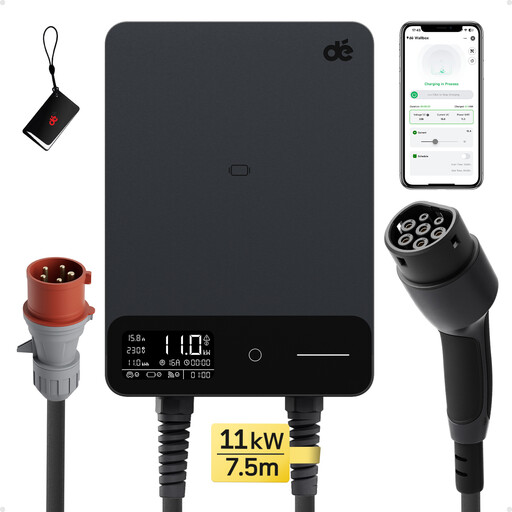
Why it stands out: This model combines the 11 kW charging power common in Germany with the most sought-after smart features, such as app control and RFID access control.
Advantages:
Who is it for? For homeowners looking for a balanced, secure, and smart 11kW wallbox for daily use who value convenience features like app control and access restriction.
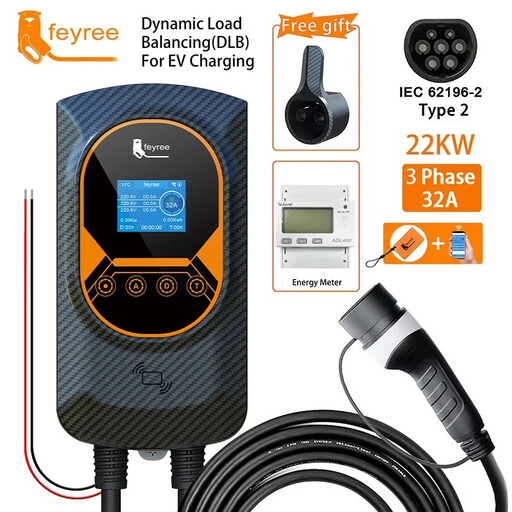
Why it stands out: This wallbox delivers high charging power of up to 22 kW and features dynamic load balancing (DLB) to prevent overloading your home's electrical system.
Advantages:
Who is it for? For users with a high-capacity electrical connection who want to install a 22kW wallbox (which may require approval). Ideal for households with multiple electric vehicles or other power-intensive appliances where smart load management is necessary.
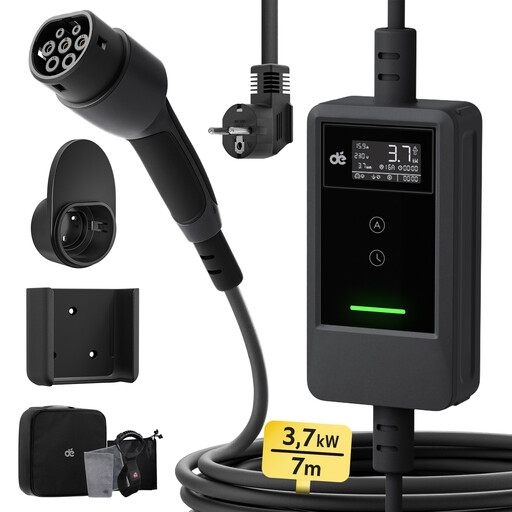
Why it stands out: As a mobile Type 2 charging cable, this solution offers maximum flexibility. It requires no permanent installation and can be used with any standard Schuko socket.
Advantages:
Who is it for? For renters who cannot install a wallbox, owners of plug-in hybrids with smaller batteries, or as a secondary charger for on-the-go use. Also great for EV drivers looking for a cost-effective and flexible backup solution.
This selection covers common use cases, but the market offers a wide variety of other models with specific functions. If you're looking for different power levels, cable lengths, or special features, you might find the right solution in our broader product range.
Explore our full range of Chargers and Cables and find the perfect solution for your needs.
Yes. According to § 19 of the German Low-Voltage Connection Ordinance (NAV), every charging device for electric vehicles must be registered with the responsible grid operator before it is commissioned. This also applies to an 11kW wallbox. The registration is typically handled by the certified electrician performing the installation.
An 11kW wallbox charges at up to 11 kilowatts (three-phase, 16 A) and can fully charge most EVs overnight. A 22kW wallbox (three-phase, 32 A) charges twice as fast but requires approval from the grid operator and a suitably rated home electrical system. Additionally, the AC charging capacity of many vehicles is limited on the car's side to 11 kW.
In Europe, the Type 2 connector (as per IEC 62196-2) has become the standard for AC charging. Therefore, virtually every modern EV home charging station with a Type 2 connector is compatible with almost all current battery electric vehicles (BEVs) and plug-in hybrids (PHEVs) on the market.