
Lieferung heute & morgen

Qualitätsgarantie

Willkommens-Angebote freischalten: KOSTENLOSE Lieferung | Bis zu 80 % RABATT | Kostenlose 30-Tage-JoyPlus-Testphase
App herunterladen
Purchasing your own charging station is a crucial step for electric car owners. An 11kW wallbox for your home promises convenience and efficiency. However, the market is overwhelming and filled with technical details that make an informed decision difficult. Incorrect assumptions about features or inadequate planning often lead to frustration and unnecessary costs.
This guide highlights the critical points you should consider before buying. We focus on the most common pitfalls and show you which features define a future-proof and practical 11kW EV charging station.
Common Pitfalls When Buying a Wallbox:
To avoid a poor investment, you should check a few core technical aspects. These determine not only the functionality but also the legal framework and the long-term usability of your charging station.
While 22kW wallboxes promise faster charging, an 11kW charging station is the more practical and cost-effective solution for most private use cases. The decisive difference lies in the approval process in Germany:
For overnight charging of an EV, 11kW of charging power is perfectly sufficient to fully charge the battery over several hours.
Ensure that the wallbox has a Type 2 connector (as per IEC 62196-2). This has established itself as the standard in Europe and is compatible with almost all electric vehicles and plug-in hybrids sold here. You have the choice between models with a permanently integrated charging cable and those with a Type 2 socket to which a separate cable is connected. A fixed cable is more convenient, while a socket offers more flexibility if you want to use cables of different lengths.
Modern charging stations offer much more than just charging. Intelligent functions enhance security and convenience:
Based on the criteria mentioned, we have identified some models that are suitable for specific user groups.
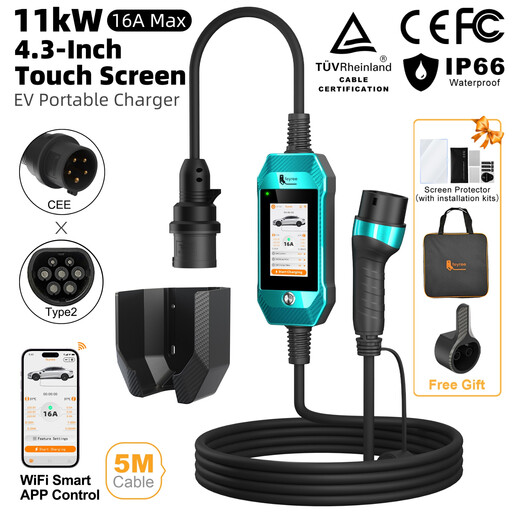
Why This Fits Their Persona: Ideal for renters or homeowners who don't want a permanent installation or wish to take their charging solution with them on holiday or to a second home. Using an existing CEE-16 socket eliminates the need for complex installation.
The integrated app control (Tuya Smart App) allows for precise scheduling of charging times and monitoring of consumption. This directly bypasses the pitfall of lacking cost control.
Advantage: High flexibility due to its portable design. Pros: Touchscreen for direct operation, detailed charging history in the app, and comprehensive safety features.
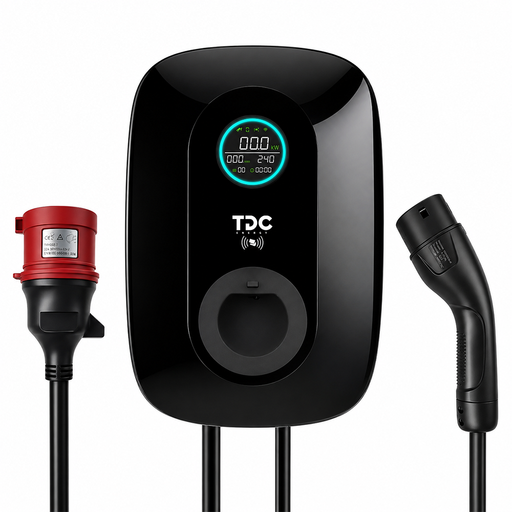
Why This Fits Their Persona: Designed for permanent and secure wall mounting in a home garage or carport. The focus is on reliability, ease of use, and controlled access for the whole family or employees.
The integrated RFID function solves the problem of unsecured use. Only individuals with one of the two included RFID cards can start a charging session, effectively preventing electricity theft.
Advantage: High operational security through fixed installation and access control. Pros: Clear LCD display to show charging status, app control as an additional option, and a robust housing.
Many chargers feature displays for enhanced monitoring. We've compiled a list of products that include this useful feature and meet strict selection criteria.
1. Does an 11kW wallbox have to be installed by an electrician? Yes, the installation of a permanently mounted wallbox must be carried out by a qualified electrical professional. They not only ensure a safe connection to the home's electrical system but also handle the legally required registration of the charging station with the responsible grid operator. A mobile wallbox connected to an existing and professionally installed CEE high-voltage socket does not require separate installation work.
2. What are the costs of charging an EV with an 11kW wallbox at home? The costs depend directly on your electricity tariff. For example: at an electricity price of 30 cents per kilowatt-hour (€0.30/kWh), fully charging a 60 kWh battery costs €18 (60 kWh × €0.30/kWh). By using a wallbox with app control, you can schedule charging sessions for cheaper tariff periods (e.g., off-peak night rates) and significantly reduce your charging costs.
3. Is an 11kW wallbox suitable for every EV? Most electric cars and plug-in hybrids sold in Europe are equipped with the Type 2 connector and can charge at an 11kW wallbox. However, the actual charging speed is limited by the vehicle's internal charger (on-board charger). For example, if your vehicle only has a single-phase charger with a maximum of 7.4 kW, it will only charge at this lower power level even at an 11kW station. The wallbox automatically adjusts the power output to match the vehicle's capacity.