
Lieferung heute & morgen

Qualitätsgarantie

Willkommens-Angebote freischalten: KOSTENLOSE Lieferung | Bis zu 80 % RABATT | Kostenlose 30-Tage-JoyPlus-Testphase
App herunterladen
A 12-cup muffin tin is practical when you want to bake twelve muffins or cupcakes in one batch. However, labels such as “non-stick”, “heat-resistant” or “particularly sturdy” reveal little about how suitable a tin is for everyday use. The key factors are the material, cup dimensions, cleaning requirements and maximum oven temperature.
A non-stick muffin tin can make it easier to remove your bakes. However, using metal utensils, abrasive cleaners or hard sponges on the surface can damage the coating. Check whether the manufacturer recommends hand washing and whether sharp kitchen tools should be avoided.
“Non-stick” does not automatically mean “dishwasher-safe”. Several coated tins in this selection are specifically intended for hand washing.
A silicone muffin tin is flexible and can be stored compactly. However, a soft rim may give way when the tin is being filled or carried. A reinforced design or a separate baking tray underneath makes it easier to place the tin safely in the oven.
Also look for a clearly stated temperature range. With silicone tins, the maximum permitted temperature should not be inferred from marketing claims.
A baking tin for 12 muffins will not automatically fit every oven. External dimensions of around 33 to 40 cm may be a tight fit depending on the shelf position and baking tray. Before buying, check:
A steel muffin tin is structurally stable and can usually be lifted safely. Steel heats differently from silicone and coated models require gentle cleaning. Carbon steel is often used for sturdy baking tins and, with a suitable coating, can support even heat distribution.
Silicone is lighter and flexible. Removing your bakes is often easier by gently pushing from underneath. However, the tin should stand on a sturdy tray when used with heavy batters or when being transported. Claims such as “lifetime” or “for many years” should not be treated as an unverified guarantee of durability.
For a coated muffin baking tin, three details are particularly relevant:
The Ballarini PATISSERIE Muffin Pan is described as having a two-layer, PFAS-free non-stick coating. According to the product details, it is oven-safe up to 230 °C and intended for hand washing. The specific care instructions from the relevant manufacturer remain decisive.
A baking tin for muffins and cupcakes should only be used within the stated temperature limit. Not every tin is suitable for use in a microwave, under a grill, on a hob or with direct heat. With coated baking tins, it is also important to keep them away from sharp tools.
Do not fill the cups to the rim. As a practical guide, the Le Creuset muffin tin’s product instructions recommend filling it no more than two-thirds full, so the batter does not overflow as it rises.
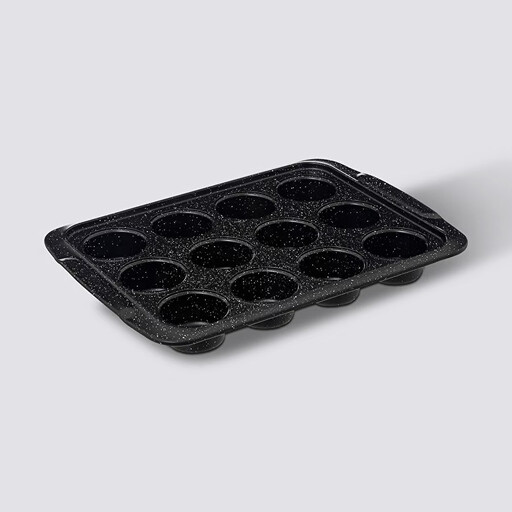
Why this product suits the profile: The classic 12-cup design is ideal for households that regularly bake larger batches of muffins and prefer a structurally stable steel construction. The dimensions are 33 × 24 × 3.8 cm.
The product details explicitly state that the tin is not dishwasher-safe or microwave-safe. This makes it easier to assess its care requirements and range of uses realistically before buying.
12 cups, a steel body, two steel handles, a weight of 610 g and stated oven suitability. For easy release, the PTFE coating should be used with soft utensils.
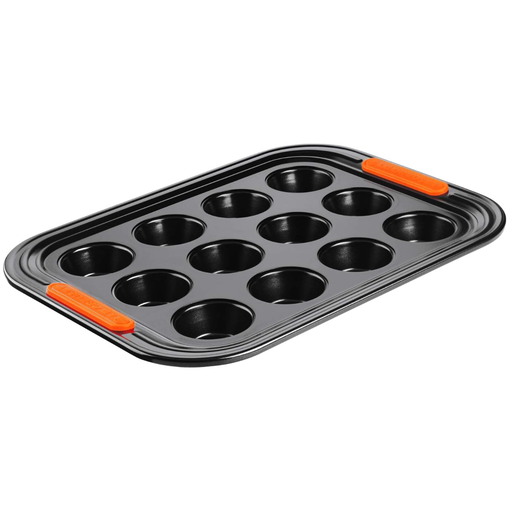
Why this product suits the profile: The deeper cups and heavy carbon steel construction appeal to households looking for a more robust baking tin for frequent sweet or savoury bakes.
The specifications state a clear temperature limit of 240 °C and advise hand washing. The coating should not come into contact with abrasive cleaners, metal scourers or pointed utensils.
12 cups, each approximately 7 cm in diameter, a carbon steel construction, a non-stick coating and rolled edges with silicone inserts for a secure grip.
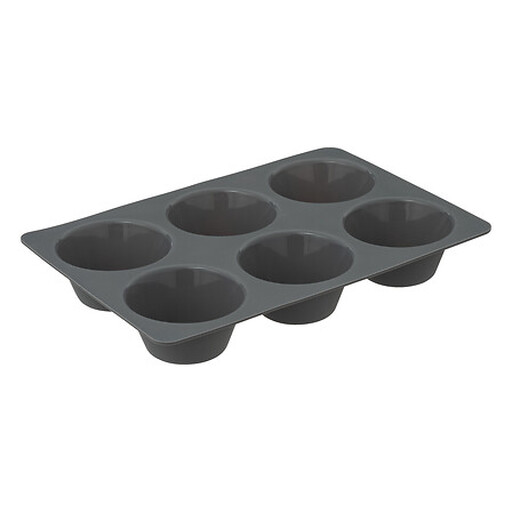
Why this product suits the profile: The flexible mould is suitable for muffins, cupcakes and individual sweet or savoury portions. Measuring 35 × 20 × 4 cm, it remains relatively compact and can be stored stacked.
The product description highlights food-grade silicone, flexible release and dishwasher suitability. Nevertheless, the mould should stand on a firm surface when being filled or carried.
According to the product details, 100% food-grade silicone, flexible release, oven and freezer use, plus dishwasher cleaning.
We have compiled a complete, regularly updated list of products that fully meet these strict selection criteria and the safety regulations applicable in the EU.
No. Check the external dimensions of the tin and the width of the oven shelf. Models around 33 to 35 cm wide will often fit standard domestic ovens, but you should still measure before buying.
That depends on how you intend to use it. Silicone makes flexible release easier and may be dishwasher-safe. Steel or carbon steel, on the other hand, provides a more structurally stable option. A sturdy construction can be more practical if you fill and transport the tin frequently.
There is no fixed service life. It depends on use, temperature, cleaning and the utensils used. Avoid scratches, sudden temperature changes and abrasive cleaning products. Once the coating is visibly damaged, the tin should no longer be used.