
Lieferung heute & morgen

Qualitätsgarantie
App herunterladen
Kategorien
Choosing a child's first bike is a decision that should be based on objective criteria. A 12-inch kids' bike is often the first step into the world of two-wheeled mobility. The right size, weight, and design are critical factors for a child's safety and learning success. This guide analyses the technical specifications and practical benefits of various models to help you make an informed purchasing decision.
Selecting the right model depends on several technical parameters that go beyond just the wheel size. Considering the child's height, motor skills, and intended use is fundamental.
The first fundamental choice concerns the type of bike. Both options cater to different developmental stages.
The "12-inch" designation refers to the wheel diameter and is only a rough guideline. The most important measurement for a proper fit is the child's inseam (inside leg length).
How to Measure: Have the child stand barefoot with their back straight against a wall. Measure the distance from the floor to their crotch.
For a 12-inch kids' bike, the lowest adjustable saddle height should be slightly less than the child's inseam. This allows the child to reach the ground with both feet flat while seated, which is essential for safety and control. A bike for 2-year-olds or a bike for 3-year-olds often falls into this size category, but the individual child's height is always the primary factor.
Based on technical specifications and practical benefits, we present three different concepts for a toddler bike.
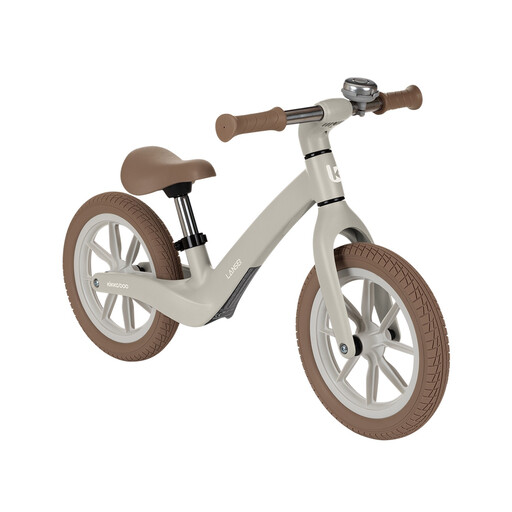
Why We Recommend It: The Kikka boo Lanser stands out with its extremely lightweight, glass-fibre-reinforced nylon frame. Weighing just 3 kg, it's effortless for children to handle and easy for parents to carry. The puncture-proof 12-inch PU wheels eliminate the hassle of flat tires and deliver solid performance on paved surfaces.
Pros:
Best For: This balance bike is an excellent choice for parents seeking an exceptionally light, low-maintenance, and durable model for children aged 3 to 6, designed primarily to develop their sense of balance.
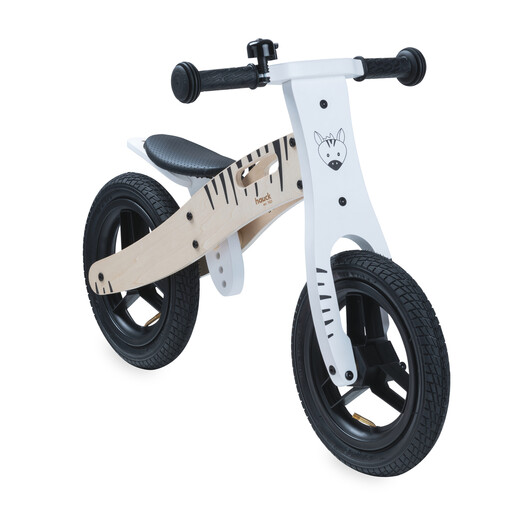
Why We Recommend It: The hauck Balance N Ride combines sustainable materials with superior ride comfort. Its frame is made from FSC-certified wood, supporting responsible forestry. The 12-inch pneumatic tires provide effective cushioning, making it suitable for rougher terrain. The four-level adjustable saddle allows for use from as early as 18 months.
Pros:
Best For: This 12-inch balance bike is ideal for eco-conscious families and for children ready to start balance training early (from 18 months). The pneumatic tires make it a comfortable option for rides on various surfaces.
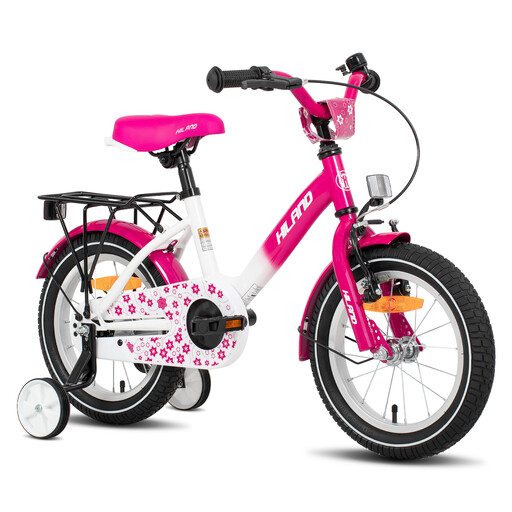
Why We Recommend It: The HILAND Starry is a classic kids' bike with training wheels, focusing on the transition to pedalling. It features a dual braking system—a front V-brake and a rear coaster brake—giving children multiple options for speed control. The durable hi-ten steel frame and chain guard are designed for longevity and safety. Arriving 90% pre-assembled, it's ready to ride in no time.
Pros:
Best For: This girls' bike (also available in other colours as a boys' bike) is designed for children aged 2 to 4 who are ready to learn how to pedal. It's a complete starter package for a first pedal bike.
The models featured here cover a range of needs. If you haven't found the perfect fit for your specific requirements, you can explore a wider selection of bikes and balance bikes in our Cycling category.
1. When is a 12-inch bike suitable? A 12-inch kids' bike is typically suitable for children aged 2 to 4, with a height of approximately 85 to 105 cm. However, inseam is more critical than age. It should be at least equal to the bike's lowest adjustable saddle height, allowing the child to safely reach the ground with their feet.
2. Balance bike or a bike with training wheels for a first bike? The choice depends on the developmental goal. A balance bike primarily teaches balance, which often simplifies the later transition to a pedal bike without training wheels. A kids' bike with training wheels, on the other hand, teaches the pedalling motion while stability is artificially provided. Many children start with a balance bike and then move directly to a pedal bike without ever using training wheels.
3. How do I determine the right bike size for my child? The correct size is determined by the frame height relative to the child's inseam, not by the wheel size. While seated on the saddle, the child must be able to comfortably touch the ground with the balls of both feet or with their feet flat. On a pedal bike, they should also be able to stand over the top tube with both feet flat on the ground.