
Lieferung heute & morgen

Qualitätsgarantie

Willkommens-Angebote freischalten: KOSTENLOSE Lieferung | Bis zu 80 % RABATT | Kostenlose 30-Tage-JoyPlus-Testphase
App herunterladen
Choosing the right 120-litre trash bag is a decision that depends on specific requirements for material, durability, and handling. Whether for a household with high waste volume, commercial use, or the disposal of garden waste, the technical specifications of a 120L refuse sack are crucial for its functionality. This article analyses the essential criteria to consider when selecting a suitable product and presents a selection of models with different features.
The performance of a trash bag is determined by a combination of its material, film thickness, and closure mechanism. Understanding these parameters allows for an informed decision.
Most 120L trash bags are made of polyethylene (PE), primarily LDPE (Low-Density Polyethylene). This material is characterised by high flexibility and elasticity, making it resistant to tears from sharp or pointed objects.
An increasingly relevant alternative is recycled trash bags. These are manufactured from processed LDPE plastic. Products bearing the "Blue Angel" eco-label (UZ 30a) must be verifiably made from at least 80% recycled plastics (post-consumer recyclates). This offers an option for eco-conscious consumers without necessarily compromising on durability.
The thickness of the film, specified in microns (?m), is a direct indicator of its robustness. A higher ?m value generally correlates with greater load-bearing capacity.
The type of closure affects handling and hygiene during disposal.
Based on an analysis of technical specifications and practical benefits, we present three products with different specialisations.
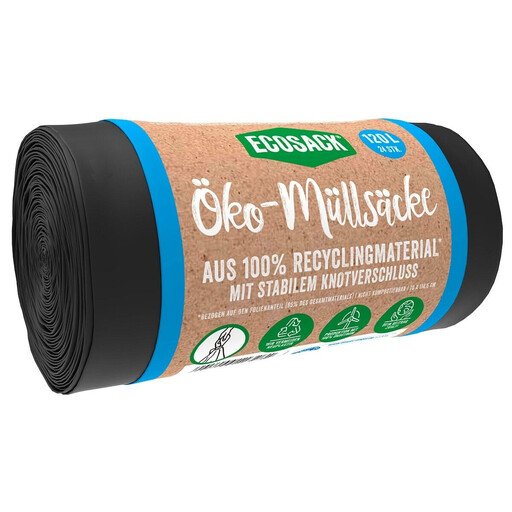
Why we recommend this product: This model combines a large capacity with a focus on sustainability. Made from recycled LDPE film and certified with the "Blue Angel" eco-label, it addresses the demand for more environmentally friendly disposal solutions. With a film thickness of 35 ?m, the bag offers solid durability for everyday use in homes and offices.
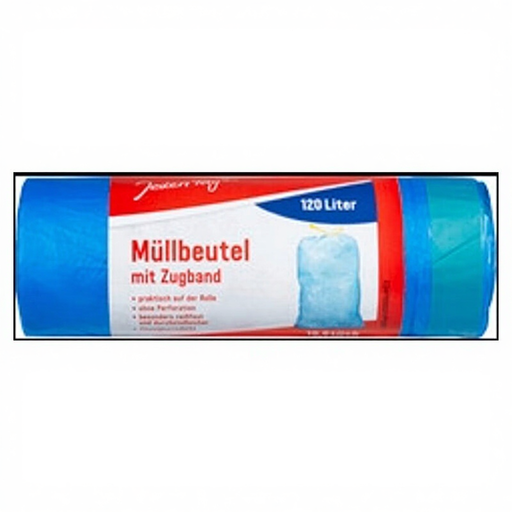
Why we recommend this product: The focus of this product is on practical handling and convenience. The integrated drawstring significantly simplifies closing and transporting the full bag. This is particularly advantageous when disposing of large quantities or when needing to carry the bag over a longer distance. The polyethylene material is designed for single use and provides a reliable barrier against leaks.
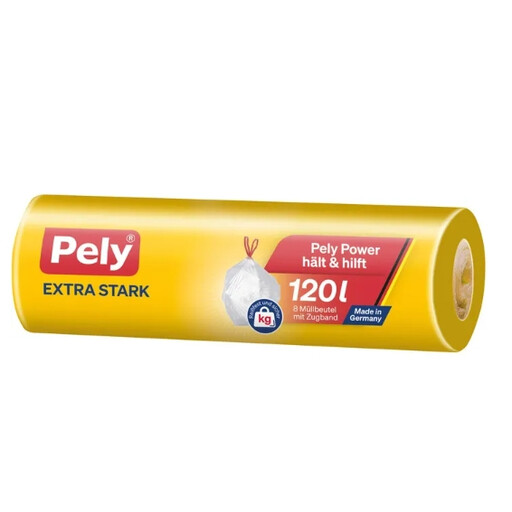
Why we recommend this product: This model is engineered for maximum durability. The quality film, designated as "extra strong," combined with a reinforced base, makes this tear-resistant trash bag the ideal choice for demanding tasks. It is suitable for heavy or bulky waste, such as that found in workshops, the catering industry, or during garden work. The drawstring further enhances its functionality.
A well-organised household relies on functional solutions that go beyond simple waste disposal. For other practical aids, such as durable options for drying laundry, you can find a selection of products in our Clotheslines category.
1. What does the "?m" (micron) specification on trash bags mean? The specification in microns (?m), often abbreviated as "my," describes the thickness of the plastic film. A higher ?m value means a thicker and, as a rule, more tear-resistant film. For trash bags for large 120L bins, values from 35 ?m upwards are recommended for reliable stability.
2. Are recycled trash bags less tear-resistant than those made from virgin plastic? Not necessarily. Modern recycling processes and the quality of the post-consumer recyclates used allow for the production of recycled trash bags with technical properties, such as tear and puncture resistance, that are comparable to products made from virgin granulate. Furthermore, certifications like the "Blue Angel" ensure minimum standards for product quality.