
Lieferung heute & morgen

Qualitätsgarantie

Willkommens-Angebote freischalten: KOSTENLOSE Lieferung | Bis zu 80 % RABATT | Kostenlose 30-Tage-JoyPlus-Testphase
App herunterladen
A 125cc-class electric scooter, technically classified as an L3e-class vehicle, represents an increasingly compelling alternative to its internal combustion engine counterparts. Choosing such a model requires a careful assessment of technical specifications like motor power and battery capacity, as well as legal requirements. This article breaks down the essential criteria for selecting the right e-scooter and introduces two models based on their technical specifications.
Selecting an electric scooter that is on par with a 125cc petrol scooter requires a close look at specific technical data. These factors determine its performance, everyday usability, and operating costs.
In Germany, electric scooters with a top speed exceeding 45 km/h fall into the L3e-A1 vehicle class. The following are mandatory for operation on public roads:
Motor power, measured in watts (W), is a direct indicator of acceleration and achievable top speed. Models with a nominal power of around 3000W typically reach speeds of up to 80 km/h. This performance class is well-suited for city traffic and shorter cross-country journeys, allowing you to merge seamlessly with the flow of traffic.
The range depends on the battery's capacity (specified in ampere-hours, Ah, or kilowatt-hours, kWh) and various external factors. These factors include:
Manufacturer range specifications are often based on standardised test conditions (e.g., 75 kg rider weight, flat terrain, constant speed). For example, a battery with a 72V and 50Ah capacity can achieve a range of over 100 km under optimal conditions. A removable battery offers the practical advantage of being chargeable away from the scooter, for instance, in your apartment or office.
Effective deceleration is a key safety feature. Hydraulic disc brakes on both the front and rear wheels are the technical standard in this performance class. They provide reliable and well-modulated braking power. The chassis, comprising the suspension and damping system, is crucial for ride comfort and stability, especially on uneven road surfaces.
Ergonomics are critical for practical, everyday use. This includes the seat height, the length of the bench seat, and the overall vehicle size. An electric scooter for 2 people must have a sufficiently long seat and fold-out footpegs for the pillion passenger. The maximum payload, noted in the vehicle's registration documents, specifies how much weight (rider, passenger, luggage) the vehicle can carry.
Based on the technical criteria above, we present two models that are suited for different user profiles due to their unique specifications.
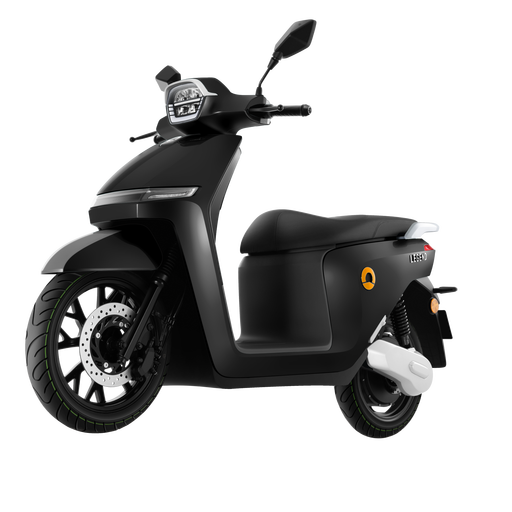
Why we're featuring this product: This model combines a classic e-motorcycle design with the performance of a modern electric scooter. Its 3000W motor and 80 km/h top speed make it a fully-fledged mode of transport for urban and suburban areas. Compliance with the L3e class and the included COC papers ensure a straightforward registration process.
Pros:
Who it's for: This model is aimed at riders looking for a powerful and legally compliant solution for daily commuting who also value a motorcycle-like appearance. It is a functional choice for holders of A1, A2, or A driving licences.
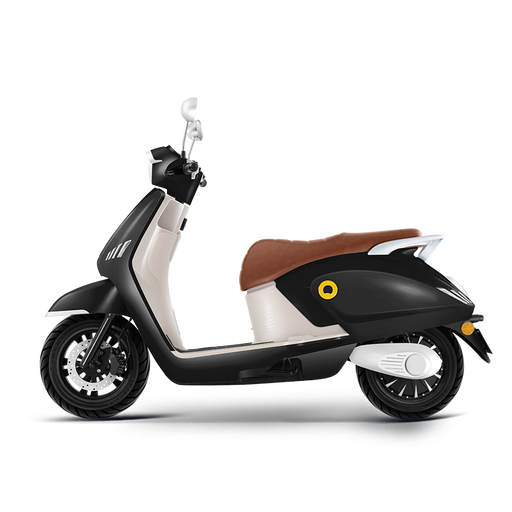
Why we're featuring this product: The SUNRA FUTURE stands out with its focus on maximum range and practicality. Its removable 72V/50Ah lithium-ion battery offers excellent flexibility for charging. The manufacturer-stated range of up to 150 km (at 40 km/h) positions this model as an option for users with particularly long journeys.
Pros:
Who it's for: This model is designed for commuters and frequent riders who prioritise maximum range and low operating costs. The ability to charge the battery remotely is a significant advantage for those living in apartment buildings without direct charging access at their parking spot.
If the models presented here don't perfectly match your needs, or if you're interested in other vehicle categories like four-wheeled ATVs or different e-mobility solutions, you can find a broader selection of electric two-wheelers and related vehicles in our ATV & Motorcycle section.
1. What kind of driving licence is needed for a 125cc-class electric scooter? For an electric scooter with a top speed over 45 km/h (L3e-A1 class) in Germany, you need either a motorcycle licence of class A1, A2, or A, or a car driving licence (Class B) with the B196 extension.
2. What are the running costs for a 125cc e-scooter? The running costs are significantly lower compared to a petrol scooter. They primarily consist of electricity costs for charging (approx. €1-€2 per 100 km), insurance premiums, and annual vehicle tax (which is often waived for several years). Maintenance costs for oil changes, spark plugs, or exhaust systems are completely eliminated.
3. Can an electric scooter be used by 2 people? Yes, many 125cc-class models are approved for two-person operation. Check the manufacturer's specifications for maximum payload, as well as for a sufficiently long seat and the presence of pillion footpegs. The SUNRA electric scooters featured here are both designed for two people.