
Lieferung heute & morgen

Qualitätsgarantie

Willkommens-Angebote freischalten: KOSTENLOSE Lieferung | Bis zu 80 % RABATT | Kostenlose 30-Tage-JoyPlus-Testphase
App herunterladen
A compact fridge that works both in your car and at home promises ultimate flexibility for commuters, campers, and anyone who wants chilled drinks or fresh snacks on the go. However, the portable cooler market is flooded with devices whose real-world performance often falls short of their marketing promises. Before you make a decision, it's crucial to understand the common pitfalls that can lead to a disappointing purchase.
Many buyers only realise after their purchase that their new device fails to meet expectations. Pay close attention to these three points to avoid a wasted investment.
To ensure your device can handle the demands of daily life, you should carefully examine three technical features.
A truly portable mini-fridge requires two separate, fully functional connection options.
Make sure both connection cables are included in the delivery and appear robust.
Most compact models use thermoelectric cooling (the Peltier effect). This technology is lightweight, quiet, and operates without refrigerants. However, it has its limits. A realistic cooling performance is around 18–20°C below the ambient temperature. A cooler with a warming function offers additional utility by heating food up to 65°C—ideal for lunch at the office or on a construction site.
Instead of relying solely on the litre specification, check the internal dimensions. Will it fit the types of containers you want to cool? A removable shelf can significantly increase flexibility, allowing you to adapt the space for small cans or a larger bottle. For use as a small car fridge or for camping, an efficiently designed interior is crucial.
Based on these objective criteria, we have identified several products that represent a smart choice for specific use cases.
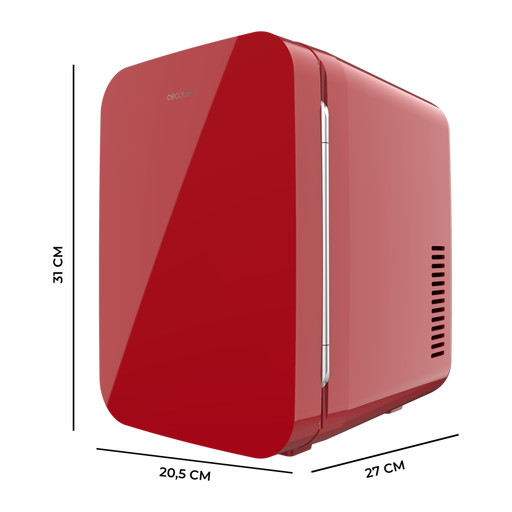
Why This Fits Their Persona: Ideal for commuters, campers, or as a secondary fridge in the office. The dual 12V and 220V connections offer maximum flexibility for use in the car and indoors. The added warming function extends its utility beyond just cooling.
The unit comes with both necessary cables for 12V and 220V, thus avoiding the pitfall of inadequate connection options. Its temperature range of 5°C to 65°C is clearly defined.
Combined cooling and warming function. Compact design with a carrying handle for high portability.
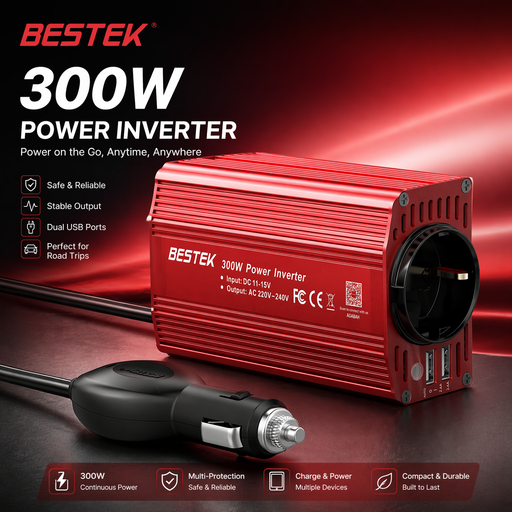
Why This Fits Their Persona: For users who need to power not just a mini-fridge but also laptops or other 230V devices in their car. This power inverter turns the 12V socket into a fully-fledged outlet on the go.
This accessory fundamentally solves the connection flexibility problem by creating a stable 230V power source in the vehicle. This allows even devices without a dedicated 12V plug to be operated safely.
Provides a 230V outlet and two USB ports in the car. Integrated safety features protect against overload and overheating.

Why This Fits Their Persona: A perfect addition to the camping experience. While the mini-fridge provides cold drinks, this rugged and waterproof speaker delivers the perfect soundtrack for the outdoors.
This product complements the utility of a mini-fridge by offering another convenience feature for on-the-go use. Its IP67 certification is a clear, verifiable quality mark for outdoor use.
IP67 waterproof and dustproof. Long battery life of up to 20 hours according to the manufacturer, and a lightweight, portable design.
We've compiled a complete, up-to-date list of products that fully meet these strict selection criteria and safety regulations.
1. How much power does a 12V mini-fridge use? The power consumption of a thermoelectric mini-fridge is typically between 40 and 60 watts. When running on a car's 12V connection, this corresponds to a current draw of about 3 to 5 amps. It is recommended to operate the device only when the engine is running to avoid draining the car battery.
2. Can I leave a 12V/220V mini-fridge permanently connected in my car? It is not advisable to leave the fridge connected to the 12V system permanently when the engine is off, as this can drain the car battery within a few hours. Some vehicles cut power to the cigarette lighter when the ignition is off, but not all do. For safety, always disconnect the device from the power source when parking the vehicle for an extended period.
3. What is the difference between a thermoelectric cooler and a compressor refrigerator? Thermoelectric coolers (Peltier element) are lighter, less expensive, and can often also provide heating. However, their cooling performance depends on the ambient temperature. Compressor refrigerators work like a conventional household fridge, reaching much lower temperatures regardless of the outside temperature, and are more efficient, but also heavier, louder, and more expensive. For most everyday applications, such as cooling drinks or snacks, a thermoelectric model is sufficient.