
Lieferung heute & morgen

Qualitätsgarantie

Willkommens-Angebote freischalten: KOSTENLOSE Lieferung | Bis zu 80 % RABATT | Kostenlose 30-Tage-JoyPlus-Testphase
App herunterladen
An off-grid power supply for 220V appliances, running from a 12V DC source like a car battery, is a fundamental requirement for remote work, camping, or emergency backup power. A power inverter, also known simply as an inverter, performs this conversion. The critical technical characteristic for the safe operation of modern electronics is the waveform of the generated alternating current. A model with a pure sine wave produces a quality of electricity identical to that of the public grid, thereby protecting sensitive devices.
This article analyses the technical parameters to consider when selecting a 12V to 220V pure sine wave power inverter and presents two models with different performance profiles.
Choosing the right device depends on objective criteria derived directly from its intended application.
The waveform is the primary indicator of an inverter's quality.
For versatile and future-proof applications, a pure sine wave model is the technically sound choice.
An inverter's power is rated in watts (W) and specified with two values:
To determine the right size, add up the rated power of all devices you plan to run simultaneously, and account for the highest surge current of any single appliance.
A high-quality 12V to 230V power converter includes integrated protection mechanisms to safeguard the inverter itself, the connected battery, and the appliances. Standard features include:
Efficiency describes the percentage of energy drawn from the battery that is successfully converted into 220V AC power. Ratings above 90% are considered excellent, minimising energy loss and heat generation. An intelligent cooling system with temperature-controlled fans is essential for continuous operation under load.
Based on the technical criteria above, we present two models suited for different requirement profiles.
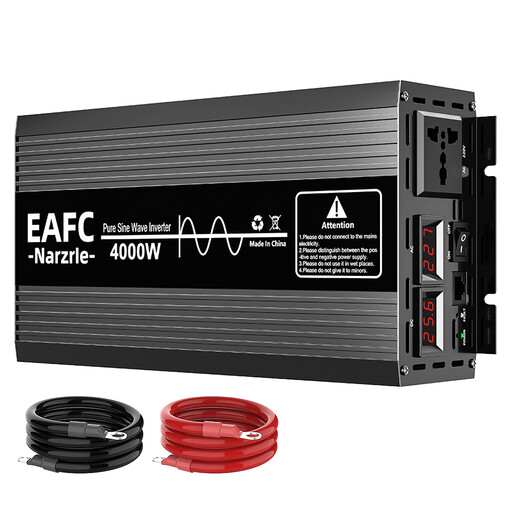
Why We Recommend This Product This model is designed for users who need high continuous power and reserves for power-hungry appliances. The 2000W rated power allows for the simultaneous operation of multiple devices, while the 4000W peak power covers the demanding surge currents of tools or kitchen equipment. The dual digital display for monitoring input and output voltage provides transparent control over the system's status.
Pros
Who It's For Ideal for RV owners or tradespeople who need to power tools, a refrigerator, a coffee machine, or other high-demand appliances off-grid. It also serves as a core component for a battery-based emergency power supply for the home.
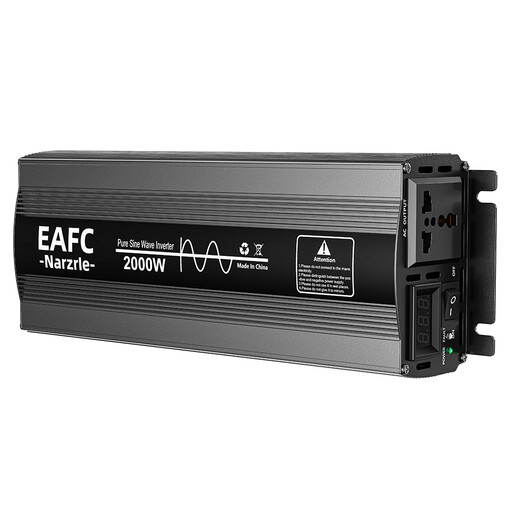
Why We Recommend This Product This model offers a well-balanced combination of power, efficiency, and a compact design. With 1000W of continuous power and 2000W of peak power, it is a versatile inverter for camping and for use in trucks or cars. The high conversion efficiency of over 90% conserves battery capacity. The temperature-controlled fan ensures quiet operation under light loads.
Pros
Who It's For Perfect for campers, truck drivers, and anyone who needs to reliably power laptops, cameras, drones, portable coolers, or small kitchen appliances on the go. The power output is sufficient for most mobile office and recreational applications.
If the models presented don't exactly match your specific requirements, you can find a wider selection of power solutions and accessories in our Cool Vehicle Gadgets category.
1. What is the difference between a pure sine wave and a modified sine wave inverter? A pure sine wave inverter generates a smooth, periodic AC voltage identical to the power from a wall outlet. This is safe for all types of devices. A modified sine wave inverter produces a blocky, stepped voltage that can cause interference, humming, or damage to sensitive electronics (e.g., laptops, power adapters, dimmable LEDs).
2. What size power inverter do I need for my RV? To determine the required size, add up the wattage of all appliances you plan to use simultaneously. Plan for a safety margin of about 20%. For running a laptop (~80W), a small refrigerator (surge current ~500W, continuous operation ~100W), and a coffee machine (~800W), a model with at least 1000W of continuous power and 2000W of peak power, like the EAFC 2000W, would be a suitable choice.
3. Can I build a home emergency power supply with a power inverter? Yes, a 12V to 220V pure sine wave power inverter is a core component of a simple battery-based emergency power supply. Combined with an appropriately sized 12V battery (e.g., AGM or LiFePO4) and a battery charger, you can continue to run essential appliances like your heating system controller, refrigerator, lights, and communication devices during a power outage. However, the device must never be connected directly to your home's electrical grid.