
Lieferung heute & morgen

Qualitätsgarantie

Willkommens-Angebote freischalten: KOSTENLOSE Lieferung | Bis zu 80 % RABATT | Kostenlose 30-Tage-JoyPlus-Testphase
App herunterladen
A 12V to 230V power inverter, also known as a 12V 230V inverter, is a device that converts the 12-volt direct current (DC) from a car battery into 230-volt alternating current (AC). This conversion allows you to run standard household appliances using your vehicle's power system. Choosing the right model depends on your specific technical needs and intended use, whether for a mobile office in your car, as a camping accessory, or for powering devices on the go. This guide breaks down the crucial parameters to help you make an informed purchasing decision.
The functionality and safety of a power inverter are determined by several core technical features. A close look at these specifications is essential for the reliable operation of your devices.
The output power, measured in watts (W), defines which devices can be operated with the inverter. A 300W inverter is sufficient for many common applications, such as charging laptops, smartphones, and cameras, or running small consumer electronics.
It is crucial to check the power consumption of the device you intend to use (this information is found on the power adapter or nameplate) and select an inverter with a continuous power rating that exceeds this value. Note that most cigarette lighter sockets in cars are only designed for a maximum load of 150W to 200W. For devices with higher power consumption, a direct connection to the car battery is required.
The waveform of the output current is a critical quality indicator that determines compatibility with different types of devices.
Pure Sine Wave: A power inverter with a pure sine wave produces an output voltage with a waveform identical to that of the public power grid. This clean and stable power supply is essential for operating sensitive electronics. This includes modern laptops, medical equipment, audio devices (hi-fi systems), coffee machines with electronic controls, and motorised power tools. Using a pure sine wave inverter protects these devices from malfunctions, overheating, and potential damage.
Modified Sine Wave: An inverter with a modified sine wave generates a stepped, approximated sine wave. These units are more cost-effective to manufacture and are suitable for simple, non-sensitive devices. Examples include incandescent bulbs, heaters without electronic controls, or basic chargers. With sensitive electronics, a modified sine wave can cause interference (e.g., a buzzing sound in speakers), reduced efficiency, or even permanent damage.
Modern power inverters offer more than just a single 230V outlet. Additional ports significantly increase flexibility. Models with USB ports are particularly convenient, as they allow for simultaneous charging of smartphones, tablets, and other USB-powered devices without occupying the 230V outlet. Pay attention to the amperage (A) of the USB ports, as higher values enable faster charging.
A high-quality car power inverter includes built-in protective circuits. Essential safety features include:
An integrated, often temperature-controlled fan provides active cooling, ensuring operational safety even during prolonged use under load.
Based on an analysis of technical specifications and practical utility, we present two models that cater to different user profiles.
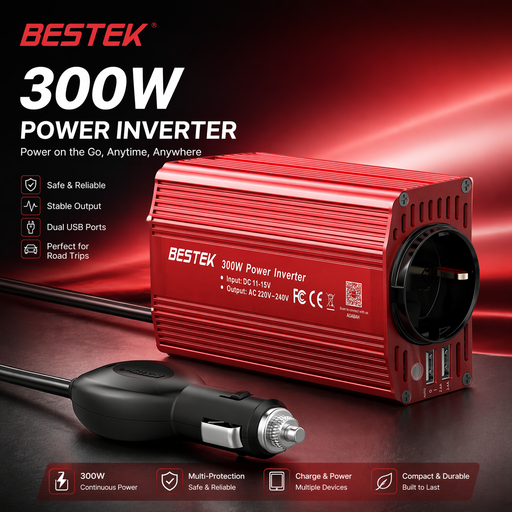
Why We Recommend It This model is designed as a cost-effective, entry-level solution for everyday use and occasional outdoor activities. It combines solid core functionality with comprehensive safety features and a durable design. Its compatibility with EU and French power sockets makes it a versatile option for travel within Europe.
Pros
Who It's For This device is suitable for users who need to power non-sensitive electronics like basic chargers, lamps, or DVD players. It's a practical solution for drivers and campers who need a reliable power source for basic applications.
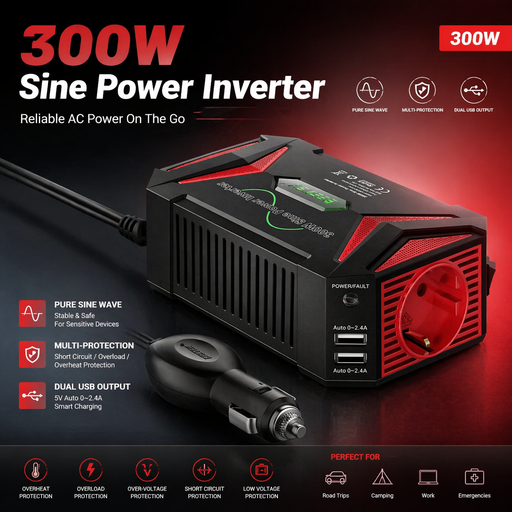
Why We Recommend It This model delivers a pure sine wave, making it the technically superior solution for running sensitive and modern electronics. It provides a stable, interference-free power supply that matches the quality of household utility power. The device is T?V certified, documenting its compliance with relevant safety standards.
Pros
Who It's For This inverter is the right choice for users who depend on an interference-free power supply for high-end electronics. It is ideal for commuters, field professionals, photographers, and discerning campers who want to power their laptops, cameras, or audio systems safely and efficiently.
The 300W models featured here cover a wide range of applications. However, if you require a different power class or specific features, you can find a wider selection of devices in our main Car Plugs category.
1. Can I run any power inverter from the cigarette lighter socket? No. Most cigarette lighter sockets in vehicles are limited by a fuse to a maximum output of 150 to 200 watts. To operate devices that require more power, the inverter must be connected directly to the car battery using battery clamps to avoid overloading the vehicle's electrical system.
2. What is the difference between a pure sine wave and a modified sine wave inverter? A pure sine wave inverter produces a smooth, consistent AC voltage identical to the power from a household wall outlet. It is suitable for all types of devices, especially sensitive electronics. A modified sine wave inverter produces a stepped, approximated wave. It is less expensive but can cause issues like buzzing, overheating, or malfunctions with certain devices (e.g., motors, audio equipment, some power adapters).
3. What power rating (in watts) do I need for my inverter? To determine the required power, check the power consumption (in watts) on the nameplate or power adapter of the device you want to run. Choose an inverter with a continuous power output that is at least 20% higher than your device's rating to ensure a safety margin. Note that devices with electric motors (e.g., refrigerators, pumps) require a significantly higher start-up surge, which the inverter must also be able to handle.