
Lieferung heute & morgen

Qualitätsgarantie

Willkommens-Angebote freischalten: KOSTENLOSE Lieferung | Bis zu 80 % RABATT | Kostenlose 30-Tage-JoyPlus-Testphase
App herunterladen
A weak or dead car battery is more than just a nuisance—it often means stress, lost time, and unexpected costs. The battery becomes a weak point, especially for rarely used vehicles, motorcycles in winter storage, or when temperatures drop. A suitable 12V car battery charger is therefore not a luxury purchase, but a wise investment in your vehicle's reliability. But the market is overwhelming and full of marketing promises. As your Joybuy Product Recommendation Officer, I'm here to help you separate fact from fiction and make an informed decision.
Before we dive into the key features, let's look at the typical pitfalls that often lead to a bad purchase.
To make the right choice, focus on these three objective criteria. They determine whether a charger is right for your needs.
The charging current, measured in Amps (A), determines the charging speed. A simple rule of thumb to calculate the approximate charging time is: Battery Capacity (Ah) / Charging Current (A) = Hours.
Even more important is compatibility. A smart charger automatically detects the battery type (e.g., Lead-Acid, Gel, EFB, AGM, Lithium) and selects the appropriate charging program. Explicitly look for labels like AGM charger or lithium charger if you own these battery types.
Modern chargers operate in multiple stages. They start with an analysis, then charge the battery in phases (bulk charge, absorption charge), and finally switch to maintenance mode. Important features that make a difference:
Instead of presenting a confusing list, we've matched products to specific user groups.
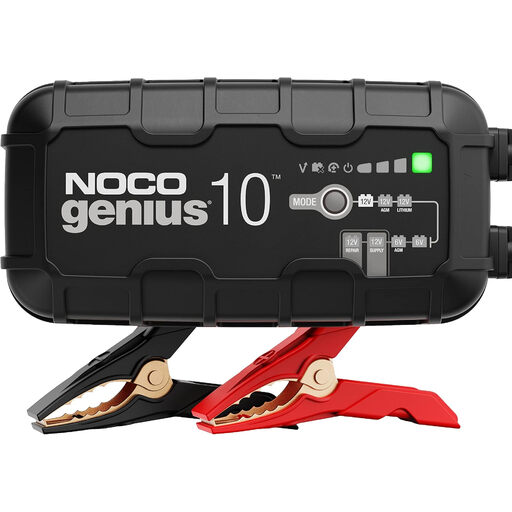
Why This Fits Their Persona: Ideal for drivers of modern cars (including those with start-stop), RVs, or boats who need a powerful and universal solution for charging and maintenance. The 10A charging current is powerful enough for most batteries up to 230 Ah.
This device bypasses the incompatibility trap with its broad support for 6V and 12V batteries, including AGM and Lithium (LiFePO4). It's a true smart charger, not just a simple power source.
Integrated thermal sensor to adapt the charging cycle to the ambient temperature. Features a recovery mode for deeply discharged batteries and a desulfation function.
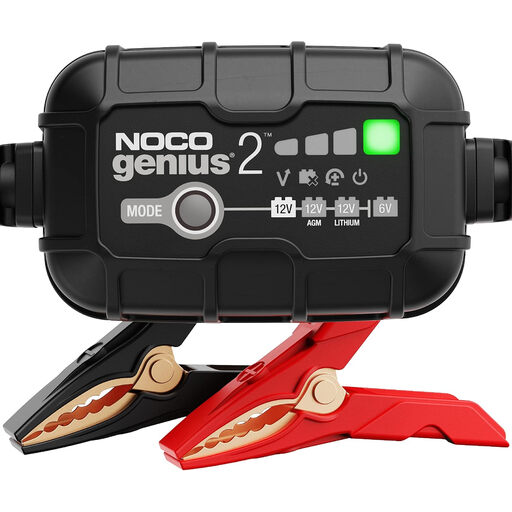
Why This Fits Their Persona: Perfect for owners of motorcycles, classic cars, ATVs, or other seasonal vehicles. The low 2A charging current is ideal for long-term maintenance charging without stressing the battery.
This device is designed as a battery maintainer. It prevents the overcharging that is a common failure point in cheap continuous chargers, which can destroy the battery. It safely switches to a maintenance mode.
Compact and rugged design. Also supports modern battery types and has the same smart safety features as the larger models, including temperature compensation.
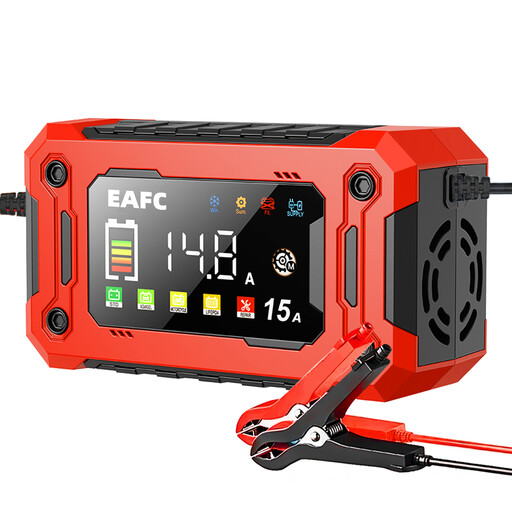
Why This Fits Their Persona: A functional choice for users who need a powerful charger for common 12V lead-acid batteries (including AGM) and can do without premium brand features.
Avoids the 'miracle repair' trap by offering a clear function: charging batteries. It has a designated repair mode, which should be understood as a simple pulse charging function for standard batteries.
High 15A charging current for fast charging. The large digital display clearly shows the current mode (e.g., Winter/Summer) and charging status, which simplifies operation.
A specialized charger can be particularly useful for modern vehicles and special requirements. We have compiled a selection of products designed for the demanding charging profiles of lithium batteries.
1. How long does it take to fully charge a car battery? The charging time depends on the battery's capacity (in Ah) and the charger's current (in A). As a rough estimate, divide the capacity by the charging current (e.g., 60 Ah battery / 10 A charger = 6 hours). Add an extra 1-2 hours for the final absorption and equalization charge that a smart charger performs.
2. Can I leave a charger permanently connected to the battery? Yes, but only if it is a smart charger with an automatic maintenance mode. These devices monitor the state of charge and only deliver small pulses of current as needed to keep the battery at 100% without overcharging it. This is ideal for winter storage of motorcycles or classic cars. Cheap, unregulated chargers should never be left permanently connected.
3. What is the difference between a battery charger and a jump starter? A battery charger is designed to slowly and gently charge and maintain a battery over several hours. A jump starter is essentially a power bank with a very high short-term current output. It delivers enough energy for a few seconds to start the engine when the battery is too weak. However, it does not recharge the battery. They are two tools for different jobs.