
Lieferung heute & morgen

Qualitätsgarantie

Willkommens-Angebote freischalten: KOSTENLOSE Lieferung | Bis zu 80 % RABATT | Kostenlose 30-Tage-JoyPlus-Testphase
App herunterladen
Reliable cooling is essential when you're on the road, whether for camping, long car journeys, or in a truck. A 12V compressor cooler offers a high-performance solution that far exceeds the capabilities of simple electric cool boxes. However, the market is confusing and full of technical pitfalls that can quickly lead to a costly mistake. As your Joybuy Product Recommendation Officer, I'll help you identify the crucial features and make an informed decision.
Many buyers focus on superficial features and overlook critical weaknesses. You should absolutely avoid these three mistakes:
The Technology Mistake: Thermoelectric Instead of Compressor Many budget-friendly models advertised as an "electric car cooler" use Peltier technology. This can often only lower the internal temperature by 15–20 °C below the ambient temperature. In a hot car on a summer day, this means the cooler will barely get below 20°C—too warm for most foods. A true portable compressor cooler works like a household refrigerator and reliably reaches temperatures down to freezing, regardless of the outside temperature.
The Capacity Dilemma: Gross vs. Usable Volume A 40-litre capacity sounds generous, but the built-in technology often takes up a significant portion of the interior space. An awkwardly placed compressor unit can make it impossible to store 1.5-litre bottles upright. Therefore, pay attention not only to the total volume but also to the usable internal dimensions and layout.
The Battery Nightmare: High Consumption Without a Protection Feature Nothing is more frustrating than a dead car battery in the morning. Cheaper models often lack an effective battery monitor. Without this protection feature, the cooler can silently deep-discharge the vehicle's battery, leaving you stranded at your campsite. A multi-stage battery protection system is therefore not a luxury, but a necessity.
To avoid the pitfalls mentioned above, you should check three core technical aspects before buying. These define the performance and practicality of your future cooler.
The crucial difference lies in the technology. Only a compressor cooler can function as a fully-fledged portable refrigerator or even a car freezer box.
Flexibility in power supply is crucial for versatile use.
Practicality depends heavily on the interior space and smart features.
Based on the criteria above, we have identified some models suitable for specific user groups.
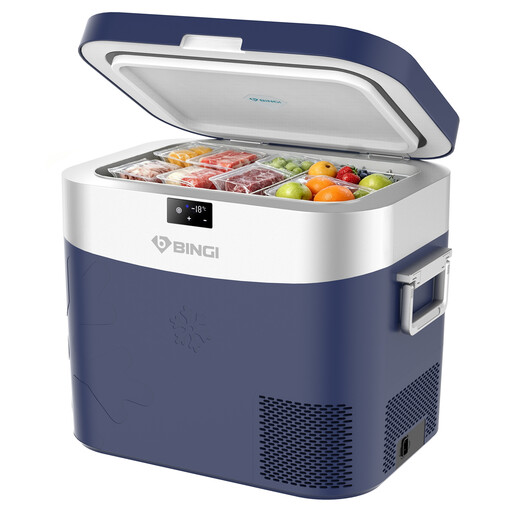
Why this model is a good fit: With 22 litres, it offers enough space for solo travellers or weekend trips. It focuses on the core function—reliable compressor cooling—making it a cost-effective entry point into the world of true portable refrigerators.
This model uses true compressor technology, thus bypassing the performance trap of thermoelectric boxes. Its compact, clean design avoids the problem of wasted space.
Offers the core performance of a compressor cooler in a very compact and accessible format for 12/24V operation.
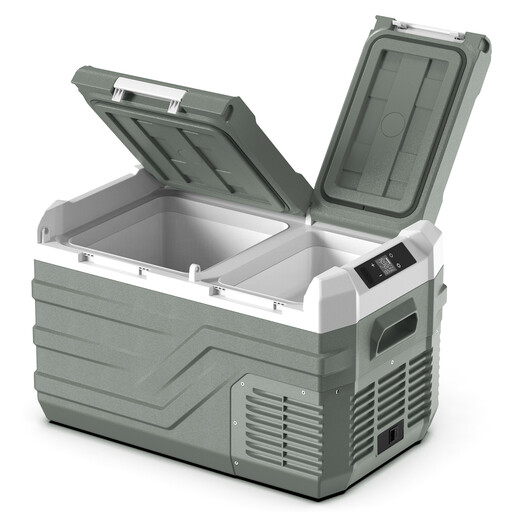
Why this model is a good fit: The dual-zone function is ideal for campers who want to cool drinks and keep food frozen at the same time. At 23 litres, it's compact but extremely flexible thanks to its two zones.
The independent dual-zone control solves the problem of impractical interior layouts. The integrated three-stage battery protection reliably prevents deep discharge of the vehicle battery.
Simultaneous cooling and freezing in two separately controlled zones. Supports 12/24V DC and 100-240V AC for maximum operational flexibility.

Why this model is a good fit: With a 55-litre capacity, this cooler offers enough space for a family's weekly groceries. The app control, ECO mode, and integrated wheels provide maximum convenience for long holidays or use in an RV.
It addresses the capacity problem with a generous and highly usable interior. The ECO mode and app control allow for efficient energy management, preventing the battery trap.
Large volume combined with modern convenience features like app control and transport wheels. Flexible thanks to 12/24V and AC connectivity.
We have compiled a complete, up-to-date list of products that fully meet these strict selection criteria and all relevant safety regulations.
How quiet is a "quiet" compressor cooler, really? Modern compressor coolers advertised as quiet operate at a noise level of around 45 decibels (dB). This is comparable to the soft hum of a modern household refrigerator or the ambient noise in a library. As a rule, this is not perceived as disruptive inside a camper or a truck cabin.
How long can a 12V compressor cooler run on a car battery? The runtime depends on many factors: car battery capacity (in Ah), set temperature, ambient temperature, the cooler's insulation, and the compressor's efficiency. As a rough guide, an efficient cooler in ECO mode can run for 24 to 48 hours on a healthy 60 Ah battery. The integrated battery monitor is crucial here to prevent damaging deep discharge.
Do I need a second battery in my RV to run a compressor cooler? For longer periods when stationary without the engine running or a shore power connection (off-grid camping), a second leisure battery (house battery) is highly recommended. For shorter trips where the vehicle is driven daily, the starter battery may be sufficient, provided the cooler has a reliably set battery monitor.