
Lieferung heute & morgen

Qualitätsgarantie

Willkommens-Angebote freischalten: KOSTENLOSE Lieferung | Bis zu 80 % RABATT | Kostenlose 30-Tage-JoyPlus-Testphase
App herunterladen
A 135x200 cm down duvet fits many single beds in Germany. Choosing one may seem straightforward at first, but terms such as “all-season”, “hypoallergenic” or “extra warm” are only helpful when the filling, weight, cover and certifications are clearly explained. If you focus only on a low price or a high filling weight, you could end up with a duvet that isn’t suited to the temperature of your bedroom.
Filling weight is often given in grams per square metre. A summer duvet at 200 g/m² is generally lighter than a winter duvet at 450 g/m². However, warmth also depends on the proportion of down and feathers, the stitching and the cover.
More filling may be useful in a bedroom that isn’t heated much, but could be too warm for a hot room or for someone who tends to feel warm. The key is to choose a combination of filling weight and warmth that suits your personal needs.
A product described as a hypoallergenic duvet isn’t automatically suitable for every allergy. Check what the claim refers to: the cover, the filling or a particular treatment. Claims about house dust mites also shouldn’t be taken as a guarantee of medical effectiveness.
A tightly woven cotton cover can make it harder for particles to get through. This is a product feature, not a promise of a cure or protection.
Labels such as OEKO-TEX-certified duvet or RDS-certified down duvet should be clearly linked to the model being sold in the product description. Depending on the certification, OEKO-TEX relates to the testing of specific materials and harmful substances. RDS is a standard covering animal welfare and the down and feather supply chain.
A certification name alone isn’t a substitute for checking the product description, specifications and seller information. If anything is unclear, ask the seller before buying.
The standard 135x200 cm size fits a single bed and standard German duvet covers in this size. Before ordering, check:
A duvet with different dimensions may slip out of its cover or sit unevenly at the sides.
A feather and down duvet contains different proportions of each. Down is softer and has a three-dimensional structure, while feathers have a firm quill and can give the filling more structure. The proportions affect the weight, feel and warmth.
The DOWNFOCUS duvet’s product description states that it contains 90% feathers and 10% down. This is more useful to buyers than a general phrase such as “down comfort”, as it describes the actual proportions of the materials.
A 2-in-1 all-season duvet may consist of two parts that can be used separately. This offers more flexibility than using one thick duvet all year round. According to the product details, the DOWNFOCUS version combines one part at 200 g/m² for warmer nights and another at 450 g/m² for the cooler months.
Check how the two parts are joined and whether they stay securely connected in everyday use. For a washable duvet, the care label, washing temperature, drying instructions and your washing machine’s maximum capacity are also important. If this information isn’t available, don’t assume the duvet is washable just because of its name.
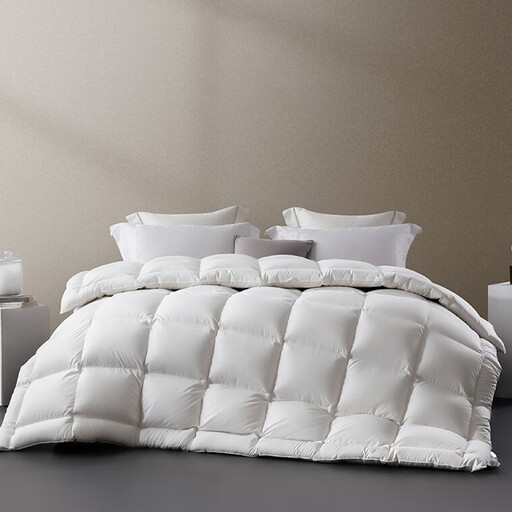
Why this product suits this profile: The stated size matches the dimensions needed for a single bed. This model may appeal to buyers looking for a feather and down duvet for different seasons, who want to compare price, size and product details before buying.
The size is stated clearly in the product name. Check the listing for further details about washing, certifications and the exact filling proportions before buying.
135x200 cm; according to the product name, designed for summer, autumn and winter.
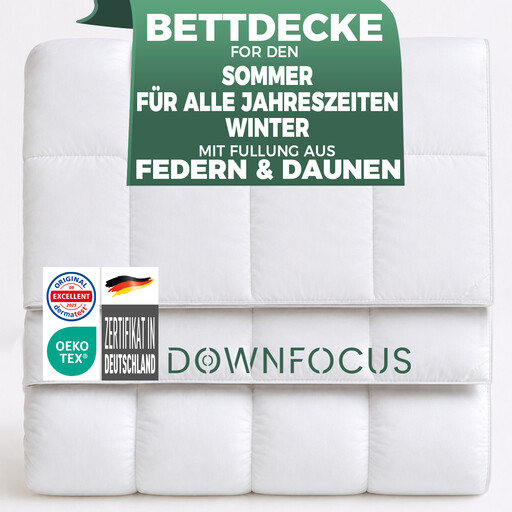
Why this product suits this profile: The two warmth options are designed for buyers who want to adapt their duvet to the room temperature and the season.
The product description specifies 200 g/m² and 450 g/m², as well as the size 135x200 cm. It also lists OEKO-TEX, RDS and a tightly woven cotton cover; check the listing for details of the certifications.
Two stated warmth options; 90% feathers and 10% down according to the product details; references to OEKO-TEX and RDS certification.
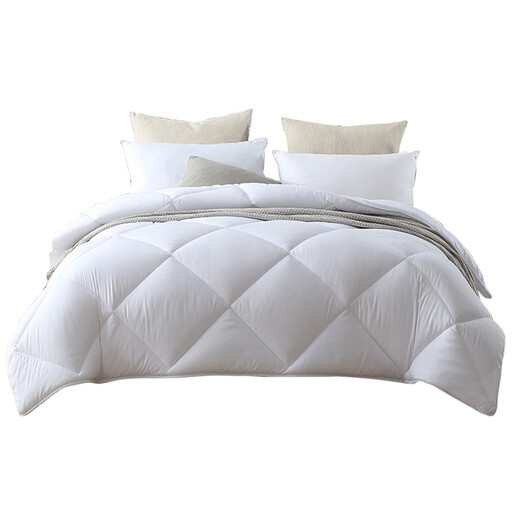
Why this product suits this profile: This larger size is designed for double beds or wider sleeping spaces. It doesn’t match the dimensions of a 135x200 cm single bed, so choose it only if you specifically need this larger size.
The clear size information helps distinguish it from a 135x200 cm duvet. Check the measurements to make sure it will fit your bed and existing cover.
Generous 220x260 cm size; described in the product name as breathable and suitable for year-round use.
How long a down duvet lasts depends on its filling, cover, use and care. Always follow the sewn-in care label. Common mistakes include washing at too high a temperature, not drying the duvet thoroughly and keeping it vacuum-packed for long periods.
For everyday care:
A lighter option, such as a summer duvet at 200 g/m², may suit a warm bedroom. How well it works will depend on the room temperature, cover material and how warm you tend to feel. A 2-in-1 version lets you use just the lighter part.
A winter duvet at 450 g/m² contains more filling than a lightweight summer duvet, so it is generally designed for cooler conditions. However, warmth is also affected by the feather-to-down ratio, stitching and cover. The filling weight alone isn’t enough to give a definitive warmth rating.
Check the specific details of the cover and filling, as well as any clearly explained testing or certification claims. A hypoallergenic duvet may be worth considering for certain needs, but it isn’t a general medical guarantee. If you have a known allergy, follow the advice of a qualified medical professional.