
Lieferung heute & morgen

Qualitätsgarantie

Willkommens-Angebote freischalten: KOSTENLOSE Lieferung | Bis zu 80 % RABATT | Kostenlose 30-Tage-JoyPlus-Testphase
App herunterladen
Choosing the first proper bicycle is a significant milestone for any child. A 14-inch kids' bike is often the first choice when transitioning from a balance bike or tricycle. However, the market can be overwhelming, and well-intentioned advice doesn't always lead to the right purchase. Many parents invest in a model that later proves to be impractical, too heavy, or unsafe. This guide will help you avoid common pitfalls and make an informed decision.
The three most common mistakes when buying a kids' bike are:
To find the perfect first bike for your child, you should focus on objective criteria rather than marketing promises. The following three points are crucial for a safe and enjoyable experience.
The "inch" size of a bike refers to the diameter of the wheels, not the frame size. The most important measurement for a proper fit is your child's inside leg measurement (inseam).
How to measure correctly: Have your child stand with their back against a wall, without shoes. Place a book vertically between their legs, up to the crotch. The distance from the floor to the top edge of the book is the inseam. For a 14-inch kids' bike, the inseam should typically be between 40 cm and 50 cm (approx. 15.5" to 19.5"). The saddle should be adjusted so the child can comfortably touch the ground with the balls of both feet while seated.
Safety is the top priority. Look for the following features:
The frame material has a direct impact on the bike's total weight.
Instead of making a one-size-fits-all recommendation, we have selected models tailored to the different needs and priorities of families.
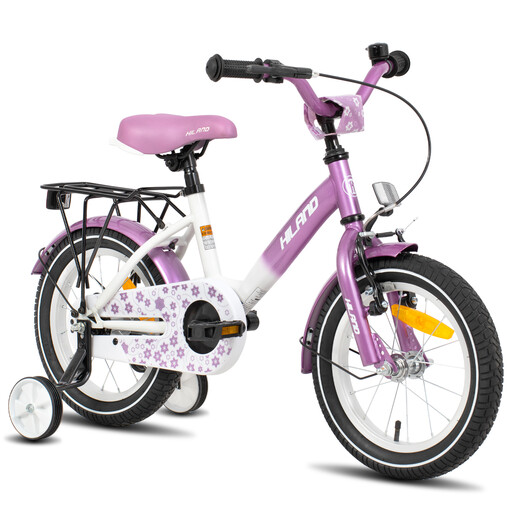
Why it's a great fit: This bike is aimed at parents who prioritise safety and ease of use. It combines an intuitive coaster brake with an additional front hand brake and comes with training wheels.
The dual braking system with a coaster brake prevents new riders from being overwhelmed by hand-only brakes. The Hi-Ten steel frame is durable, while the design is tailored to the needs of beginners.
According to the manufacturer, the bike arrives 90% pre-assembled, allowing for final assembly in about 20 minutes. Training wheels and tools are included in the box.
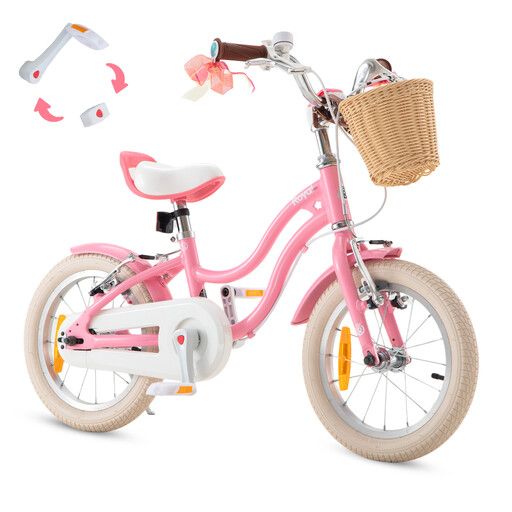
Why it's a great fit: Ideal for families who value low weight and an appealing design. The lightweight aluminium frame and low step-through design make it especially easy for girls to handle.
With a net weight of just 9.2 kg (20.3 lbs, manufacturer's specification), it specifically avoids the pitfall of a bike that is too heavy. The child can control, lift, and push it more easily.
The aluminium alloy frame is not only lightweight but also rust-resistant. The low step-through design makes it easy to get on and off safely, even while wearing a dress or skirt.
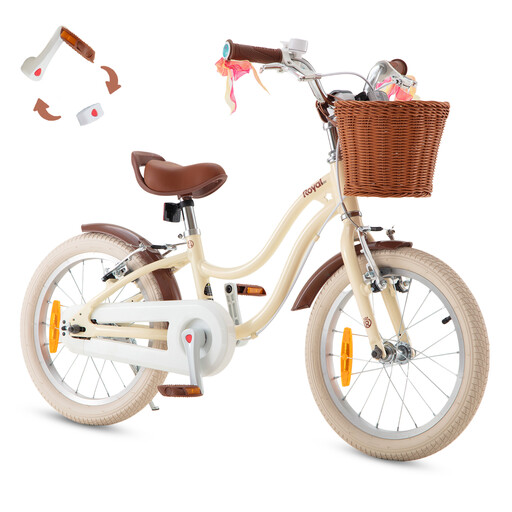
Why it's a great fit: This bike is designed for children who are still making the transition from a balance bike to pedalling. It converts from a balance bike to a pedal bike, growing with the child's abilities.
It prevents the need to buy two separate vehicles (a balance bike and a pedal bike). The child can first practise their balance in balance bike mode and later learn to pedal on the same, familiar bike.
According to RoyalBaby, the bike features a patented quick-release crank system that allows for a tool-free switch between modes. The lightweight aluminium frame supports learning in both phases.
We have compiled a comprehensive, up-to-date list of products that meet these strict selection criteria and safety standards.
A 14-inch bike is typically suitable for children aged 3 to 5. However, more important than age are height (approx. 95–110 cm or 37"-43") and inseam (approx. 40–50 cm or 15.5"-19.5"). Measure your child's inseam to ensure they can safely reach the ground with their feet.
Training wheels are not strictly necessary, but they can give many children confidence at the start. They help them get used to pedalling and steering. As soon as the child gains confidence, the training wheels should be removed so they can practise their balance. An alternative is to start with a balance bike, which trains the sense of balance from the very beginning.
Most kids' bikes are delivered partially assembled. Models like the Hiland kids' bike arrive 90% pre-assembled, according to the manufacturer. Final assembly is often limited to attaching the handlebars, saddle, pedals, and training wheels. The necessary tools are often included, and the process can usually be completed in 20 to 30 minutes.