
Lieferung heute & morgen

Qualitätsgarantie
App herunterladen
Kategorien
Choosing a child's first proper bicycle is a decision that should be based on objective criteria. The wheel size, measured in inches, is the most critical parameter for ensuring safety and a successful learning experience. A 14-inch kids' bike is typically designed for children aged approximately three to six years. This guide analyses the technical specifications to consider when selecting the right model.
The decision for a child's first bike should be based on an analysis of size, materials, braking system, and safety features.
The inch measurement refers to the wheel diameter, but it's only an indicator. The crucial measurement is the child's inseam. With the saddle at its lowest setting, the child should be able to touch the ground flat-footed with both feet. This provides a sense of security and makes stopping easier.
Measure your child's inseam (from crotch to floor) and compare it with the manufacturer's specifications for the minimum seat height.
Most kids' bikes in this segment use a Hi-Ten steel (High-Tensile Steel) frame. This material is known for its high robustness and durability, making it resilient to the stresses of the learning process. A low step-through frame makes it easier for children to get on and off and minimises the risk of injury during a sudden stop.
For new riders, a combination of two independent braking systems has proven to be effective.
A bike that integrates both systems offers a redundant safety feature and supports the learning process.
Additional components increase the bike's safety and utility.
The following models from the HILAND brand feature technical specifications tailored to their target audience. This selection is based on the manufacturer's product specifications.
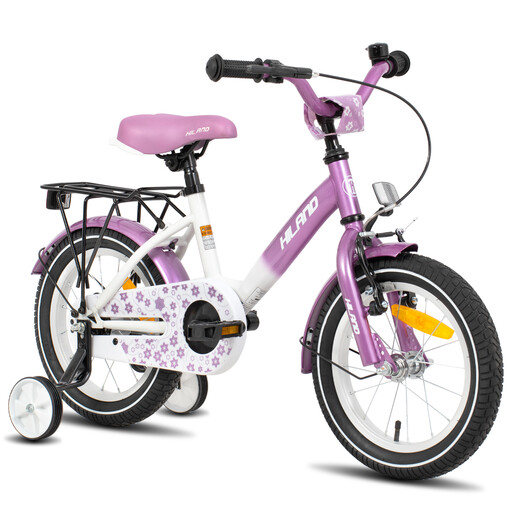
Why We Recommend This Product HILAND's 14-inch model is designed for the core target group of 3 to 6-year-olds. It combines a robust Hi-Ten steel frame with a low step-through design for easy mounting. The dual braking system, featuring a front V-brake and a rear coaster brake, provides reliable stopping power for new riders. The wide 1.95-inch tyres contribute to a stable ride.
Advantages
Who It's For This model is designed for children with a height between 90 cm and 125 cm, corresponding to the typical age for a bike for 3-6 year olds. It is a suitable choice for parents looking for a fully equipped beginner bike for their child.
For children who are either younger and smaller or already older and taller, the Starry series offers suitable alternatives.
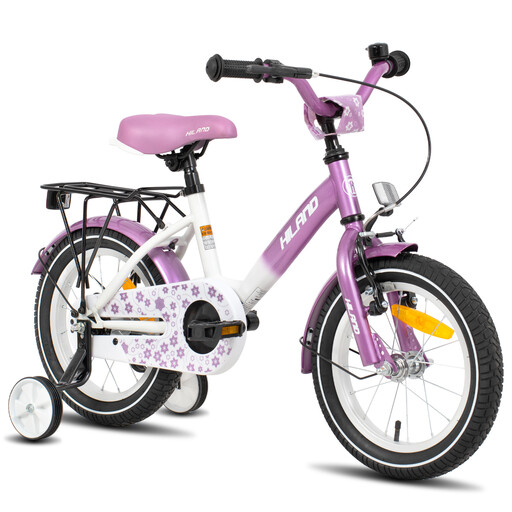
Why We Recommend This Product The 12-inch version is structurally identical to the 14-inch model but is adapted to the ergonomics of smaller children (2–4 years). With a recommended height of 80 cm to 105 cm, it is a suitable first bike after a balance bike. It also features the dual braking system and safety-relevant components.
Who It's For Ideal for toddlers aged 2 to 4 who are making their first attempts at pedalling. The purple girls' bike design appeals to a broad audience.
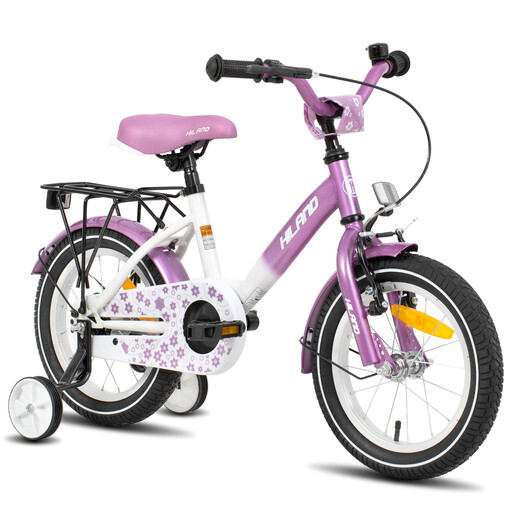
Why We Recommend This Product The 16-inch model is aimed at children who have outgrown the 14-inch bike or are starting directly with this size due to their height. It retains the proven safety features like the Hi-Ten steel frame and the dual braking system. According to the manufacturer, this model comes with a kickstand instead of training wheels, indicating it is intended for children who can already balance.
Who It's For Designed for children aged 4 to 7 with a height of 105 cm to 135 cm. It represents the next logical step after a smaller beginner bike.
Selecting the right bike is specific to a child's developmental stage and physical attributes. If you are looking for alternative mobility solutions like balance bikes or other sports equipment, you can find a wider selection in our Running Gear category.
1. When is a 14-inch kids' bike the right choice? A 14-inch kids' bike is suitable when the child's height (approx. 90–125 cm) and inseam allow them to safely reach the ground with both feet at the lowest saddle setting. This is typically the case for children aged 3 to 6.
2. Does a beginner's bike need training wheels? Training wheels can make learning easier by taking care of the balancing aspect. However, it is often recommended to first let children learn to balance on a balance bike and then transition directly to a bicycle without training wheels. The HILAND kids' bike models presented here in 12 and 14-inch sizes include training wheels that can be attached or removed as needed.
3. What is the difference between a 12-inch and a 14-inch bike? The main difference is the frame size and wheel diameter. A 12-inch bike is designed for smaller children (approx. 80–105 cm), while a 14-inch bike fits slightly taller children (approx. 90–125 cm). The choice should always be based on the child's current height and inseam, not on age alone.