
Lieferung heute & morgen

Qualitätsgarantie

Willkommens-Angebote freischalten: KOSTENLOSE Lieferung | Bis zu 80 % RABATT | Kostenlose 30-Tage-JoyPlus-Testphase
App herunterladen
For professionals and digital nomads, a dead laptop battery is more than just an annoyance—it's lost productivity. A high-performance 140W laptop power bank seems like the logical solution. However, the market is filled with technical promises that often fall short in practice. Many users invest in an expensive device only to find it barely charges their laptop, or does so very slowly.
This guide, created by the Joybuy Product Recommendation Officer, reveals the three most common pitfalls to avoid when buying and highlights the key technical details you need to look for to make an informed decision.
Before you make a purchase, you should be aware of the typical marketing traps that lead to disappointment.
To avoid these pitfalls, focus on three verifiable technical specifications.
The 140W rating refers to the maximum power a single port can deliver. This is critical for power-hungry devices like a MacBook Pro or gaming handhelds. Ensure the power bank explicitly supports the PD 3.1 standard. This is the only way to guarantee that the full charging power reaches your device. Also, check the total output when charging multiple devices simultaneously, as the power will be split among the different ports.
The more important metric than milliampere-hours (mAh) is watt-hours (Wh). It is calculated by multiplying the capacity (in Ah) by the nominal voltage (in V). For example, a 25000mAh power bank with a typical cell voltage of 3.6V has 90 Wh (25 Ah * 3.6 V).
A portable laptop charger should ideally be under 100 Wh to ensure maximum travel flexibility.
Modern power banks offer more than just energy. Look for the following features:
Here are three recommendations tailored to specific user profiles that meet the criteria mentioned above.
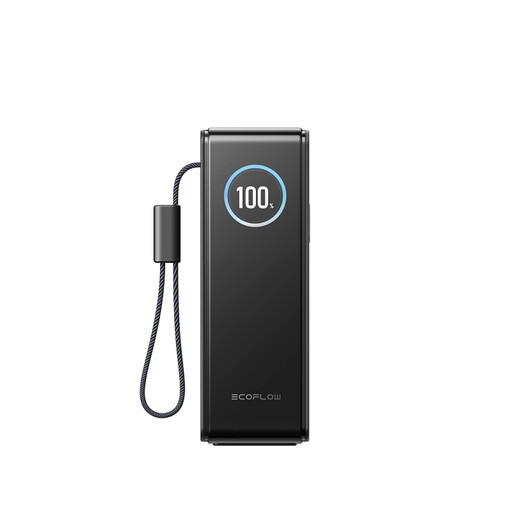
Why it's a match: Perfect for people who are constantly on the move. The integrated 100W USB-C cables eliminate the need to carry separate ones, and the 90 Wh capacity is optimized for air travel.
The capacity is clearly declared at 90 Wh, making it airline-approved. The built-in cables ensure a compatible high-performance cable is always available, solving the protocol dilemma.
High total output of 170W for charging multiple devices and the convenience of two integrated 100W USB-C cables.
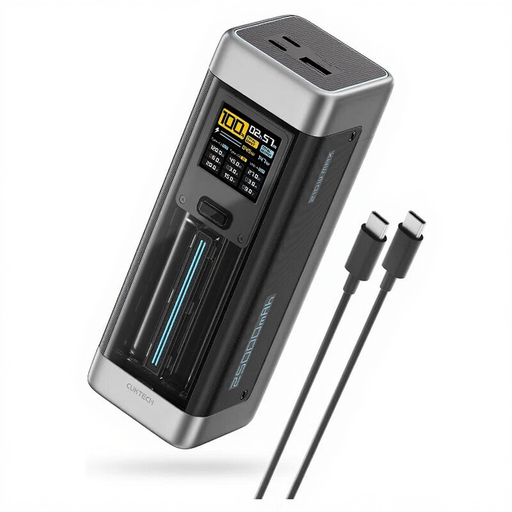
Why it's a match: For users who demand maximum performance and control. Its support for the PD 3.1 standard with 140W on a single port is perfect for the latest laptops, and the color display provides detailed, real-time performance data.
This model solves the protocol dilemma with explicit PD 3.1 support, delivering a true 140W. The display provides transparency on actual power output and charging status.
True 140W single-port charging with PD 3.1 and a detailed color display for complete monitoring of the charging process.
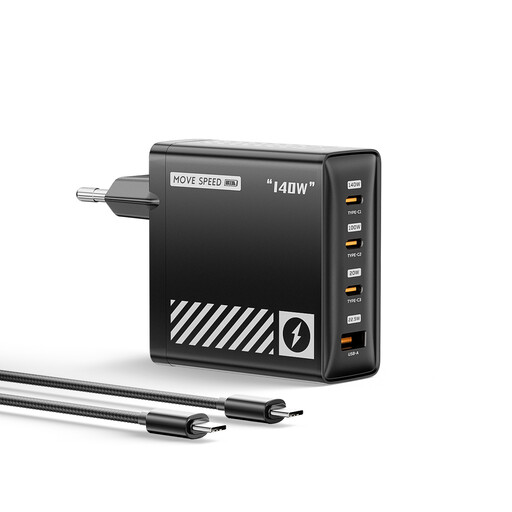
Why it's a match: For anyone looking for a stationary, high-performance charging solution. This GaN wall charger replaces multiple chargers, powering a laptop, tablet, and smartphone simultaneously at maximum speed from your desk.
As a wall charger, the pitfalls of capacity and airline approval don't apply. It focuses on a single task: delivering maximum, stable charging power for multiple devices in a fixed location.
Extremely compact design thanks to GaN technology. A single device with 4 ports and 140W of total power ensures a clutter-free workspace.
We've compiled a complete, up-to-date list of products that fully meet these strict selection criteria and safety regulations.
1. How many times can a 25000mAh power bank charge my MacBook Pro? This depends on your MacBook Pro model and the real-world efficiency of the power bank. A 14-inch MacBook Pro has a battery of about 70 Wh. A 25,000mAh power bank (approx. 90 Wh) with a realistic efficiency of 65-70% will deliver a net output of about 58-63 Wh. This is enough to charge the laptop battery from 0% to roughly 80-90%. A full charge is usually not possible.
2. Is every 140W power bank suitable for air travel? No. The charging power (watts) should not be confused with the capacity (watt-hours). The sole factor for airline approval is the capacity in Wh. Most high-power models with a 25000mAh capacity are intentionally designed with around 90 Wh to stay under the 100 Wh limit, making them airline-approved. Always check the Wh value printed on the device's casing before your flight.
3. Do I need a special cable for a 140W USB C power bank? Yes, this is crucial. To utilize the full 140W charging power via PD 3.1, you need a USB-C cable rated for Extended Power Range (EPR) up to 240W. These cables contain a special E-Marker chip that negotiates the high power delivery. Using a standard 100W cable will limit the charging speed to a maximum of 100W.