
Lieferung heute & morgen

Qualitätsgarantie

Willkommens-Angebote freischalten: KOSTENLOSE Lieferung | Bis zu 80 % RABATT | Kostenlose 30-Tage-JoyPlus-Testphase
App herunterladen
The search for a powerful 140W power bank is often clouded by technical jargon and marketing promises. Anyone needing a portable charger for a MacBook Pro, a drone, or other demanding devices faces the challenge of making the right choice. However, not every model that advertises high performance delivers on its promises in practice. Certain pitfalls frequently lead to disappointment and unnecessary expenses.
This guide highlights the crucial criteria you should check before buying and shows you how to distinguish exaggerated advertising claims from genuine performance features.
Before you make a decision, it's important to be aware of three common problems that can occur with powerful power banks:
To avoid a bad buy, you should focus on three core technical parameters. These determine the actual performance and usability of your power bank.
Charging power, measured in watts (W), indicates how quickly a power bank can charge a device. For power users, a 140W power bank for laptops is ideal. However, ensure that this power is delivered via a single port and that the device supports the PD 3.1 standard. Only this combination guarantees that a 16" MacBook Pro or a comparable device will charge at the maximum speed intended by the manufacturer. A power bank with a display that shows the output power in real-time offers additional transparency and control.
Capacity, specified in milliampere-hours (mAh), determines how many times you can charge your devices. A 20000mAhUSB C power bank offers a good compromise between energy reserve and portability. For longer trips or powering multiple devices, a 25,000 mAh model can be a sensible choice.
Important for air travel: Most airlines limit battery capacity in carry-on luggage to 100 watt-hours (Wh).
Both capacities are typically below the limit and are therefore airline-compliant. Nevertheless, always check your airline's specific regulations before you travel.
A modern fast charger should have multiple ports to ensure flexibility. A typical configuration for a high-performance power bank includes two USB-C ports and one USB-A port. This allows for the simultaneous charging of a laptop, smartphone, and headphones. Pay attention to power distribution: when multiple devices are connected at the same time, the total output is split among the ports. Product descriptions should detail how many watts each port delivers in various charging scenarios.
Choosing the right model depends heavily on your individual usage patterns. Here are three options tailored to specific profiles.
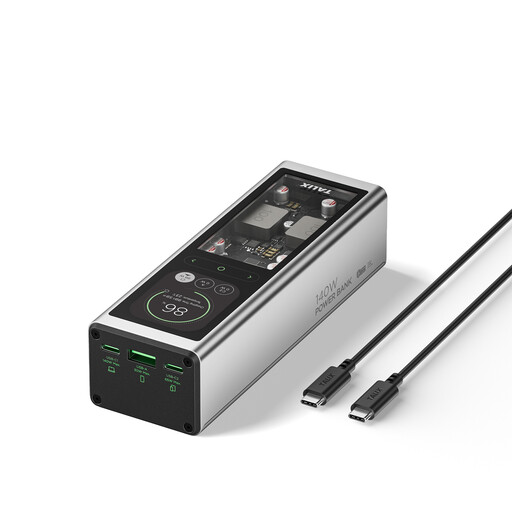
Why this model is a fit: Ideal for content creators and digital nomads who need maximum power for high-end laptops, drones, and cameras. The combination of 140W output, PD 3.1, and 20,000mAh capacity covers the energy needs for a full workday on the go.
This model explicitly specifies a 140W output via a single USB-C port and supports the PD 3.1 standard. The digital display shows performance data in real-time, creating transparency instead of relying on misleading advertising.
Full 140W charging power for the most demanding devices and an informative display to monitor all charging processes.
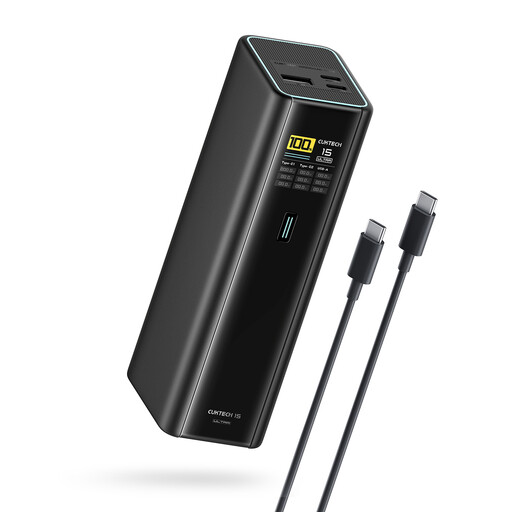
Why this model is a fit: Perfect for commuters and business travellers who need a reliable and powerful charging solution that is still portable. It offers high charging power for laptops in an airline-compliant, 20,000mAh format.
This model clearly states that it supports PD 3.1 fast charging. The 20,000 mAh capacity is a realistic and established standard for this performance class, avoiding the pitfall of unrealistic capacity claims.
A balanced combination of very high 140W power and a practical 20,000 mAh capacity.
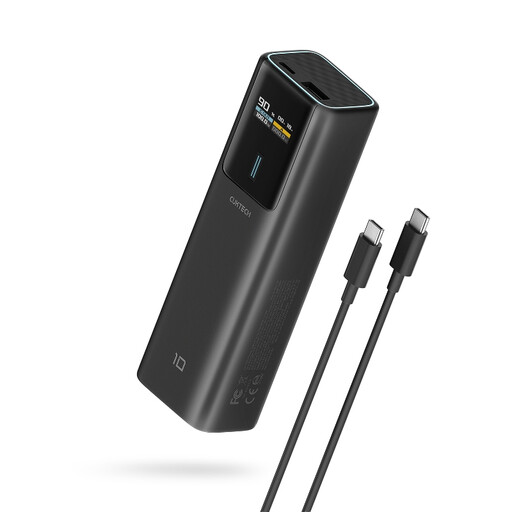
Why this model is a fit: For users who occasionally charge a laptop but primarily value compactness and low weight. 100W of power is sufficient for most USB-C laptops, and the 10,000mAh format is ideal for a daily bag.
This model makes no exaggerated promises. It delivers a clearly defined 100W output with a compact 10,000 mAh capacity. The realistic power-to-size ratio and the TFT display build trust.
Very high power (100W) in an exceptionally compact and lightweight package, ideal for daily transport.
We have compiled a complete, up-to-date list of products that fully meet these strict selection criteria and safety regulations.
No. Modern chargers and devices communicate via protocols like USB Power Delivery (PD). Your smartphone will only request the amount of power it can safely handle. The power bank automatically adjusts its output to the connected device and will not overload it with 140 watts.
This depends on the battery capacity of your MacBook model. For example, a MacBook Air (M2) has a battery of about 52.6 Wh. A 20,000 mAh power bank (approx. 74 Wh), after accounting for energy loss during transfer (around 15–25%), can provide about one full charge. It's excellent for significantly extending your runtime or completely recharging the device once.
Yes, in most cases, this is permitted. The International Air Transport Association (IATA) and most airlines limit batteries in carry-on luggage to 100 watt-hours (Wh). A 20,000 mAh power bank (~74 Wh) and even a 25,000 mAh power bank (~92.5 Wh) fall below this limit. They must be transported in your carry-on luggage, not in checked baggage. However, it is always advisable to check with your specific airline before flying.