
Lieferung heute & morgen

Qualitätsgarantie

Willkommens-Angebote freischalten: KOSTENLOSE Lieferung | Bis zu 80 % RABATT | Kostenlose 30-Tage-JoyPlus-Testphase
App herunterladen
A 140x200 cm hybrid mattress usually combines springs with foam or comfort layers. This allows it to bring together pressure-relieving support, ventilation and a softer sleeping surface. For couples, adults and back, side and front sleepers, this size saves space while remaining practical for everyday use.
However, buying one can often lead to unrealistic expectations. Terms such as “ergonomic”, “7 zones” or “breathable” do not automatically describe a sleeping feel that suits you. The actual construction, firmness rating and conditions for delivery, expansion and care are what really matter.
A 5-zone mattress or 7-zone mattress divides the sleeping surface into areas with different properties. This can make the construction easier to understand, but it does not replace considering your own sleeping position. Side and front sleepers often need a different degree of sink than back sleepers. Body weight, preferred firmness and the type of slatted base used also affect the sleeping feel.
The terms H2 and H3 are not completely standardised across the market. An H2 H3 mattress may have two different sides or refer to a construction with balanced firmness. Buyers should therefore consider the manufacturer’s description, maximum load capacity and mattress height together. “Medium-firm” is also a guide rather than a standardised measurement for every model.
A mattress in a box is delivered vacuum-packed and rolled. This makes it easier to transport through narrow hallways, stairwells and lifts. After opening, however, the core needs time to reach its intended shape. Depending on the product, the recommended period may be 24 to 48 hours or up to 72 hours. During this time, the mattress should be left in a well-ventilated position and used only in accordance with the manufacturer’s instructions.
In a 140x200 cm hybrid mattress, the core usually consists of pocket springs and a foam layer. A 140x200 pocket sprung mattress contains individually wrapped springs that can react independently. This supports targeted pressure relief and can reduce the transfer of movement between two people.
Foam mattresses, on the other hand, work without springs. They can provide a more even, quieter sleeping surface, but differ in terms of ventilation, responsiveness and firmness. A mattress with motion isolation is therefore an interesting option for couples. Claims such as “quiet” or “motion absorption” should relate to the specific construction rather than simply being general marketing statements.
Mattress height affects the overall setup, getting in and out of bed and compatibility with the bed frame. A reinforced edge can provide additional stability when sitting on the edge of the bed and help preserve the usable surface right up to the edge. A mattress with reinforced edges is therefore a practical option, particularly for couples or beds where getting in and out happens frequently.
You should also check the permitted load, the mattress’s own weight and the dimensions of the packaging. Especially in a narrow stairwell, the final size of 140 x 200 cm is not the only relevant factor—the size of the box matters too.
A breathable mattress can allow air to circulate through the springs, foam structure and cover. This does not automatically guarantee a particular room temperature or a dry sleeping climate. Look for a removable cover, the permitted washing temperature and cleaning instructions. The mattress core itself must generally not be washed or soaked.
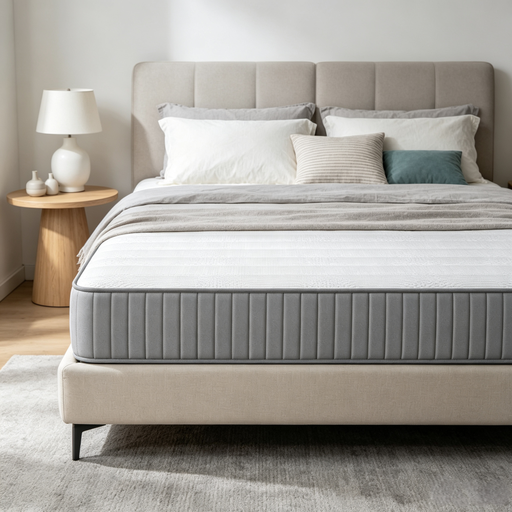
Why this product suits the profile: The 24 cm-high hybrid construction combines 5-zone pocket springs with H2/H3 support, making it suitable for buyers looking for balanced firmness. Rolled delivery makes it easier to transport into homes with narrow access routes.
The product details specify the zone construction, firmness range, reinforced edges and cover material instead of relying solely on a general promise of comfort.
5-zone pocket springs, H2/H3 design, reinforced edge and knitted, breathable cover.
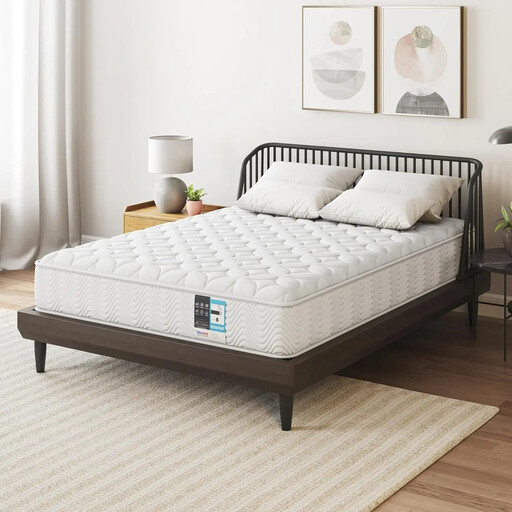
Why this product suits the profile: This 23 cm-high model is designed for people who prefer an H3-firm pocket sprung mattress with 7 zones. The stated load limit of 120 kg and jacquard polyester cover make it easier to assess the product objectively.
The manufacturer’s details specify the load limit, an expansion time of 24 to 48 hours and clear care instructions. This makes it easier to plan how and when the mattress can be used.
7-zone pocket spring core, H3 firmness, 23 cm height, plus details on motion absorption and ventilation.
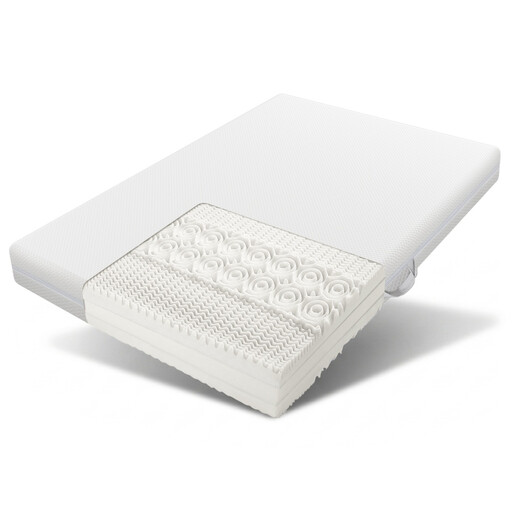
Why this product suits the profile: This 20 cm-high foam mattress has two sleeping surfaces with H2 and H3 firmness. It is suitable for users who want to choose between two firmness levels and prefer a removable cover for regular care.
The two firmness options are located on the mattress sides specified for each level. The cover is washable at up to 60 °C; the foam core itself must not be washed.
7-zone cold foam, H2/H3 reversible design, removable cover, machine washing at 60 °C and carrying handles.
We have put together a complete, regularly updated list of products that fully meet these strict selection criteria and the safety regulations applicable in the EU.
This depends on the model. Product details often specify periods of 24 to 48 hours, while some models may require up to 72 hours. The manufacturer’s instructions and guidance are the deciding factors.
Such a mattress can be suitable for couples if it has a sufficient load limit, a stable edge construction and individually housed pocket springs. For different sleeping habits, firmness options such as H2/H3 or the option to choose separate sleeping surfaces are also relevant.
Its service life depends on factors including material quality, body weight, the base beneath it, ventilation and care. A blanket number of years is therefore not reliable. Check the manufacturer’s information, turn or rotate the mattress only as instructed, and replace it if it remains permanently sagged, becomes damaged or is no longer comfortable.