
Lieferung heute & morgen

Qualitätsgarantie

Willkommens-Angebote freischalten: KOSTENLOSE Lieferung | Bis zu 80 % RABATT | Kostenlose 30-Tage-JoyPlus-Testphase
App herunterladen
Acquiring a 14K resin 3D printer is a significant investment for professional users and ambitious prosumers. The high resolution promises a level of detail that is crucial for prototyping, dental applications, or small-batch production. However, the market is saturated with technical specs and marketing promises that can make an informed decision difficult. Certain, often-overlooked pitfalls can lead to an expensive device failing to meet expectations, hindering your workflow rather than accelerating it.
This guide focuses on the critical factors beyond mere resolution, helping you distinguish the high-performers from the rest.
Before you make a decision, you should be aware of three common problems that often only become apparent after the purchase:
To avoid these pitfalls, you should base your selection on objective technical features. The following three parameters are non-negotiable for professional results.
The "14K" designation refers to the number of pixels on the LCD exposure screen. However, far more crucial for detail fidelity is the XY resolution, which is specified in micrometres (?m). It defines the smallest possible dot size on the horizontal plane. For demanding applications like 3D printers for prototyping or dental models, a value below 25 ?m is desirable. A printer like the Anycubic Photon Mono M7 Pro, for example, offers an XY resolution of 16.8 × 24.8 ?m, enabling the creation of extremely fine structures and smooth surfaces.
A fast resin 3D printer depends not only on its motor but crucially on its light source system and release film. Modern systems use a combination of a COB light source and a Fresnel lens to ensure high and uniform light intensity across the entire print area. This allows for shorter exposure times per layer. Combined with an improved ACF release film, which requires lower peel forces, high print speeds can be achieved without sacrificing quality. Pay attention to the specified light intensity (in ?W/cm?) and the type of release film.
A large 3D printer build volume is only advantageous if mechanical stability is guaranteed for tall objects. A precise and robust Z-axis, ideally with dual linear rails, is critical to prevent Z-wobble and layer shifting in tall models. A Z-axis precision of 10 ?m or better is a good indicator of the printer's ability to produce large and heavy prints reliably and with dimensional accuracy.
Based on the criteria above, we have selected a range of devices suitable for different professional requirement profiles.
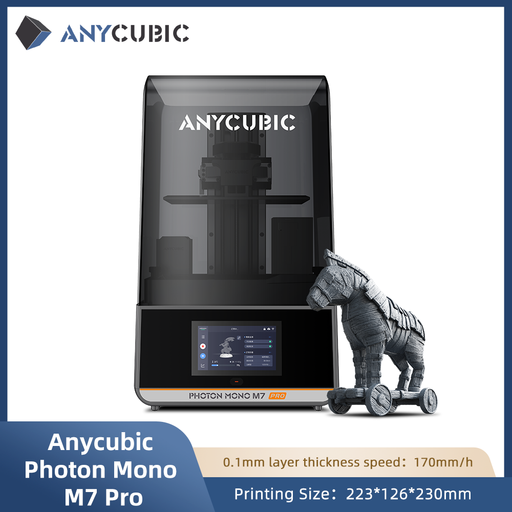
Why This Fits Their Persona: Ideal for small businesses and manufacturing environments where throughput, reliability, and minimal manual effort are critical. The automated workflow maximizes productivity.
Directly addresses the pitfalls of temperature instability and manual resin management with an integrated, adaptively controlled heater and a unit for automatic resin feeding and removal.
Enables print speeds of up to 170 mm/h with high-speed resin, according to the manufacturer. The fully automated workflow significantly reduces the error rate and personnel costs.
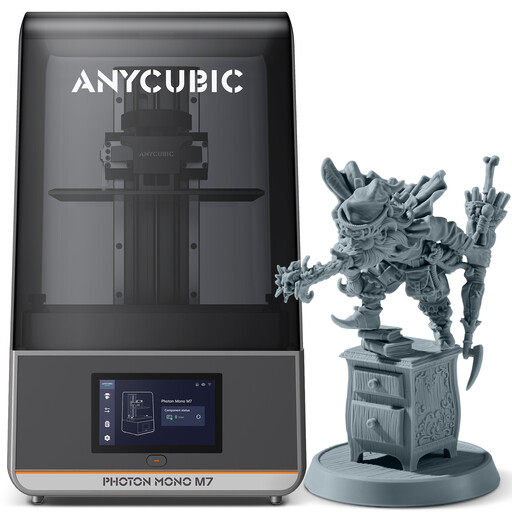
Why This Fits Their Persona: Suitable for engineers, designers, and model makers who require the highest level of detail for prototypes and one-off pieces, and for whom automation is a secondary concern.
Focuses on core competencies: The LighTurbo 3.0 system and ACF film enable high speeds, while the 14K resolution ensures maximum precision without increasing costs through full automation.
Offers the same outstanding 14K resolution (16.8 × 24.8 μm) as the Pro model. The stable dual linear rails on the Z-axis secure precision over the entire build height of 230 mm.
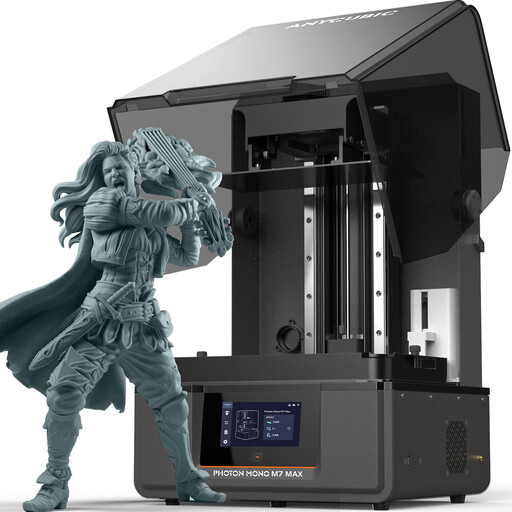
Why This Fits Their Persona: Perfect for producing large architectural models, full-scale functional prototypes, or batch-producing many small parts in a single print run.
Solves the problem of a limited build volume. It eliminates the need to manually split and later assemble large models, a process that often leads to inaccuracies. Automation features like resin recycling and heating support long print times.
Offers an exceptionally large build volume of 14.7 litres (298 × 164 × 300 mm). The 7K resolution still delivers a high level of detail at this size, with an XY accuracy of 46 μm.
We have compiled a complete, up-to-date list of products that fully meet these strict selection criteria and UK/EU safety regulations.
1. How important is an integrated heater for a resin printer in a region with a variable climate? An integrated heater is highly recommended. Room temperatures, especially in workshops, garages, or basements, can fluctuate significantly. A resin printer with a heater ensures a constant resin viscosity, which is crucial for the reliability and quality of print results, particularly for long, overnight print jobs. This reduces print failures and material waste.
2. What are the running costs of a 14K resin 3D printer? Besides the initial purchase price, you must factor in the cost of consumables. These include the resin itself (e.g., standard, high-speed, or water-washable variants like the ANYCUBIC Water Washable Resin 2.0), replacement release films (ACF/FEP), and screen protectors. Another long-term cost factor is the lifespan of the 14K monochrome LCD screen, which needs to be replaced after a certain number of operating hours.
3. Do I need special resin for a 14K printer? In principle, most 405nm UV resins are compatible. However, to achieve the maximum print speeds advertised by the manufacturer, a special "High-Speed Resin" is often required. For maximum detail reproduction, high-resolution resins are a great choice. It is always advisable to consult the printer manufacturer's compatibility list and recommended print parameters to achieve optimal results.