
Lieferung heute & morgen

Qualitätsgarantie

Willkommens-Angebote freischalten: KOSTENLOSE Lieferung | Bis zu 80 % RABATT | Kostenlose 30-Tage-JoyPlus-Testphase
App herunterladen
A 1.5-litre blender is suitable for many UK households: its capacity is enough for several smoothies, protein shakes or a sauce, without the need for a large kitchen appliance with multiple attachments. At the same time, appliances vary considerably in motor power, blade design, controls and cleaning requirements.
However, if you only look at the wattage or container size, you may end up buying a product that does not meet your needs. The following criteria will help you distinguish marketing claims from product features that really matter.
A 500-watt blender can be sufficient for fruit, soft vegetables, shakes and many smoothie recipes. However, wattage alone does not indicate how well an appliance can handle frozen ingredients, nuts or larger quantities. The blade shape, pulse control and permitted operating time are also important.
Do not overfill the container when processing hard or frozen ingredients. Short pulses can reduce the load on the motor. The manufacturer's guidance on pauses and maximum quantities is more important than having the biggest number on the packaging.
The stated container capacity is usually the maximum volume. During blending, the ingredients and liquid need room to circulate inside the container. A scale on the container makes measuring easier, but does not replace the maximum fill line specified in the user manual.
A 1.5-litre blender with a measuring scale is therefore practical for families who want to prepare larger quantities. Special precautions apply to soups and hot liquids: only use a model whose instructions explicitly allow this type of use. Steam and pressure can cause scalding when the lid is opened.
A blender may be described as “easy to clean”, even though residue can collect around the blade mount or underneath the seal. Look for removable stainless-steel blades, a container opening that is easy to reach and clear care instructions.
A stainless-steel blade blender is not automatically dishwasher-safe. “Rust-resistant” means that, with proper care, the steel used offers increased resistance to corrosion. All parts should be allowed to dry completely after washing. The motor housing must never be immersed in water.
For everyday smoothies, shakes, sauces and puréed foods, a container with a 1.5-litre rated capacity is a versatile size. An integrated scale helps you follow recipe quantities accurately. If you are looking for a BPA-free blender, check for a specific material statement in the product description rather than relying on general terms such as “food-safe”.
Glass is less prone to retaining odours and becoming discoloured, but it can be heavier. Plastic is usually lighter and easier to handle. Your choice will therefore depend on weight, storage space and your preferred cleaning routine.
Four stainless-steel blades arranged in a cross pattern can be designed to handle a range of ingredients in a multi-purpose blender. If you want a blender with an ice-crushing function, this feature should be stated explicitly. Do not run ice continuously; process it in short intervals as instructed.
A smoothie maker or smoothie blender is often designed for drinks and smaller portions. A multi-purpose blender, on the other hand, may offer additional uses for vegetables, baby food, salsa or soups, depending on the model. The name alone does not guarantee a particular consistency.
Several speed settings make it easier to adjust the appliance to soft and firmer ingredients. A pulse or turbo function is suitable for short, controlled bursts. A stable base, non-slip feet and a safety interlock that only allows operation when the container is correctly fitted are equally important.
Also check the mains specifications. The following appliances are described as operating at 220–240 volts or as being suitable for European household use. Before use, the container and lid must be correctly locked in place. Unplug the appliance before cleaning or changing the blades.
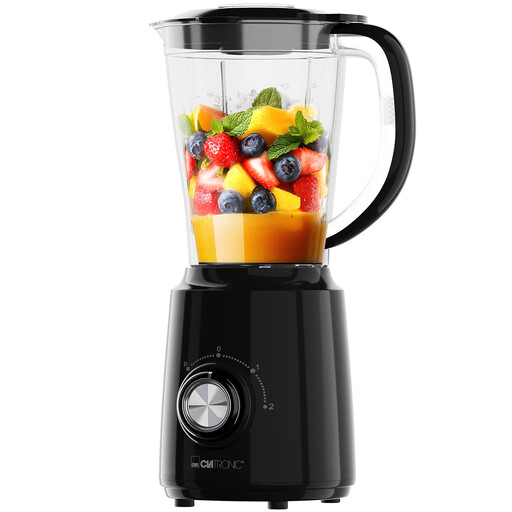
Why this product suits this profile: This blender combines 500 watts with a 1.5-litre BPA-free container, three speed settings and a pulse/turbo function. It is suitable for smoothies, protein shakes, sauces and puréed ingredients in everyday household use.
The product details clearly state the capacity, container material, ice-crushing function and removable blades, rather than promising general versatility alone.
1.5-litre scale, four-way rust-resistant stainless-steel blade, lid with filling opening and safety interlock.
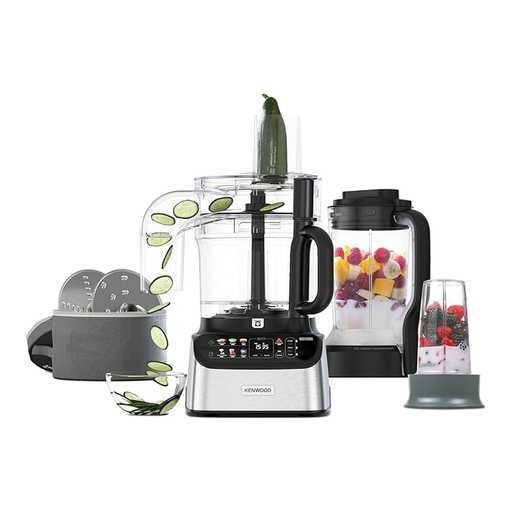
Why this product suits this profile: This food processor combines a 1.5-litre thermo-blender unit with a 3-litre bowl and several attachments. It is aimed at households that want to knead, slice, grate and purée as well as prepare drinks.
The capacities of the individual containers and the functions are listed separately. This makes it easier to compare the actual equipment with your own kitchen requirements.
1,000-watt rating, six One-Touch programmes, integrated scales and dishwasher-safe accessories according to the product description.
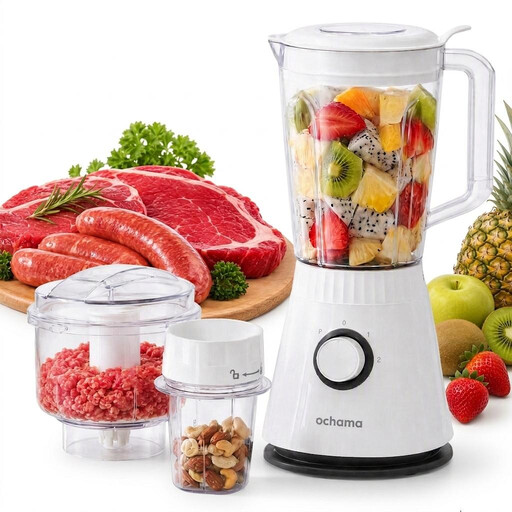
Why this product suits this profile: The product description lists three speed settings, ice crushing, 600 watts and additional uses such as baby food, juice, chopping and processing spices.
The possible uses, cleaning by disassembly and the safety requirement for a correctly locked lid are described explicitly.
1.5-litre container, 600-watt motor and several uses for everyday cooking.
We have put together a complete, regularly updated list of products that fully meet these strict selection criteria and the safety regulations applicable in the EU.
This size can be sufficient for several glasses of smoothie, shakes or a medium-sized portion of sauce. However, the usable capacity is often below the maximum container capacity stated. A larger container may be more suitable for very large family portions or substantial quantities of soup.
For soft fruit, vegetables, milkshakes and protein shakes, appliances in the 500 to 600-watt range may be suitable, depending on the blade assembly and recipe. If you regularly crush ice or process hard ingredients, you should also check the manufacturer's information on the function, load and operating time. A higher wattage is not, on its own, proof of quality.
It is not possible to make a reliable prediction of service life based solely on wattage or price. It depends on how often the appliance is used, the ingredients processed, cleaning, overloading and compliance with the user instructions. Avoiding overfilling, allowing breaks and handling the blades carefully can reduce typical everyday strain.