
Lieferung heute & morgen

Qualitätsgarantie

Willkommens-Angebote freischalten: KOSTENLOSE Lieferung | Bis zu 80 % RABATT | Kostenlose 30-Tage-JoyPlus-Testphase
App herunterladen
A 16 cm milk pan is ideal for small portions, warming milk, sauces, soups, pasta or baby food. Its compact size suits single-person households and couples, and it also makes a useful addition to a larger pan set. However, models can vary considerably in capacity, heat distribution, handle design and ease of cleaning.
Anyone who focuses only on the diameter or an eye-catching coating may overlook important details. Three common buying misconceptions are particularly worth bearing in mind:
A classic 16 cm handled saucepan is often shallower and well suited to sauces, milk or small portions of soup. A taller pan, on the other hand, can hold more liquid and may be a better choice for pasta, vegetables or steaming inserts.
Among the available products, stated capacities range from around 1.5 litres for a compact milk pan to several litres for tall speciality pans. A tall vessel with a 16 cm diameter is therefore not automatically comparable with a shallow 16 cm sauce pan.
Look out for:
A pouring rim is practical for milk and sauces. With a milk pan with lid, the lid should sit securely without making pouring unnecessarily difficult.
A stainless steel milk pan made from 304 or 18/10 stainless steel is neutral in taste, rust-resistant and generally suitable for acidic ingredients. However, the material specification alone says little about heat distribution. The construction of the base is more important.
A bonded or multi-layer base can distribute heat more evenly from the hob into the pan body. This is particularly useful when warming milk or preparing delicate sauces, as intense localised heat can make cleaning more difficult. Even with stainless steel, you should control the temperature and avoid heating an empty pan at high heat for long periods.
Ceramic exterior or interior coatings can affect how the pan should be cared for. Do not clean them with wire wool or abrasive powders. With coated models, also follow the instructions regarding metal utensils, temperature changes and hand washing.
An induction milk pan needs a base that the manufacturer has expressly approved for induction cooking. Good product descriptions also specify compatibility with gas, electric, ceramic or halogen hobs. Before buying, check that the base is suitable for your smallest cooking zone.
A pan with glass lid lets you monitor the contents while cooking. This can help you keep an eye on the liquid without having to remove the lid repeatedly. Glass and the lid handle become hot, so oven gloves or pan holders are still advisable.
When cleaning:
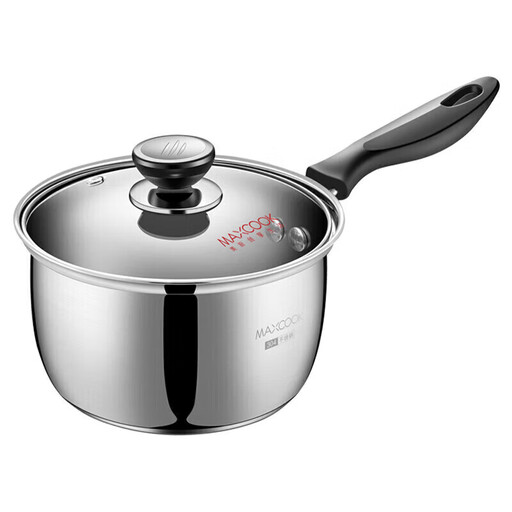
Why this product suits this profile: This compact pan combines 304 stainless steel with a glass lid and, according to the product details, is suitable for gas, electric, ceramic and induction hobs. It is therefore well suited to everyday small portions.
The product details clearly specify the material, lid type and hob compatibility instead of simply making general claims about versatility.
304 stainless steel, glass lid, bonded base and a pouring design for controlled decanting.

Why this product suits this profile: This 16 cm pan features a 316 stainless steel interior, a glass lid and a steaming insert. It is designed for households looking for one pan to handle milk, sauces, porridge and steamed vegetables.
The contents of the package explicitly include the steaming insert. The care instructions also point out that hand washing can help protect the ceramic coating.
316 stainless steel interior, three-layer base, steaming insert and compatibility with gas, induction, ceramic and halogen hobs.
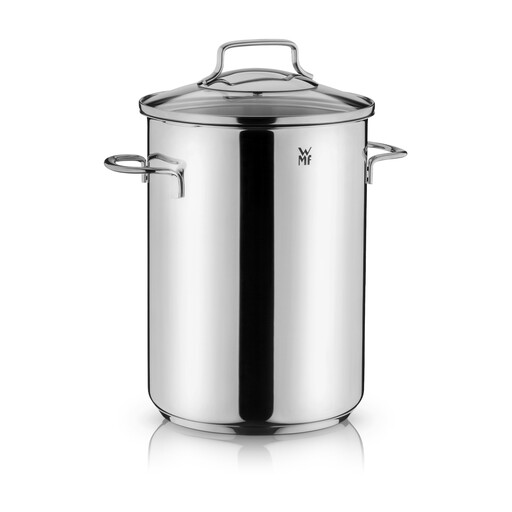
Why this product suits this profile: The tall design, with a capacity of 4.5 litres and a wire insert, is designed for asparagus, spaghetti, vegetables and larger quantities. For simply warming milk, this pan is considerably more spacious than necessary.
The tall shape and separate insert are clearly specified. This makes it easier to choose the pan according to its intended use.
Cromargan stainless steel, TransTherm base, glass lid, wire insert and components that are dishwasher-safe according to the manufacturer.
We have put together a complete, regularly updated list of products that fully meet these strict selection criteria and the safety regulations applicable in the EU.
That depends on the base. Look for an explicit manufacturer’s statement such as “suitable for induction” or “suitable for all hob types”. With small pans, the diameter of the base is also important, as some induction hobs require a minimum size to detect the pan.
Capacity varies according to the height and shape. Compact models may hold around 1.5 litres, for example, while tall speciality pans with the same diameter can hold considerably more. A smaller capacity is often sufficient for milk and sauce; for pasta or steaming, a taller design may be more practical.
Some models are dishwasher-safe according to the product details. However, hand washing is often recommended for coated pans, wooden handles or specialist lids. For this reason, check the care instructions for each individual component and allow the pan to cool before cleaning to avoid sudden temperature changes.