
Lieferung heute & morgen

Qualitätsgarantie

Willkommens-Angebote freischalten: KOSTENLOSE Lieferung | Bis zu 80 % RABATT | Kostenlose 30-Tage-JoyPlus-Testphase
App herunterladen
Anyone looking to buy 18 kg of jasmine rice is usually seeking a reliable supply, a pleasant aroma and consistent cooking results. For households with high rice consumption, restaurants, catering businesses and Asian food shops, buying in bulk can be cost-effective. At the same time, an 18 kg sack is difficult to store and can take a long time to use up if you make the wrong choice.
The product name alone is therefore not enough. The key factors are the origin, rice variety, packaging, grain characteristics and suitability for your intended use.
Thai jasmine rice, Cambodian fragrant rice and Vietnamese jasmine rice can differ in aroma, grain length and cooked texture. Terms such as “aromatic”, “AAA” or “Premium” should therefore not be assessed in isolation. More useful details include the country of origin, an ingredient declaration of 100% rice and the stated rice category.
Buying in bulk is only worthwhile if you can use the rice within the stated shelf life. A 4.5 kg pack may be more practical for a small household, while restaurants and catering companies can benefit from a larger supply. Storage space must also be taken into account: an 18 kg sack should be kept in a dry, raised position away from direct sunlight.
With long-grain rice, the grains generally remain distinct after cooking. “Double Broken Rice”, on the other hand, consists of broken rice grains. This variety may be suitable for congee, rice porridge or dishes where a softer texture is preferred. For decorative side dishes or curries where clearly defined grains are desirable, classic long-grain rice is often a better choice.
Jasmine rice is available from countries including Thailand, Cambodia and Vietnam. Hom Mali rice in a product description refers to a Thai jasmine rice variety. When comparing products, check whether the item is explicitly described as Thai Hom Mali, Thai Jasmine Rice, Cambodian Fragrant Rice or Vietnamese fragrant rice.
The country of origin does not automatically determine your personal preference. Thai jasmine rice is often chosen for its floral aroma and soft, slightly sticky texture. Cambodian fragrant rice can also be aromatic, while Vietnamese varieties may offer a softer or slightly firmer texture, depending on the product description.
The following details are relevant when making an informed choice:
Nutritional information is provided for comparison and does not replace checking the current label. The information on the packaging delivered with the product is authoritative.
A sealed or airtight pack can help protect the rice from moisture and unwanted odours. Sunlee Thai Hom Mali Jasmine Rice, for example, is described as being packaged in aluminium foil. Other products are supplied in sacks, which should be transferred to a resealable storage container after opening.
For storage in Germany, we recommend:
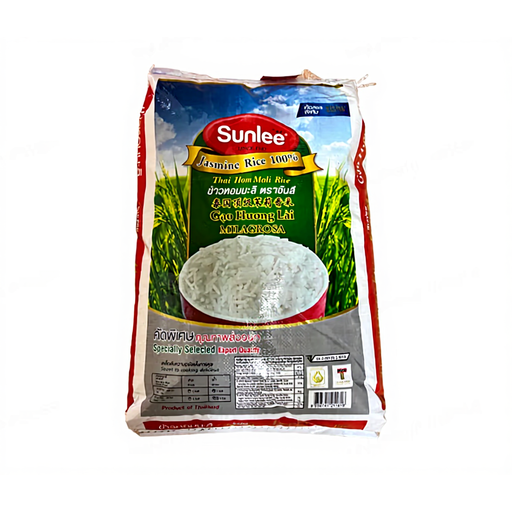
Why this product suits this profile: This product is aimed at buyers looking for Thai Hom Mali jasmine rice in a complete 18 kg pack. The description states that it contains 100% Thai Hom Mali Jasmine Rice and comes in aluminium foil packaging.
The product details clearly state the origin, ingredients and net quantity, rather than using a generic description such as “fragrant rice”.
18 kg net quantity, 100% Thai Hom Mali Jasmine Rice and, according to the product details, aroma-preserving aluminium foil packaging.
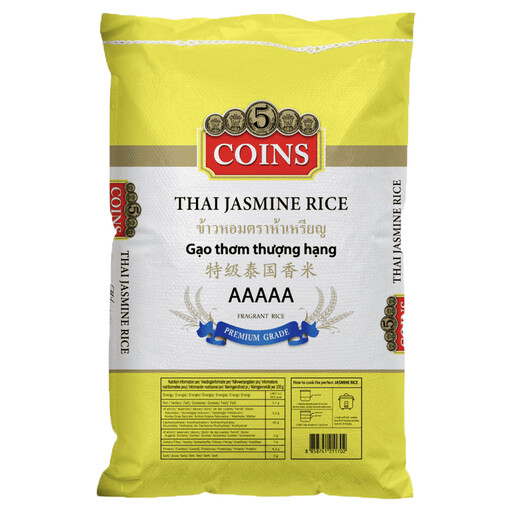
Why this product suits this profile: This pack is an appealing choice for buyers looking for a straightforward Thai jasmine rice with no additional ingredients, supplied in a large quantity.
The ingredients list identifies 100% white fragrant rice; it should be stored in a dry place protected from heat and direct light.
18 kg net quantity and a concise ingredients list containing 100% White Fragrant Rice.
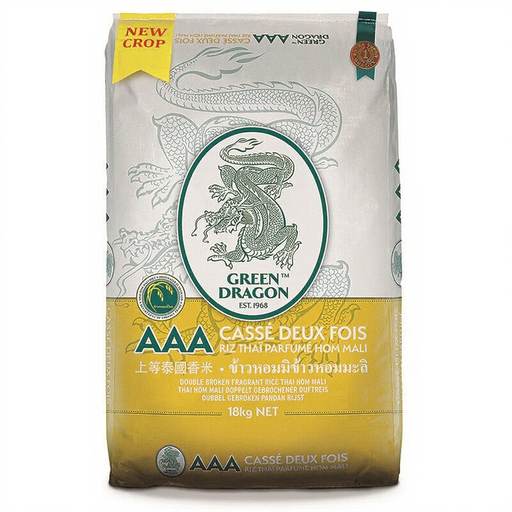
Why this product suits this profile: According to the product description, the broken grains are intended for congee, rice porridge and quick-to-prepare everyday dishes.
The “Double Broken” description makes the grain structure clear and reduces the risk of expecting classic long-grain rice.
18 kg pack, clearly identified Thai jasmine rice and suitability for porridge dishes and absorbing flavours.
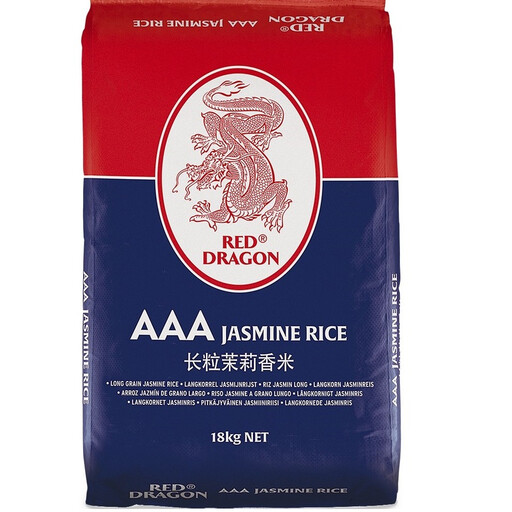
Why this product suits this profile: The 18 kg quantity and stated long-grain format suit businesses that regularly serve rice as a side dish with curries and wok dishes.
The product details explicitly state the Cambodian origin, AAA classification and long-grain type.
18 kg net weight, Cambodian fragrant rice and specific preparation instructions using approximately 1.2 to 1.5 parts water.
We have put together a complete, regularly updated list of products that fully meet these strict selection criteria and the safety regulations applicable in the EU.
The recommended water ratio varies depending on the variety and brand. You should therefore start by following the instructions on the sack. As a practical guide, rinse the rice thoroughly, measure the water and rice according to the manufacturer’s instructions, then leave the cooked rice to rest for a few minutes.
For cost planning in the food-service industry, the price of the sack is not the only consideration. Compare the price per kilogram, the portion size required and your actual weekly consumption. An 18 kg pack is particularly worthwhile if rice dishes are served frequently and the rice can be stored hygienically in dry conditions.
The specific best-before date is shown on the packaging. Unopened rice should be stored in a cool, dry place away from direct sunlight. After opening, an airtight storage container is recommended. Moisture and significant temperature fluctuations can affect storage quality.
Jasmine rice can be a basmati rice alternative if you prefer a softer, slightly stickier rice with a floral aroma. Basmati rice, by contrast, is often chosen for its longer, looser grains. Which variety is more suitable depends on the dish and your preferred texture.
The exact quantity depends on the variety, amount of water added and cooking method. Rice absorbs water during cooking, multiplying its weight as a result. For precise calculations in a restaurant or catering business, prepare a small test batch using the intended cooking method and weigh it afterwards.