
Lieferung heute & morgen

Qualitätsgarantie

Willkommens-Angebote freischalten: KOSTENLOSE Lieferung | Bis zu 80 % RABATT | Kostenlose 30-Tage-JoyPlus-Testphase
App herunterladen
As a Joybuy Product Recommendation Officer, I see customers struggle daily with choosing the right tools for their home and garden. A powerful 180 bar pressure washer promises to remove stubborn grime effortlessly, but the market is flooded with models whose performance and durability don't live up to their advertising. Before you make a decision, it's crucial to understand the common pitfalls that can lead to an unsatisfying and expensive purchase.
Many units look convincing at first glance, but a closer look often reveals flaws that severely limit their practical use. Pay special attention to these three points:
To avoid a bad purchase, don't be swayed by marketing promises. Instead, focus on verifiable technical specifications. These two metrics are critical for cleaning performance.
Pressure, measured in bar, is responsible for dislodging dirt from the surface. A 180 bar pressure washer provides a very solid foundation for this. However, without a sufficient volume of water (flow rate), measured in litres per hour (L/H), the loosened dirt cannot be effectively washed away. The true cleaning power comes from the combination of these two values.
The motor's power, specified in watts (W), is an indicator of the machine's resilience and longevity. An electric pressure washer with a power rating around 2200W can reliably maintain the required pressure and water flow over extended periods.
The accessories determine how versatile your machine will be:
Based on these objective criteria, we have identified products that offer a suitable solution for specific user profiles and their requirements.
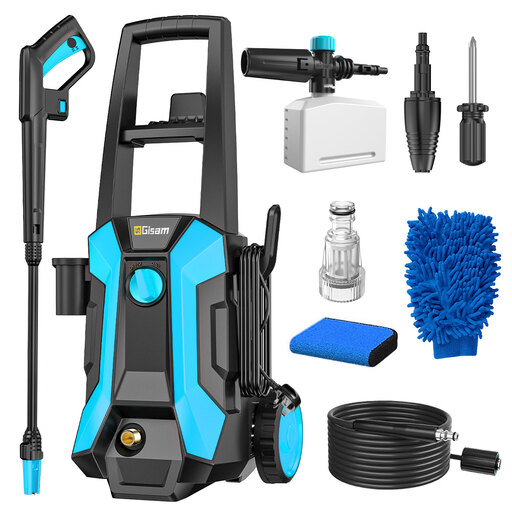
Why This Fits Their Persona: Ideal for homeowners looking for a powerful and versatile solution for all cleaning tasks—from a mossy walkway cleaner to a gentle pressure washer for the car. The combination of power and features covers all typical scenarios.
The integrated hose reel and 8-metre hose solve the problem of poor usability. The included accessories, including a foam nozzle and rotating nozzle, are designed for specific applications and aren't just token add-ons.
Strong cleaning performance thanks to the combination of a 2200W motor, 180 bar pressure, and a 480 L/H flow rate. The unit is equipped for a wide range of tasks without the need to buy expensive additional accessories.
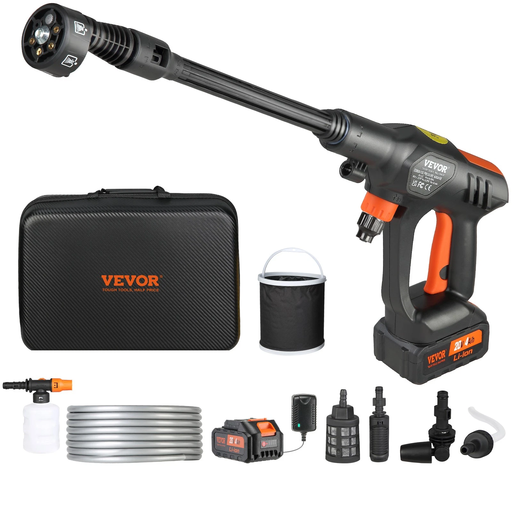
Why This Fits Their Persona: Perfect for users who don't have a power outlet nearby or want to quickly and easily clean smaller areas like balconies, garden furniture, or bicycles. Its independence from the power grid offers maximum flexibility.
This unit sidesteps the trap of exaggerated pressure ratings by focusing on its main advantage: mobility. It doesn't promise extreme power but delivers adequate cleaning force for tasks where a large, corded machine would be impractical.
Battery-powered for complete freedom of movement. Lightweight, compact, and ready for quick, spontaneous clean-ups without having to run any cables.
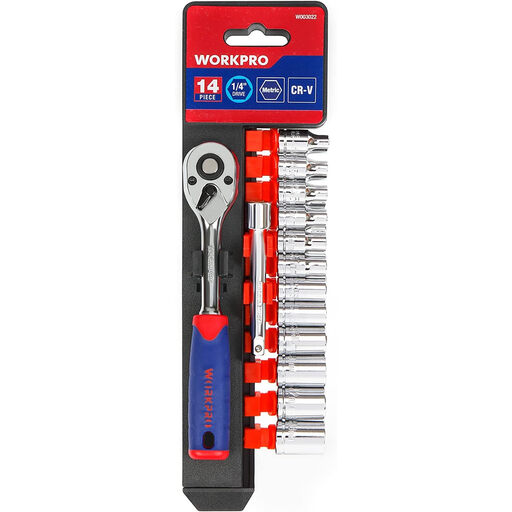
Why This Fits Their Persona: After the car, bicycle, or garden tools have been thoroughly cleaned, small maintenance or repair jobs often come up. This compact set is the ideal companion for these subsequent DIY tasks.
Instead of buying an oversized and expensive toolbox that's overkill for occasional jobs, this set focuses on the most common metric sizes. It's a pragmatic and space-saving solution.
High-quality chrome vanadium steel ensures durability. The 72-tooth ratchet allows for precise work even in tight spaces. Everything is organised in a practical holder.
We have compiled a complete, up-to-date list of products that fully meet these strict selection criteria and German safety regulations.
1. How much bar pressure does a pressure washer need for a patio? For common patios made of concrete pavers or stone slabs, a working pressure between 130 and 180 bar is very effective against moss, algae, and deep-seated dirt. However, for more delicate wooden decks, you should start with a lower pressure (approx. 100-120 bar) and a fan-jet nozzle to avoid damaging the material. A special patio cleaner attachment is a great choice for this, as it distributes the pressure evenly.
2. Can I use any pressure washer to wash my car? In principle, yes, but the correct technique is crucial. Always maintain a safe distance of at least 30-50 cm from the paint surface and only use a wide or fan-jet nozzle. The harsh point-jet can damage the paint. For a paint-friendly clean, a foam nozzle for a pre-wash is highly recommended. A pressure washer for car applications should ideally have pressure regulation.
3. What is the difference between a pressure washer and a steam cleaner? A pressure washer uses high water pressure (cold or warm) to mechanically remove dirt. A steam cleaner, on the other hand, heats water into steam and works with high temperature but lower pressure. Steam is very effective at dissolving grease, oil, and for disinfection, but it has less force to remove heavily caked-on dirt like mud or moss.