
Lieferung heute & morgen

Qualitätsgarantie

Willkommens-Angebote freischalten: KOSTENLOSE Lieferung | Bis zu 80 % RABATT | Kostenlose 30-Tage-JoyPlus-Testphase
App herunterladen
A powerful pressure washer can make cleaning patios, walkways, facades, and vehicles significantly easier. Models with 180 bar of pressure promise high cleaning power, but to avoid a bad purchase, there are crucial details to consider during selection. Many devices entice with high pressure ratings but disappoint in practice due to a lack of performance or durability. This guide will help you identify the important features and find the right device for your needs.
Before you make a decision, you should familiarise yourself with some common problems that often only become apparent after the purchase.
To objectively evaluate the performance and suitability of a pressure washer, you should check three core parameters. These determine how efficient and versatile the device truly is.
The 180 bar rating describes the force with which the water hits the surface—ideal for loosening caked-on dirt. However, the water flow rate, measured in litres per hour (L/h), is at least as important. A high flow rate ensures that the dislodged dirt is washed away quickly and effectively. A good balance is crucial: a device with 180 bar and 480 L/h will clean a surface much faster and more thoroughly than a model with the same pressure but only 350 L/h.
An electric pressure washer for demanding tasks should have adequate motor power. A 2200W pressure washer, for example, can typically maintain the required pressure and water flow rate consistently without overheating. The motor power is an indicator of the device's robustness and longevity, especially with regular and prolonged use for cleaning garden tools or large areas.
The true strength of a pressure washer is revealed in its adaptability to different tasks. Look for a set that includes various nozzles:
Here are some recommendations tailored to different use cases that take the aforementioned criteria into account.
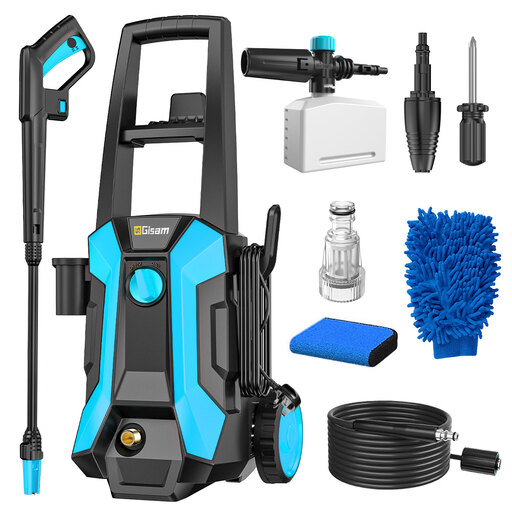
Why This Fits Their Persona: Ideal for homeowners who need a powerful and versatile solution for regular cleaning jobs—from the patio and garden fence to the family car.
This model solves the problem of messy storage with an integrated hose reel. The accessory package, including a foam nozzle, rotary nozzle, and high-pressure gun, covers the most common applications and prevents expensive follow-up purchases.
The combination of a 2200W motor, 180 bar pressure, and a 480 L/h water flow rate provides balanced, high-level cleaning performance. The 8-metre hose ensures a large operating radius.
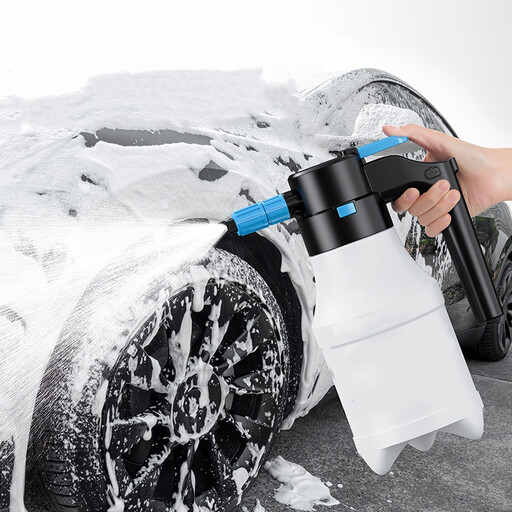
Why This Fits Their Persona: Perfect for car enthusiasts who want to perform a paint-safe pre-wash. This device generates thick foam to encapsulate dirt particles without mechanically stressing the paintwork.
Instead of relying on high pressure, which can damage paint if used incorrectly, this specialised tool focuses on chemical pre-cleaning. It's a targeted supplement, not a compromise.
Cordless operation allows for maximum flexibility without a cable. The one-button operation and adjustable nozzle make it simple and efficient to use. Ideal for creating a thick blanket of foam.
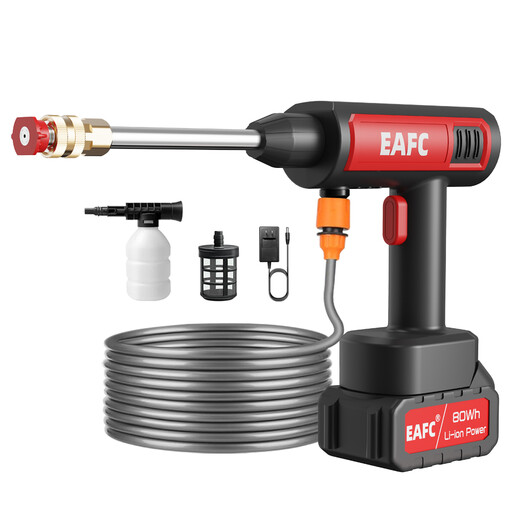
Why This Fits Their Persona: Suitable for users who need a quick and straightforward solution for smaller cleaning tasks, like rinsing off bicycles, garden furniture, or balconies, without needing access to a power outlet or water tap.
This device doesn't promise 180 bar; instead, it delivers a level of performance appropriate for its size and portability. It meets the expectations for a portable device rather than being an inadequate substitute for a large, corded model.
The self-priming function allows it to draw water from a bucket or any other container, providing maximum independence. Its lightweight, cordless design makes it extremely handy and easy to store.
For specialised cleaning tasks, particularly in vehicle care, the right foam is crucial. Discover products designed for effective and gentle cleaning.
1. How important is the water flow rate in a 180-bar pressure washer? Very important. While the pressure (bar) provides the force to loosen dirt, the water flow rate (L/h) determines how quickly that dirt is washed away. A higher flow rate results in faster and more efficient cleaning of large areas. A balanced ratio between these two values is the key to convincing performance.
2. Can I use any pressure washer for car washing? Generally, yes, but with caution. A jet stream that is too strong or held too close can damage the paint, seals, or tyres. For car washing, always use a flat-jet nozzle with reduced pressure or a special foam nozzle for pre-cleaning. The distance to the surface should be at least 30-50 cm.
3. What is the average lifespan of an electric pressure washer? The lifespan heavily depends on the quality of the motor and pump, as well as on usage and maintenance. Models with high-quality components and robust construction, often found in devices with higher motor power (e.g., 2200W), can last for several years with regular private use. It is important to drain the device after each use and store it in a frost-free location.