
Lieferung heute & morgen

Qualitätsgarantie

Willkommens-Angebote freischalten: KOSTENLOSE Lieferung | Bis zu 80 % RABATT | Kostenlose 30-Tage-JoyPlus-Testphase
App herunterladen
A 180x200 H3 mattress gives two people a continuous sleeping surface. But size and firmness shouldn’t be the only things you consider. The materials and construction, body weight, sleeping position, ventilation and care requirements all affect how well a mattress suits your needs in everyday use.
The H3 label usually indicates a medium-firm mattress. However, there is no legally standardised firmness scale. Depending on the manufacturer, foam density, core construction and body weight, an H3 mattress can feel quite different. That’s why the term ‘medium-firm’ doesn’t replace information about the recommended weight range.
There’s another factor for couples: two people with very different body weights may experience the same mattress differently. Reversible models with two firmness levels can be a practical option.
A 7-zone mattress divides the sleeping surface into areas for the head, shoulders, back, pelvis and legs. What matters, though, is how the zones are designed and whether the mattress suits your preferred sleeping position. Side sleepers may benefit from more yielding shoulder and hip areas, while back sleepers often prefer more even support.
The term orthopaedic mattress is no substitute for specific information about materials and dimensions. It’s often used to position a product, but doesn’t make a general claim about its health benefits.
With a mattress with a washable cover, you can usually remove the fabric cover and clean it according to the care label. The mattress core itself generally shouldn’t be washed. So check for:
A mattress measuring 180 x 200 cm must fit your bed frame exactly. Also check the gaps between the slats and the maximum permitted load. Some models arrive rolled or vacuum-packed. Depending on the product, they may need around 24 to 72 hours after unpacking to regain their full shape.
Mattress height affects how easy it is to get in and out of bed, as well as ventilation. The models featured here are, for example, 18 or 20 cm high. A taller mattress isn’t automatically more comfortable; the core construction, density and suitability of the base matter more.
A 180x200 cold foam mattress has an open-cell foam core. Its structure can help with air circulation, and it usually responds to movement across a wider area. Memory foam moulds more closely to pressure, but may feel different from cold foam if you frequently change sleeping position.
A mattress with memory foam or gel foam often combines several layers. Product descriptions often associate gel or Cool-Flex foam with temperature regulation and breathability. These properties depend on the overall construction, cover and room temperature.
A pocket-sprung mattress contains individually housed springs. The model featured below is listed as having 868 pocket springs and seven zones. The springs may provide more tailored support and reduce movement across the other side of the mattress. At the same time, this model is heavier than many all-foam mattresses.
For an Öko-Tex mattress, check the exact certification and what it covers. OEKO-TEX and Öko-Tex refer to tested textile or material criteria, not automatically to every feature of the finished product. CertiPUR is cited as a material standard for certain types of foam.
A certification can therefore be a useful, verifiable point of comparison, but it doesn’t guarantee a particular feel or a medical benefit. For allergy sufferers, a removable cover, its washing temperature and regular cleaning are also important.
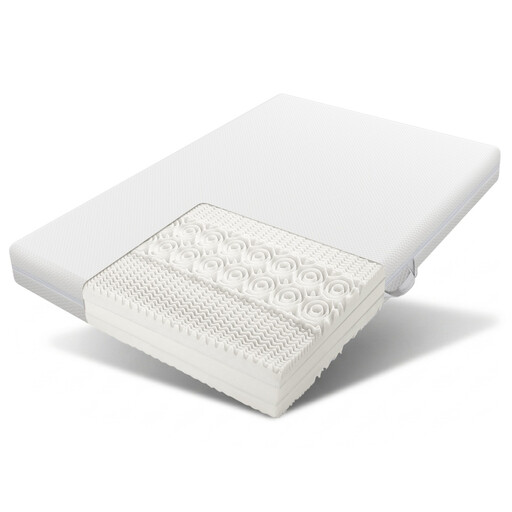
Why this product suits this profile: This model combines the standard 180x200 cm size with two stated firmness levels. That means you can choose between H2 and H3 without buying two different mattresses.
The product details specify seven zones, H2 and H3, as well as a maximum load of 200 kg. That gives you important details to compare before buying.
20 cm high, reversible design, removable cover stated as washable up to 60 °C, and fabric turning handles.
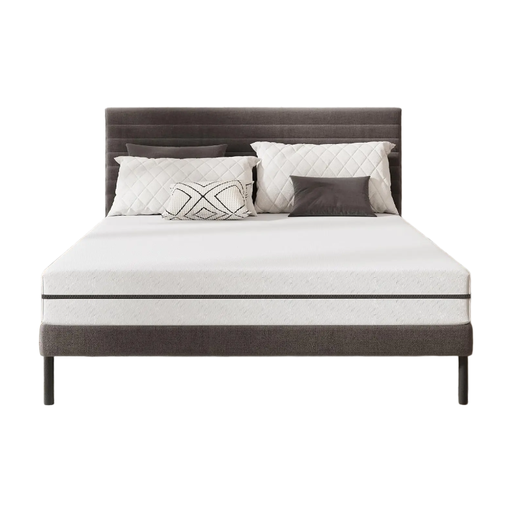
Why this product suits this profile: Its three-layer construction is aimed at buyers who want to compare gel foam, the option to flip between H3 and H4, and documented material standards.
The details distinguish between the H3 and H4 sides. They also specify a removable cover, as well as OEKO-TEX and CertiPUR certifications.
18 cm high, gel and latex-like foam, washable cover, and delivered compressed.
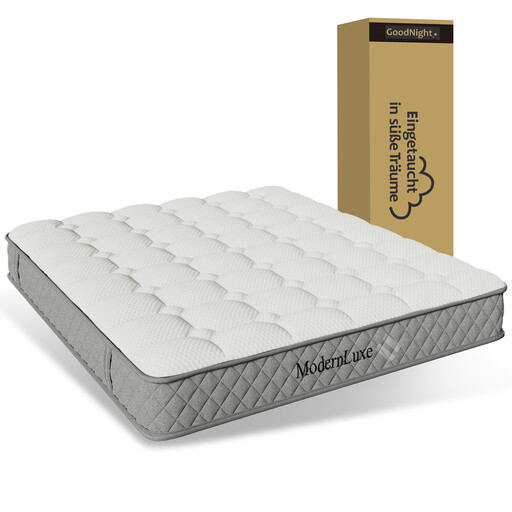
Why this product suits this profile: This model combines cold foam with a 7-zone pocket-sprung core. It’s worth considering if you’re a couple looking for a springy sleeping surface with a stated maximum load of up to 280 kg.
Rather than relying on ‘7 zones’ alone, the product details specify 868 individual pocket springs, H3, and clear care and load information.
20 cm high, four carry handles, OEKO-TEX certification stated, delivered rolled, and a polyester knitted cover.
We’ve put together a complete, regularly updated list of products that meet these strict selection criteria and the safety regulations in force in the EU.
H3 is often offered as a medium-firm option. There’s no universal weight limit. The manufacturer’s guidance, foam density, core construction and how the mattress feels to you all matter. Couples should also check the combined maximum load.
It depends on the model. Product details often recommend 24 to 72 hours. During this time, keep the mattress flat on a suitable base and air the room according to the care instructions.
Its lifespan depends on material quality, load, base, room conditions and care. Turning it regularly can help distribute wear more evenly. Visible impressions, lasting sagging or reduced support are signs that it may be time to check your mattress, whatever the general lifespan estimate.