
Lieferung heute & morgen

Qualitätsgarantie

Willkommens-Angebote freischalten: KOSTENLOSE Lieferung | Bis zu 80 % RABATT | Kostenlose 30-Tage-JoyPlus-Testphase
App herunterladen
Buying a pressure washer seems straightforward at first glance. But anyone looking for a high-performance pressure washer that can reliably clean patios, driveways, and vehicles will quickly encounter pitfalls. Often, impressive numbers on paper hide devices that disappoint in practice. Before you buy a pressure washer, it's crucial to distinguish typical marketing claims from the performance features that truly matter.
Two common problems lead to poor purchasing decisions:
To make an informed decision, you should carefully examine three core technical parameters. These determine whether an electric pressure washer is suitable for your needs.
The cleaning performance of a pressure washer is not determined by pressure alone. The combination of water pressure and water volume is critical:
A device with high pressure but a low flow rate acts like a fine, sharp jet that makes slow progress. In contrast, a model with a balanced ratio, such as 185 bar and over 500 l/h, offers the necessary power and efficiently flushes away dirt—ideal for a pressure washer for your car and patio.
The motor power, specified in watts (W), is the engine behind the pressure and flow rate. A 2200W pressure washer can typically deliver more stable and higher performance data than a model with a lower wattage. Look for motors designed for extended operation. Equally important is the pump material. Pumps made of aluminium or brass are generally more durable and resistant to corrosion than those made of plastic.
A good pressure washer with accessories saves you from expensive additional purchases and significantly expands its range of applications. Check whether the attachments that are important to you are included and solidly built. Useful additions include:
Here are some recommendations tailored to specific use cases that avoid the common pitfalls mentioned.
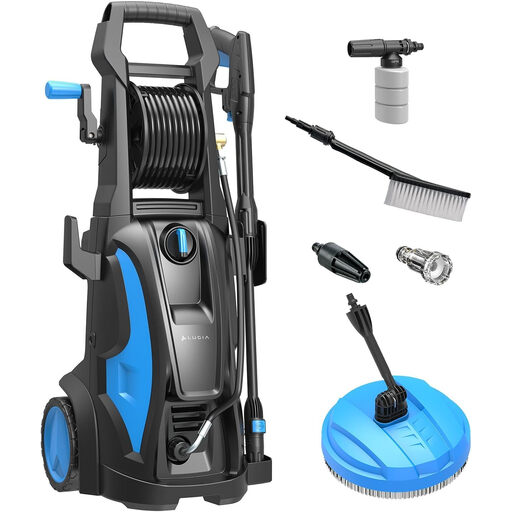
Why This Fits Their Persona: Ideal for homeowners who need a single device for various tasks—from cleaning the patio and driveway to washing the car. The comprehensive accessory kit covers the most common applications right out of the box.
The device comes with a complete, functional accessory set, including a patio cleaner and a rotating brush. This saves you from buying low-quality or incompatible individual parts.
The high flow rate of 550 l/h ensures large areas are cleaned quickly. The 2200W motor provides the necessary, consistent power to achieve this.
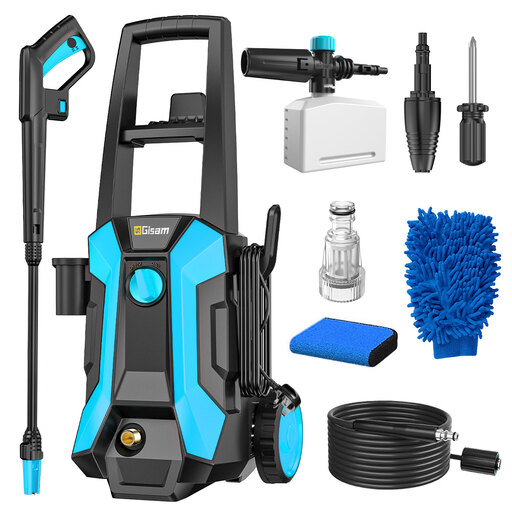
Why This Fits Their Persona: Suitable for users who need a strong, concentrated water jet for targeted tasks like removing stubborn dirt from pavements or fences and who value ease of use.
This model focuses on a high working pressure of 180 bar, ensuring effective cleaning action. The integrated hose reel also prevents the hose from tangling—a common annoyance with cheaper units.
The integrated hose reel ensures tidy storage and easy handling. The 2200W motor provides the necessary power for the high pressure.
Why This Fits Their Persona: Perfect for users with large properties, driveways, or patios who want to clean efficiently and save time. High area coverage is the top priority here.
The high flow rate, combined with the included patio cleaner, prevents the common problem of spending hours cleaning large areas with a small nozzle. This saves time and ensures a consistent result.
The combination of 185 bar pressure and a 550 l/h flow rate enables high area coverage, significantly reducing cleaning time on large surfaces.
We have compiled a complete, real-time list of products that fully satisfy these strict selection criteria and UK safety regulations.
Not necessarily. Very high pressure can damage sensitive surfaces like wood, car paint, or grout. A balanced ratio of pressure and flow rate, tailored to the specific cleaning task, is more important. For most home applications, a working pressure between 120 and 185 bar is sufficient.
Yes, but with caution. Use a wide fan-spray nozzle instead of a harsh point jet and maintain a safe distance (at least 30 cm) from the paintwork, tyres, and seals. A wash brush or a foam nozzle is a useful and gentle addition for car washing.
To prevent frost damage to the pump and pipes, the unit must be completely drained. Let all the water out of the device, hose, and gun. Then, store the pressure washer in a dry, frost-free place like a basement or garage.