
Lieferung heute & morgen

Qualitätsgarantie

Willkommens-Angebote freischalten: KOSTENLOSE Lieferung | Bis zu 80 % RABATT | Kostenlose 30-Tage-JoyPlus-Testphase
App herunterladen
An 18 V cordless combi drill should handle several jobs: driving screws, drilling into wood and metal, and carrying out lighter drilling work in masonry. In practice, however, poor purchases are often down to unclear details about torque, battery platform and what’s included, rather than the voltage.
18 V describes the voltage class; it doesn’t automatically indicate drilling power. Torque, gear ratios, motor type and battery capacity are among the factors that matter. Even a cordless drill with a high voltage rating may not suit a particular job if its hammer function or torque isn’t right for the material.
On many tools, a suffix such as “Z” or a similar product variant means that the battery and charger aren’t included. If you don’t already have a compatible battery platform, you’ll need to factor in the extra cost. A kit with two batteries and a charger may be better value for regular use, even if the initial price is higher.
A cordless combi drill is suitable for many masonry jobs involving wall plugs and fitting work. For concrete, frequent drilling at larger diameters or chiselling, a dedicated rotary hammer is usually a better choice. A 13 mm keyless chuck on its own doesn’t tell you whether a tool is suitable for hard materials.
Torque is measured in Newton metres (Nm). A higher figure can be useful when driving larger screws or working with resistant materials, but you’ll need to set it carefully. For fitting work, multiple torque settings are important to avoid putting unnecessary strain on screw heads and workpieces.
The first gear usually delivers more power at a lower speed. The second gear is designed for faster drilling. Figures such as 0–500 and 0–1,900 min⁻¹ describe the no-load speed range and should always be considered in relation to the material you’re working with.
The impact rate is given in blows per minute. It affects how the tool works when hammer drilling into masonry, but it doesn’t replace specific guidance from the manufacturer. Check the stated maximum drilling diameters for materials such as wood, steel and masonry.
A suitable drill for wood, metal and masonry should also have a switchable hammer function. This lets you use the tool without hammer action when driving screws or drilling into wood or metal.
A brushless cordless combi drill works without traditional carbon brushes. This can reduce maintenance and allow for a more compact design. Whether the extra cost is worthwhile depends on how often you’ll use it and which battery platform you already own.
Also check:
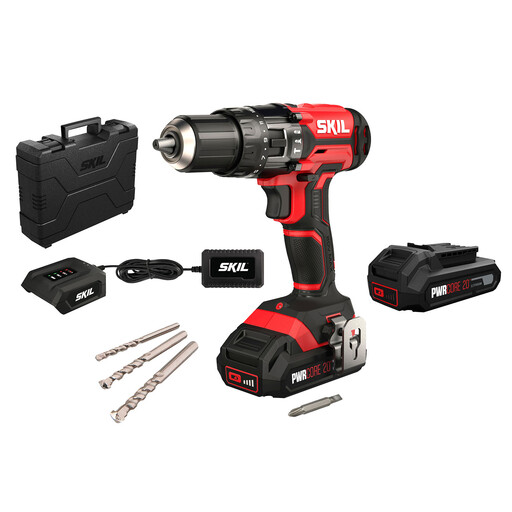
Why it suits this type of user: This tool combines screwdriving, drilling and hammer drilling in one body, making it suitable for typical DIY jobs, furniture assembly and lighter renovation work.
The 17 torque settings, along with separate drilling and hammer-drilling modes, make it easier to choose the right setting for the material. According to the product details, the battery and charger aren’t included, so remember to factor them in when comparing prices.
13 mm Auto-Lock chuck, two-speed gearbox and integrated LED work light.
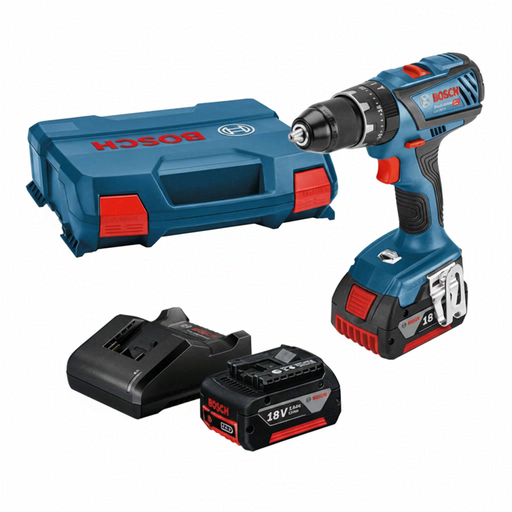
Why it suits this type of user: This kit is for anyone looking for a complete 18 V system, with two batteries, a charger and a carry case, for regular fitting and renovation work.
The kit includes two 3.0 Ah batteries, a GAL-18V-20 charger and an L-Case. This avoids the common assumption that a bare tool will automatically arrive ready to use.
Maximum torque of 63 Nm, metal chuck, 20 + 2 settings, and stated drilling capacities of up to 38 mm in wood, 13 mm in steel and 13 mm in masonry.
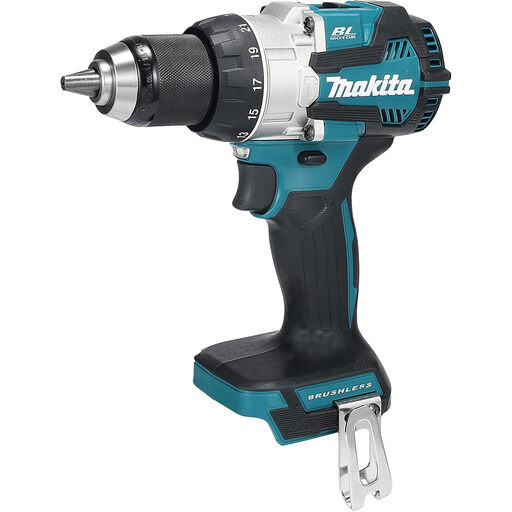
Why it suits this type of user: This bare tool is a good option if you already own Makita 18 V LXT batteries and want to add a brushless tool for a range of drilling and screwdriving jobs.
The product details clearly state that the battery and charger aren’t included. This makes it easier to compare the total cost with that of a kit before you buy.
Maximum torque of 73 Nm, brushless motor, XPT protection, two-speed gearbox and LED lighting, with a stated weight of 1.5 kg.
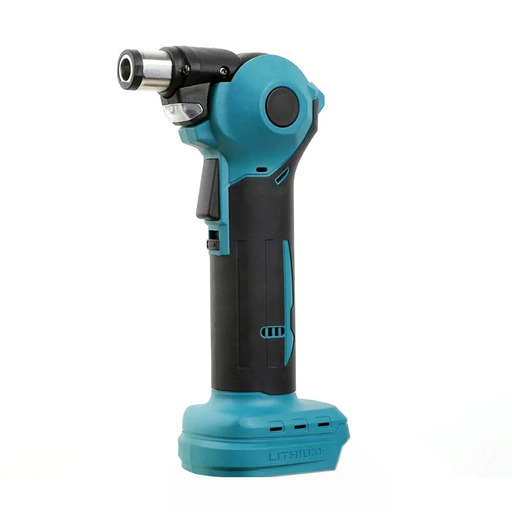
Why it suits this type of user: According to the description, this compact tool is designed for precise woodworking and joinery tasks, such as assembling furniture and cabinets.
Limit use to the woodworking tasks specified. The battery and charger aren’t included; you should also check compatibility with your existing 18 V battery platform before buying.
Stated weight of 0.85 kg, adjustable head with 45° and 90° positions, and compatibility with Makita 18 V lithium-ion batteries according to the product description.
We’ve put together a complete, regularly updated list of products that meet these strict selection criteria and the safety regulations in force in the EU.
The hammer function may be enough for occasional holes in softer masonry. For concrete, drilling lots of holes in succession or larger diameters, a rotary hammer with a suitable SDS chuck is usually the more practical choice. Always check the manufacturer’s stated material and diameter limits.
Runtime depends on battery capacity, material, drilling diameter and how you use the tool. A 3.0 Ah battery won’t necessarily last as long under heavy use as it will during short screwdriving jobs. For longer sessions, two interchangeable batteries are more practical than a single battery with a very high capacity.
A kit with a charger makes sense if you don’t already have a compatible battery platform or plan to use the tool regularly. If you already own a Makita or Bosch Professional system, a bare tool can help you avoid extra costs and duplicate chargers. The key is to compare the full initial cost, including the battery, charger and any accessories you need.