
Lieferung heute & morgen

Qualitätsgarantie

Willkommens-Angebote freischalten: KOSTENLOSE Lieferung | Bis zu 80 % RABATT | Kostenlose 30-Tage-JoyPlus-Testphase
App herunterladen
An 18V cordless drill driver is suitable for many jobs around the home, in furniture making and on building sites. It drills into wood and metal, assembles furniture and, depending on the model, can also handle light masonry work. Before you buy, though, it’s worth taking a closer look at the technical specifications. Marketing claims such as ‘high power’ or ‘long runtime’ don’t tell you much on their own about whether a tool is right for the job.
Not all voltage ratings are directly comparable. A 16V, 18V, 20V or 21V tool belongs to a particular battery system. What matters is whether you already have compatible batteries and chargers, and whether other tools can use the same batteries.
For example, an 18V cordless drill driver from Makita or Bosch Professional will only work with the corresponding battery system. With a brushless cordless drill driver, you should also check whether a battery and charger are included. A low-cost bare tool can end up costing more once you buy them separately.
The stated torque, usually measured in newton metres (Nm), is a technical maximum under specific conditions. It doesn’t automatically tell you how long the tool can maintain that force under load. For assembling furniture and driving smaller screws, a finely graduated torque setting is often more useful than the highest possible maximum torque.
A 2-speed gearbox gives you more choice: first gear is slower and delivers higher torque, while second gear runs faster for drilling. A mechanical torque clutch is also useful, as it helps prevent damage to screw heads and workpieces.
A standard drill driver is suitable for wood, metal and plastic. For brick or other light masonry work, an 18V cordless combi drill with a selectable hammer function is more practical. However, it won’t automatically replace a rotary hammer for hard concrete or extensive renovation work.
Check the chuck size too. A 10mm chuck is enough for many DIY jobs, while a 13mm chuck gives you more flexibility with larger drill bits and tougher applications.
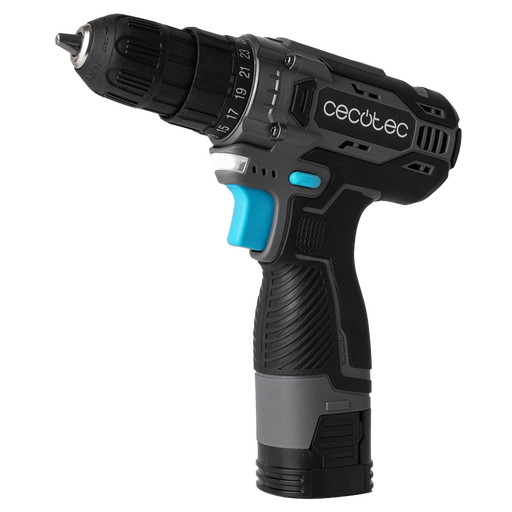
Why this product suits this type of user: This kit is for anyone who needs a full set of accessories for furniture assembly, repairs and occasional drilling. It includes two 2.0Ah batteries, a charger, a case, and a selection of screwdriver bits and drill bits.
The listing clearly states that a battery, charger and accessories are included. So there’s no uncertainty about whether you’ll need to buy extra items for a bare tool.
38 Nm torque, two speed settings, 25+1 settings, LED work light and two batteries.
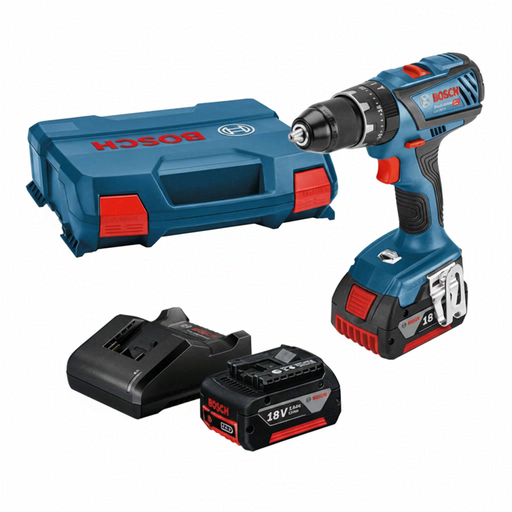
Why this product suits this type of user: This cordless combi drill handles screwdriving, drilling and hammer drilling. With two 3.0Ah batteries, a charger and an L-Case, it’s designed for regular work with a range of materials.
The specifications clearly distinguish between torque, speed and maximum impact rate. The 13mm metal chuck and 20+2 settings also make it easier to assess the tool’s capabilities.
63 Nm hard torque, 0–500/0–1,900 rpm, up to 28,500 impacts per minute and electronic motor monitoring.
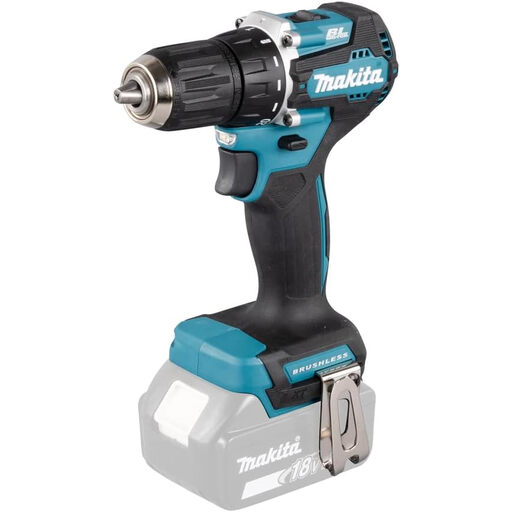
Why this product suits this type of user: This compact Makita cordless drill driver is designed for people who already use the Makita 18V lithium-ion system and want a lightweight bare tool for screwdriving and drilling.
The listing clearly states that the battery and charger aren’t included. This lets buyers check in advance whether their existing Makita 18V batteries are compatible.
Brushless motor, 40 Nm torque, 0–1,700 rpm, 13mm chuck, twin LED lights and electronic overload protection.
A standard cordless drill driver is all you need for screwdriving, furniture assembly and drilling into wood or metal. A combi drill is a good choice if you occasionally need to work on brick, sand-lime brick or light masonry. The tools listed above aren’t intended to replace a rotary hammer for reinforced concrete.
If you already own several tools, think of the battery system as a long-term cost. Sharing a battery between a saw, a lamp and a drill can reduce the number of chargers you need. If you’re buying a new tool, an 18V cordless drill driver kit with two batteries gives you more flexibility, while a bare tool may be enough if you already own compatible batteries.
We’ve put together a complete, regularly updated list of products that meet these strict selection criteria and fully comply with the safety regulations in force in the EU.
Runtime depends on battery capacity, the material, drill bit size and the load. A 2.0Ah battery is lighter and suitable for shorter jobs. For longer sessions, 3.0Ah or more, or a spare battery, can be useful. However, the manufacturer’s Ah rating doesn’t give you a fixed runtime for every application.
It depends on the wall and the tool’s features. A drill driver is suitable for wood and metal. For light drilling into brick or masonry, choose a model with a selectable hammer function. For concrete or very hard masonry, a rotary hammer with a suitable drill bit is the better choice.
Running costs mainly come from the electricity used by the charger and, if needed, replacement batteries. The electricity used per charge is usually cheaper than buying an additional battery. For a realistic estimate, consider battery capacity, charging cycles, spare-part availability and your existing battery system together.