
Lieferung heute & morgen

Qualitätsgarantie

Willkommens-Angebote freischalten: KOSTENLOSE Lieferung | Bis zu 80 % RABATT | Kostenlose 30-Tage-JoyPlus-Testphase
App herunterladen
A high-performance cordless hammer drill driver is a cornerstone tool for countless projects, whether you're a professional tradesperson or an ambitious DIY enthusiast. But the market is flooded with technical specs and marketing jargon that can make choosing the right one difficult. The wrong choice leads not only to frustration but also to unnecessary expense. As your Joybuy Product Recommendation Officer, I'll help you identify the critical features and avoid common purchasing pitfalls.
Before we dive into the technical details, it's crucial to understand the common misconceptions that often lead to buyer's remorse.
Focus your selection on the following three objective criteria to find a tool that meets your needs as a tool for renovation and other demanding tasks.
Torque indicates the rotational force the tool applies for screwing or drilling. It's important to distinguish between:
A professional-grade cordless drill comes standard with a 2-speed gearbox. The first gear offers low speed and high torque for powerful screwdriving. The second gear delivers high speed for rapid drilling progress in wood or metal. A finely adjustable torque clutch with at least 15 settings is essential to precisely match the force to the specific screw and material.
The 18V class has established itself as the standard for a balanced ratio of power to weight. If you already own batteries and a charger from a specific brand, purchasing a so-called bare tool (without a battery and charger) is the most economical option. Models like the Makita 18V bare tool allow you to expand a high-quality tool collection cost-effectively. Pay attention to compatibility within the battery system (e.g., Makita LXT).
Professional tools are distinguished by details that extend their lifespan under harsh conditions. These include:
Here are some recommendations tailored to different needs and use cases.
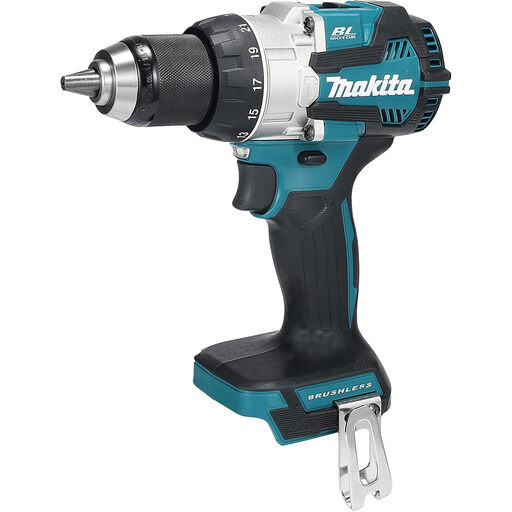
Why This Fits Their Persona: This model offers an excellent balance of power (up to 73 Nm), precision (2-speed gearbox), and durability. It's an ideal all-rounder for screwdriving and drilling in wood, metal, and masonry—perfect for demanding use in renovations or on the job site.
It bypasses the torque trap with a finely adjustable gearbox and sensitive electronics that make its powerful performance controllable. The brushless motor is part of a robust overall package.
XPT (eXtreme Protection Technology) provides effective protection against dust and splash water, increasing reliability under job site conditions. Compact design at only 17.5 cm in length.
Why This Fits Their Persona: For users who have already invested in the Makita 18V LXT battery system, buying this tool as a bare-tool version is the smartest choice. You get a full-featured professional hammer drill driver without paying for batteries and chargers you already own.
This approach avoids the cost trap of having to purchase a complete kit with every new tool. It maximises the value of the investment already made in the battery system.
Maximum cost savings and flexibility by using existing Makita 18V LXT batteries. Full professional-grade performance at a bare-tool price.
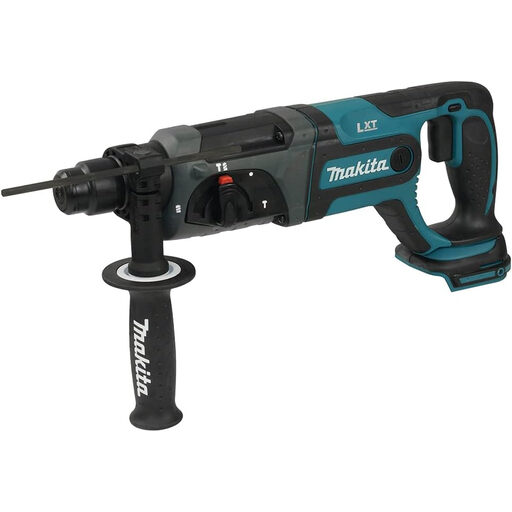
Why This Fits Their Persona: Anyone who regularly drills into concrete needs the specialised power of a rotary hammer. This model is designed for electricians, installers, or renovators who need to set anchor holes repetitively or perform light chipping work.
This tool resolves the confusion between a hammer drill driver and a rotary hammer. It is the correct choice for concrete, preventing wear and tear or overload on an unsuitable tool.
The pneumatic hammer mechanism ensures rapid drilling progress in the hardest materials with minimal user pressure. Compatible with SDS-Plus bits for a secure hold and optimal power transfer.
We have compiled a complete, up-to-date list of products that fully meet these strict selection criteria and safety regulations.
For occasional, small-diameter holes (e.g., 6 mm) in softer concrete or screed, a powerful 18V cordless hammer drill driver may suffice. However, it is unsuitable for regular work in hard, reinforced concrete. The mechanical hammer mechanism will wear out quickly, and drilling progress will be slow. In this case, a cordless rotary hammer (bare tool) or a full kit is the technically superior and more durable solution.
The runtime depends on three factors: battery capacity (measured in amp-hours, Ah), the application, and the motor technology. A 5.0 Ah battery will last significantly longer than a 2.0 Ah battery. Drilling into masonry with the hammer function engaged consumes more energy than driving screws into wood. A brushless motor operates more efficiently, delivering on average up to 30% more runtime per charge than a comparable brushed motor.
These two values describe the drill's behaviour in different situations.