
Lieferung heute & morgen

Qualitätsgarantie

Willkommens-Angebote freischalten: KOSTENLOSE Lieferung | Bis zu 80 % RABATT | Kostenlose 30-Tage-JoyPlus-Testphase
App herunterladen
A 1-litre thermos flask is ideal for the breakfast table, the office, lengthy meetings or serving coffee and tea to guests. This size is practical for many households: depending on the cup capacity, one litre is enough for approximately eight cups, according to product specifications.
However, not all models are suitable for the same tasks. Marketing claims about insulation duration, leak-proofing and ease of use should therefore be checked against the technical specifications.
The claims “hot for 12 hours” or “cold for 24 hours” generally describe an ideal value. Factors including the starting temperature, fill level, how often the flask is opened and the ambient temperature are also important. If only a small amount is poured in, it will usually cool down faster than a completely full container.
You should therefore check whether the manufacturer says “up to” 12 hours hot and “up to” 24 hours cold. This wording does not mean that the temperature will remain constant throughout the entire period.
A secure lid is important when transporting and storing the flask. Nevertheless, the flask should be fully closed before packing and transported upright wherever possible. Worn seals, a lid that has not been fitted correctly or overfilling can affect its ability to prevent leaks.
When choosing a leak-proof thermos flask, it is therefore worth looking at the closure design, care instructions and availability of replacement parts.
A stainless-steel thermos flask with double-walled vacuum insulation is less susceptible to impact damage than a flask with a glass liner. Glass can be damaged if dropped or exposed to sudden, significant changes in temperature. However, some households prefer glass inner containers for serving coffee or tea.
Important: A decorative glass carafe is not automatically an insulated flask. Several glass products in the range are specifically intended for cold or room-temperature drinks and are not suitable for hot liquids.
For keeping drinks hot or cold for longer, double-walled vacuum insulation is an important technical feature. With stainless-steel models, the product description should clearly state the material and insulation design. A simple glass bottle or decorative drinks container will not provide the same function.
Also check whether the lid consists of several parts and whether the seals can be removed for cleaning. Coffee residue and tea stains tend to build up in hard-to-reach areas.
A thermos flask with one-handed closure is practical in the office or at breakfast when one hand is already holding a cup. Quick-Tip or Quick-Press systems allow you to open suitable models with one finger and pour in a controlled manner.
For everyday use, three points matter:
An insulated flask with a one-litre capacity is suitable for several cups, while taking up less space than larger serving jugs. A slim shape can be useful for narrow kitchen cupboards or office cabinets. The handle should be sturdy and designed to prevent slipping, particularly when the flask is filled with hot coffee.
Before buying, you should also consider the filling opening. A wide opening makes filling and cleaning easier; with narrow openings, a suitable bottle brush may be required.
The following models differ in terms of material, operation and intended use. The insulation-duration figures come from the respective product information and should be understood as manufacturer specifications.
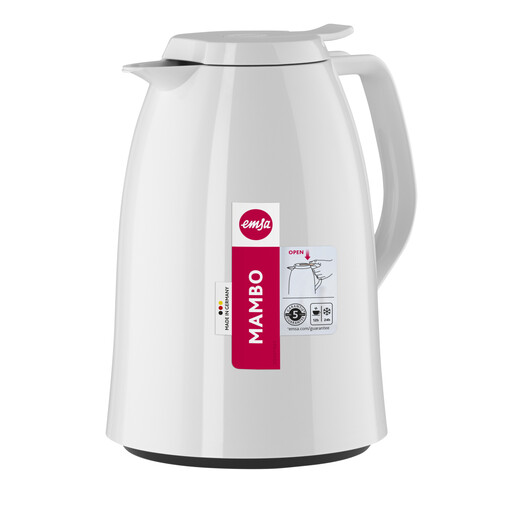
Why this product suits this profile: This classic insulated flask has a 1.0-litre capacity, a Quick-Press closure and a wide opening for filling and cleaning. It is ideal for households looking for a straightforward coffee flask that keeps drinks hot.
The product specifications state that the lid is 100% leak-proof and can be operated with one hand. This clearly sets out the closure and ease-of-use features.
1.0-litre capacity; according to the product specifications, keeps drinks hot for up to 12 hours and cold for 24 hours.
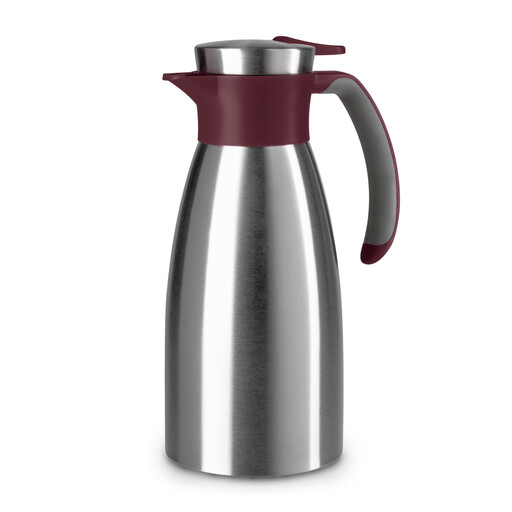
Why this product suits this profile: The double-walled stainless-steel construction, non-slip Soft Grip handle and slim shape are designed for users who place greater importance on material specifications and ergonomic handling.
The product description specifies vacuum insulation, a one-finger Quick-Tip closure and a leak-proof design. This makes the key buying criteria clear.
Double-walled stainless steel; manufacturer claims of up to 12 hours hot and 24 hours cold.
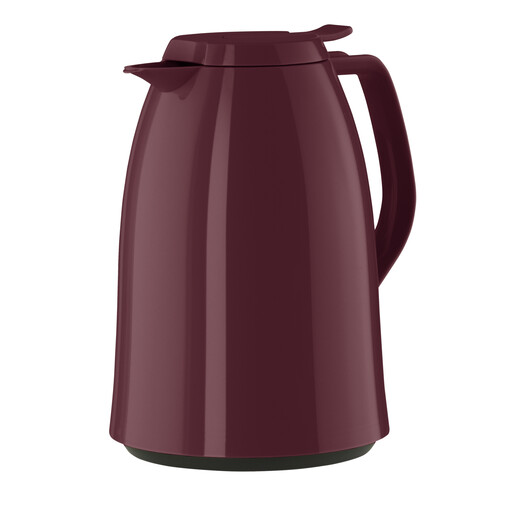
Why this product suits this profile: For regular coffee breaks, offices or events, this model offers one-handed operation, a wide filling opening and, according to the product information, a five-year guarantee.
The specifications mention the Quick-Tip closure, a 100% leak-proof lid and a wide opening. This helps reduce common problems when pouring and cleaning.
According to the product description, keeps drinks hot for 12 hours and cold for 24 hours; wide opening for cleaning.
Rinse an insulated flask with warm water and a mild cleaning product after every use. Leave it to dry completely with the lid open. Abrasive cleaners and harsh chemicals can damage surfaces or seals.
With coffee and tea, you should not leave residue in the container for extended periods. Preheating the flask with hot water before filling can help support its insulating performance. For cold drinks, using cold water is advisable accordingly.
Models with a glass liner require extra care: do not drop them, avoid exposing them to sudden temperature shocks and do not use metal spoons inside. Carbonated drinks or dry ice are not suitable for many glass inner containers.
We have put together a complete, regularly updated list of products that fully meet these strict selection criteria and the safety regulations applicable in the EU.
That depends on the cup size. At around 125 millilitres per cup, 1,000 millilitres is approximately eight cups. With larger mugs, the contents will provide fewer servings accordingly.
Fill the flask as fully as possible with coffee that is already hot and close the lid immediately. Briefly preheating it with hot water can help. Frequent opening, a low fill level and cold ambient temperatures will shorten the time the coffee stays hot.
Its service life depends on the body, lid, seals and how it is handled. Clean the flask regularly, avoid dropping it and check the lid for cracks or signs that the seal is becoming less effective. If the seals or lid become worn, it is important to check whether the manufacturer offers replacement seals or replacement lids.