
Lieferung heute & morgen

Qualitätsgarantie

Willkommens-Angebote freischalten: KOSTENLOSE Lieferung | Bis zu 80 % RABATT | Kostenlose 30-Tage-JoyPlus-Testphase
App herunterladen
A 2.5 TOG baby sleeping bag with legs can be a practical option for children aged around 12 to 24 months when the bedroom is cool, at 16–20 °C, and your child moves around a lot while sleeping or getting up. Unlike a traditional sleeping bag, a style with separate legs gives your child more freedom to turn over, crawl and walk.
There are, however, a few common pitfalls to watch out for when buying. A high TOG rating alone tells you nothing about the fit, soft fabric is not necessarily tested for harmful substances, and a generous size can pose a safety risk around the neck or armholes. The following criteria will help you assess product descriptions objectively.
2.5 TOG describes the thermal insulation of a sleeping bag. However, the rating is not a blanket recommendation for what your child should wear underneath. The room temperature, your child’s individual comfort and the manufacturer’s guidance are all important.
The baby sleeping bag for 16–20 °C featured here is designed for this temperature range. Avoid simply adding extra blankets, as this could make your child too warm. Choose clothing to wear underneath according to the actual temperature, and check your child regularly for signs of overheating.
A cotton baby sleeping bag may feel comfortable, but the material description alone does not confirm that it has been tested for harmful substances. If you’re specifically looking for an OEKO-TEX baby sleeping bag, check that the product explicitly mentions OEKO-TEX Standard 100. According to the product information, the cotton in the Vowia model is tested for harmful substances to this standard.
This does not mean that the product has medical properties. It is simply information about the stated material testing. You should also check the product description for details about the filling, lining, zip and seams.
A sleeping bag should not be so large that your child’s head could slip through the closed neckline. The armholes should also fit securely without being restrictive. For children aged between 12 and 24 months, height is therefore more important than age alone.
A style bought ‘to grow into’ may be too loose around the neck and shoulders. It’s better to choose the right size, with enough room for movement around the crotch and legs.
A 2.5 TOG baby sleeping bag is intended for cooler bedrooms. The Vowia model mentioned here is stated to be suitable for 16 to 20 °C. A room thermometer can help you check the actual temperature where your child sleeps.
Important:
A sleeping bag with foot openings should provide enough room for a nappy and for movement, without excess fabric around the neck or arms. Separate legs can be useful for active toddlers, as they may be less likely to get caught in the bottom of the sleeping bag when standing up or walking.
The Vowia model is listed as 80 cm long in size L and 90 cm long in XL. According to the size chart, size L is intended for children 76–89 cm tall, while XL is for 89–101.5 cm. Compare these measurements with your child’s actual height before buying.
The product description should provide clear information about the fastening, zip guard, neck opening and material composition. According to the product information, the outer fabric and lining of the Vowia styles are made from 100% cotton, while the padding is polyester.
The manufacturer also states that the products comply with EN 16781, the European safety standard for baby sleeping bags. Even so, check each individual product page and follow the warnings. A standard does not replace checking that the sleeping bag fits your child and is undamaged.
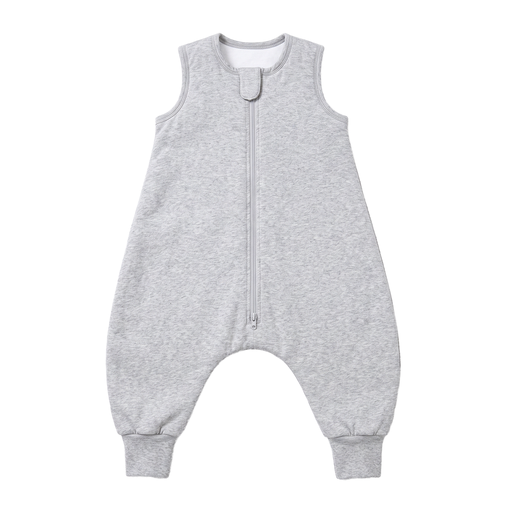
Why this product is a good match: According to the size chart, size L is intended for children 76–89 cm tall. It combines a clearly stated TOG rating with separate legs.
The product information gives a specific temperature range of 16–20 °C, material composition, and size and weight ranges, rather than making only general claims about warmth.
According to the product information, the outer fabric and lining are 100% cotton. It also features a two-way zip and a zip guard.
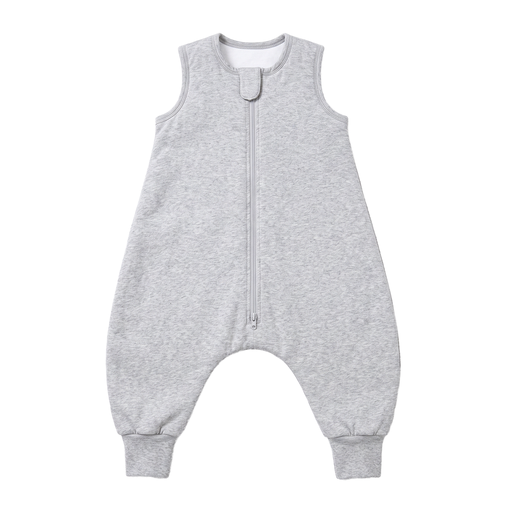
Why this product is a good match: According to the product information, size XL is intended for children 89–101.5 cm tall, with room for active toddlers in the stated age range.
The stated fit is based on height and weight. The product information also explicitly mentions OEKO-TEX Standard 100 and EN 16781.
2.5 TOG for the stated temperature range, a deep crotch for extra room and ribbed leg cuffs.
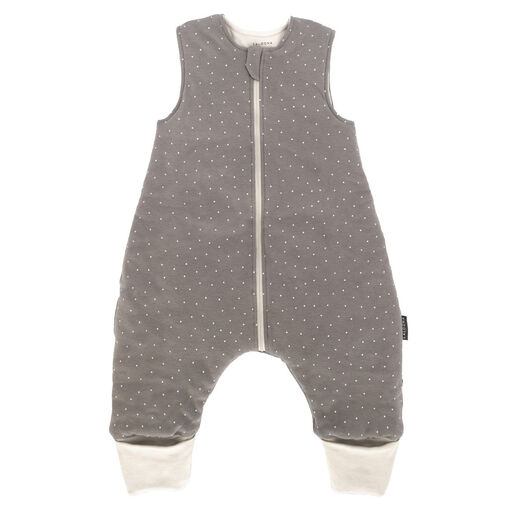
Why this product is a good match: The 70 cm size may suit smaller children or work well as a transition option. The flexible foot covering can be useful when conditions change.
The product page lists a 2.5 TOG rating, a full-length zip with a zip guard and fold-over foot cuffs. Check carefully that the 70 cm size is right for your child before buying.
The foot cuffs can be adjusted; according to the product information, the cotton fabric is certified to OEKO-TEX Standard 100.
We’ve put together a comprehensive, regularly updated list of products that meet these strict selection criteria and the safety regulations in force across the EU.
Before buying a baby winter sleeping bag, check the care instructions. According to the product information, the Vowia models should be washed on a delicate cycle at a maximum of 30 °C and are not suitable for tumble-drying. Reshape the sleeping bag after washing and leave it to air-dry.
A two-way zip can make night-time nappy changes easier without fully exposing your child’s upper body. Before each use, check the zip, seams, cuffs and fabric for damage. Replace the sleeping bag if it shows visible wear or the neckline no longer fits properly.
The Vowia models featured here are stated to be suitable for 16–20 °C. The clothing your child wears underneath will depend on the room temperature, the sleep space and your child. Do not use an extra blanket.
Height, weight, and the fit around the neck and armholes are key. According to Vowia’s size chart, size L is intended for children 76–89 cm tall, while XL is for 89–101.5 cm. If your child’s head could pass through the closed neckline, the style is not suitable.
How long it lasts depends on your child’s growth, how often it is washed and how much the material wears. Use a sleeping bag only while it still fits safely and there is no damage to the zip, seams or fabric. Growing children often need a larger size sooner than they need a warmer sleeping bag.