
Lieferung heute & morgen

Qualitätsgarantie

Willkommens-Angebote freischalten: KOSTENLOSE Lieferung | Bis zu 80 % RABATT | Kostenlose 30-Tage-JoyPlus-Testphase
App herunterladen
A 2-in-1 steam cleaner typically combines an upright steam mop with a detachable handheld steam cleaner. This means you can clean sealed floors as well as kitchen surfaces, windows, grout, walls and hard-to-reach corners. For households with children, pets or lots of smooth surfaces, this design can be particularly practical.
However, marketing claims about steam cleaners can quickly lead to a bad purchase. High wattage, extensive accessory lists and especially short heat-up times alone don't tell you much about how well a device will perform in everyday use. What really matters is how the technical specifications match your own cleaning needs.
A 1200 W steam cleaner can heat water quickly, but the wattage doesn't directly describe the steam pressure or the running time. For practical use, steam pressure, steam volume and adjustability are also important. A device with 3 bar can deliver different amounts of steam at the nozzle depending on its design.
So look for a combination of:
A steam cleaner that heats up quickly is convenient for smaller cleaning jobs. However, with a small tank, the steam time can be limited. The ROUNY STEAMO X model, for example, has a 250 ml water tank. According to the product specifications, the steam time on the low setting is around 14 minutes, and on the high setting around 10 minutes.
For individual kitchen surfaces or a bathroom, that may be enough. If you want to clean several rooms one after another, you should plan for a larger tank capacity or an easy refilling option. Important: before refilling, the device must be unplugged and completely cool.
A long list of accessories is only useful if the attachments suit your own household. For a steam cleaner for floors, a sturdy mop head and washable pads are relevant. For a steam cleaner for windows, you need a suitable window attachment. Brushes with nylon or copper bristles can be helpful for grout and tough areas, but should not be used indiscriminately on delicate materials.
Check before you buy:
A steam cleaner with 3 bar falls into a device category suitable for many household applications. The pressure can help loosen dirt on grout, fittings or kitchen areas. However, it doesn't replace the right exposure time and mechanical support from a cloth or brush.
A low steam setting is useful for lighter soiling and more delicate surfaces that are explicitly suitable. A higher setting can be used on robust, sealed materials. The manufacturer's instructions for each surface take priority.
A 6 m long cable reduces the need to change sockets frequently. This is practical for floors in several rooms or for high wall areas. However, a long cable also increases the risk of tripping over it. It should be guided behind the device during use and wound up neatly after it has cooled down.
Steam is not suitable for every surface. Unsealed wood, delicate plastics, certain varnishes, natural stone, sensitive textiles and cold glass can be damaged by heat or moisture. Always test the steam on an inconspicuous area first. For windows and mirrors, avoid a large temperature difference, as glass can be damaged under unfavourable conditions.
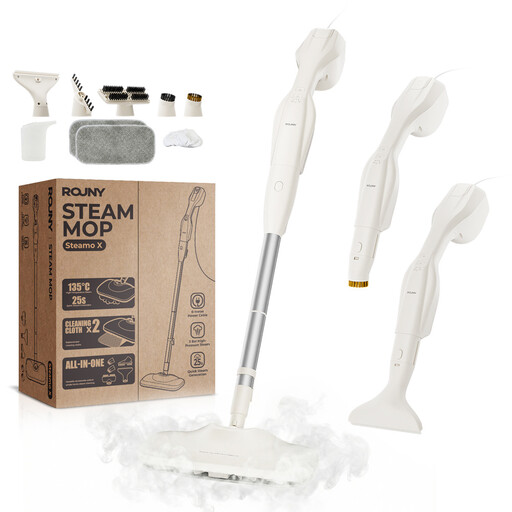
Why this product fits the profile: This device combines a steam mop and handheld steam cleaner in one compact solution. With a heat-up time of around 25 seconds, a 6 m cable and five cleaning attachments, it's suitable for small to medium-sized households.
The product specifications mention two steam levels, 2.5–3 bar pressure and a specific steam time. This makes it easier to assess the scope than relying on wattage alone.
1050–1250 W power range, 25-second heat-up time, 6 m cable and attachments for floors, windows, walls and corners.
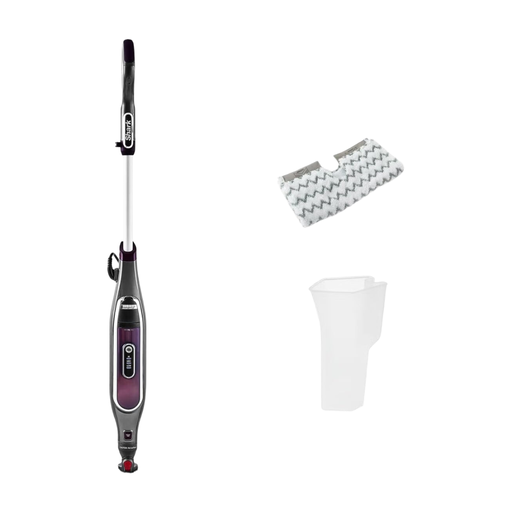
Why this product fits the profile: The focus is on sealed hard floors. The adjustable steam control, two washable Dirt-Grip pads and the 6 m connection make it ideal for regular floor care.
The focus on hard floors prevents false expectations of a universal handheld device. The pads are washable and the steam can be adjusted to suit the floor area.
1200 W, 380 ml tank, around 30-second heat-up time, two washable pads and an additional steam level for stubborn floor dirt.
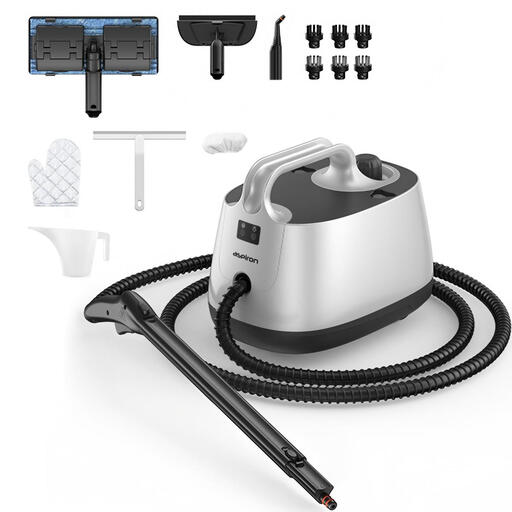
Why this product fits the profile: With a large tank and 21 accessories, this model is aimed at users who want to clean not only floors but also windows, grout, upholstery, carpets and hard-to-reach areas.
The range of use is described through specific attachments and the 1.5 l tank. Buyers can check in advance whether the space required and the accessories suit their own household.
1500 W, 4 bar steam pressure, 1.5 l water tank and 21 accessories for multiple areas of the home.
We've put together a complete, regularly updated list of products that fully meet these strict selection criteria and the safety regulations in force in the EU.
To ensure the longest possible service life, only use the water specified by the manufacturer. Cleaning agents, fragrances, vinegar or other liquids should only be added to the tank if the instructions explicitly allow it. Otherwise, deposits, fumes or damage can occur.
After each use, you should:
The term chemical-free cleaning means that no cleaning agent is added during intended operation. It should not be equated with general suitability for all materials or with a medical efficacy claim.
The lifespan depends on frequency of use, water quality, care and material quality. Limescale can affect heating elements and nozzles. Therefore, follow the manufacturer's descaling instructions and do not replace damaged cables or seals yourself.
The cost depends on the power consumption and the actual operating time. A device with 1200 W theoretically consumes 1.2 kWh during one hour of continuous operation. In practice, it is often used for shorter periods or switched off between tasks. So for running costs, the real cleaning time is more important than the wattage alone.
Many models offer suitable attachments for this. Only use the window attachment on approved, intact surfaces and avoid large temperature differences on cold glass. In the kitchen, keep steam and moisture away from sockets, electrical appliances, unsealed wood and heat-sensitive surfaces.