
Lieferung heute & morgen

Qualitätsgarantie

Willkommens-Angebote freischalten: KOSTENLOSE Lieferung | Bis zu 80 % RABATT | Kostenlose 30-Tage-JoyPlus-Testphase
App herunterladen
A 2 mm clear PVC table protector should protect your table from everyday wear without hiding the wood grain, colour or finish. Waterproof and wipe-clean properties are especially useful for families, home offices, kitchens, schools and care settings. However, products can vary considerably in their edges, dimensions, surface texture and heat resistance.
If you focus only on the material thickness or a low price, you may end up with a poorly fitting table protector, air bubbles or permanent warping. The following points will help you assess marketing claims objectively.
Several table protectors on offer are described as heat-resistant up to 80 °C. This may be relevant for warm plates, coffee cups or serving dishes. However, it does not mean you can place hot pans straight from the hob or baking trays on the protector.
Some products also state that temperatures above 60 °C can cause permanent warping. Buyers should therefore check the specific product description and safety information. For very hot items, it is sensible to use an additional trivet.
A rectangular table protector in a standard size will not necessarily fit every table. Before buying, measure the length and width of the tabletop in several places. A roll-cut protector may also have a slight shrinkage tolerance of around 1 to 5 mm.
A clear table cover that is too small will not protect the edges properly. On the other hand, material that overhangs the table can catch on chairs or shift out of place. For unusual sizes, a made-to-measure table protector or a cut-to-size option is a practical choice.
A non-slip table protector can sit relatively securely on wood, matt finishes and textured tabletops. On glass or high-gloss surfaces, however, air bubbles may form or the protector may stick more firmly. Some product descriptions therefore recommend placing a thin layer of fabric between the table and the protector.
Before laying it down, make sure the tabletop is clean, dry and dust-free. Rolled products often need 24 to 48 hours to flatten completely. Gently weighing down the edges can help.
At 2 mm thick, a protector is more stable than very thin plastic sheets and can help guard against spills, stains and light scratches in everyday use. The material remains transparent, leaving the natural tabletop visible. However, the term scratch-resistant table protection should not be taken to mean protection against sharp knives or heavy mechanical wear.
For dining tables, desks and kitchen worktops, these features are particularly useful:
A wipe-clean PVC tablecloth can usually be cleaned with a soft, damp cloth and mild soapy water. Scouring pads, concentrated bleach and harsh cleaning products can make the clear surface look cloudy.
For families with children or creative workspaces, a protective cover for the dining table or for desks and craft tables is useful. A waterproof surface can also reduce cleaning time in offices, cafés and care settings. If the surface will come into direct contact with food, always follow the relevant manufacturer’s guidance.
A straight-cut edge is practical and easy to trim. A table protector with a bevelled edge, on the other hand, has a 45-degree V-shaped edge. This can feel more comfortable when you rest your arms on it and gives the edge of the table a less sharp-looking finish.
For delicate furniture, check whether the manufacturer recommends the protector for the particular surface. Several models include specific guidance on avoiding bubbles on glass and high-gloss surfaces.
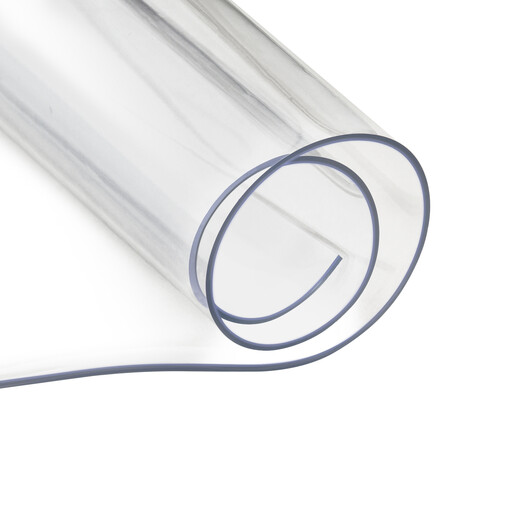
Why this product is a good match: The 70 x 120 cm rectangular size is suitable for smaller dining tables, side tables or desks. Its clear finish leaves the tabletop visible.
The stated 2 mm thickness and specific dimensions make it easier to choose than a very thin or oversized protector.
Waterproof surface, easy to clean and, according to the product description, a non-slip finish.
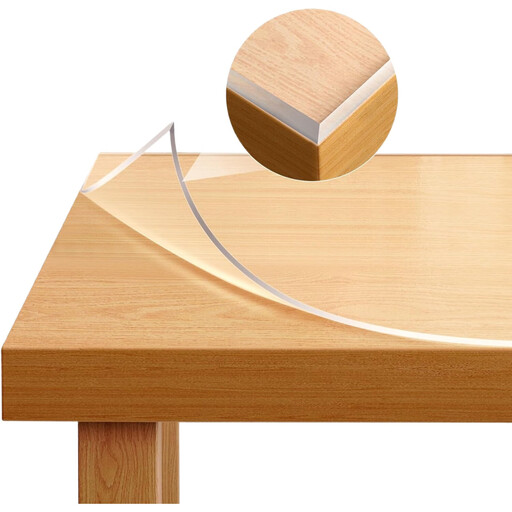
Why this product is a good match: The longer cover is suitable for large dining tables. Its 45-degree bevelled edge gives the table edge a more comfortable finish.
The edge shape avoids the drawback of a hard, straight-cut protector edge. However, you should still follow the guidance on heat sources and glass surfaces.
2 mm PVC, a water- and grease-resistant surface, and a textured underside according to the product description.
Why this product is a good match: The large size is suitable for dining, work or care tables that see frequent use. According to the product description, the protector can be cut to size if needed.
The larger size reduces the risk of a standard protector failing to cover the whole tabletop. When cutting it to size, use a flat work surface and handle the cutting tool safely.
Waterproof and wipe-clean, and rated as heat-resistant up to 80 °C by the supplier; hot items should still not be placed directly on it.
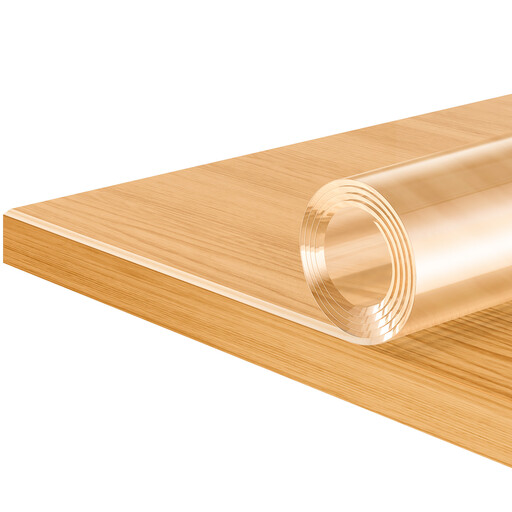
Why this product is a good match: This medium-sized cover combines a clear finish with a bevelled edge, making it suitable for dining areas or work surfaces where you often rest your arms.
The shaped edge is an alternative to protectors with a sharp edge. On glass or high-gloss surfaces, use the recommended layer underneath.
2 mm PVC, a water-resistant surface, a non-slip texture and, according to the product description, reduced noise from cutlery.
We’ve put together a complete, regularly updated list of products that meet these strict selection criteria and fully comply with the safety regulations in force in the EU.
For solid wood or painted tables, it is a good idea to test the protector on an inconspicuous area before using it regularly. This lets you check for moisture, pressure marks or changes to the surface.
The protector is usually delivered rolled up. Unroll it and lay it on a clean, flat surface. Depending on the material, it can take 24 to 48 hours to flatten completely. Gently weighing down the edges may help. Avoid high temperatures from hairdryers or heaters, as these can warp PVC.
That depends on the specific manufacturer’s guidance. Some models are rated for temperatures up to 80 °C. This does not mean they are suitable for pans straight from the hob or baking trays. A trivet is still the safe choice for hot items.
Its lifespan depends on everyday wear, cleaning, exposure to sunlight and how it is treated around sharp or hot objects. With proper use, a 2 mm protector may last longer than thinner alternatives. Visible scratches, permanent warping, heavy clouding or torn edges are signs that it is time for a replacement.