
Lieferung heute & morgen

Qualitätsgarantie

Willkommens-Angebote freischalten: KOSTENLOSE Lieferung | Bis zu 80 % RABATT | Kostenlose 30-Tage-JoyPlus-Testphase
App herunterladen
A 2 mm clear PVC table protector should protect your furniture without hiding its surface. For dining tables, desks, kitchen worktops and craft surfaces, protection from spills, scratches, grease and everyday wear is particularly important. But product claims such as ‘heat-resistant’, ‘non-slip’ or ‘made to measure’ don’t always mean the same thing.
The following points can help you choose the right table protector and avoid common buying mistakes.
A heat-resistant table protector isn’t automatically suitable for hot pans or baking trays. The stated temperature limit is what matters. Some models are listed as heat-resistant up to 80 °C. That may be enough for warm plates or coffee cups, but it’s no substitute for a heat-resistant mat for very hot items.
You should also keep the protector away from naked flames and heat sources, and avoid prolonged exposure to direct sunlight. PVC can warp or discolour at high temperatures.
A table protector shouldn’t extend too far over the edge of the table or be too short. Before buying, measure the length and width of the tabletop in several places. If you’re choosing a rectangular table protector, also check that the shape of the protector suits the corners and edges of your furniture.
A table protector with a bevelled edge can feel more comfortable along the front of the table. Its 45-degree edge is less sharp and makes it easier to rest your arms on the surface. However, it’s no substitute for measuring carefully.
A PVC table cover tends to be less noticeable on wood, matt finishes and textured surfaces. Air bubbles can form on glass or high-gloss tabletops, though. Some products therefore recommend placing a thin layer of fabric between the table and the protector. Depending on the design, you may also need to allow for slight shrinkage of around 1 to 5 mm.
At 2 mm thick, this type of protector has more substance than thinner covers, which can crease or move around more easily. It can shield your table from splashes, abrasion and everyday scratches, while also helping to soften the sound of cutlery. The level of protection you get will also depend on the tabletop, how you use the protector and how you care for it.
Check that the material is specifically listed as PVC, and look at the stated properties. Claims such as ‘scratch-resistant’ or ‘abrasion-resistant’ don’t mean the surface is impervious to sharp knives. Cutting directly on the protector can damage it.
A waterproof table protector or wipe-clean table cover is particularly useful for family homes, kitchens and dining tables. A smooth, non-absorbent surface can usually be cleaned with a soft, damp cloth. For grease or drink stains, you can use mild soapy water, unless the product description advises otherwise.
Scouring products, rough sponges and sharp objects can affect the clarity of the surface. If you’ll be using the protector with food, also check whether the manufacturer explicitly states that it is suitable for direct contact with food.
A textured or non-slip underside can help reduce movement during everyday use. However, it’s still important to clean the surface thoroughly before laying the protector down. Both the tabletop and the protector should be dry, clean and free from dust.
If you need a made-to-measure table protector, check whether the model can be cut to size. Use a stable work surface and a suitable cutting tool, and keep children and pets well away while cutting. If the protector has a bevelled edge, don’t trim it without checking first, as this could alter the edge.
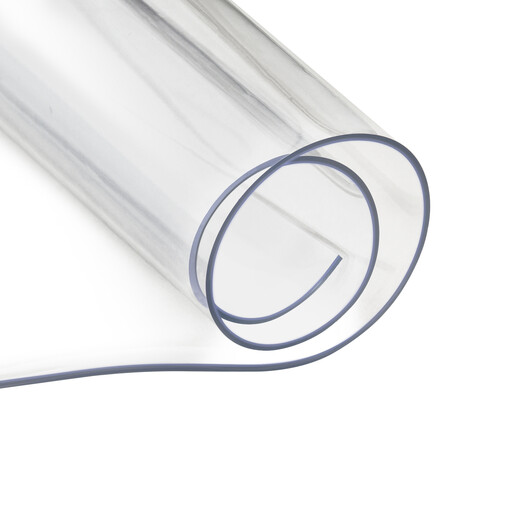
Why this product suits this need: Its rectangular size is a good fit for smaller dining tables, desks and work surfaces. The product description specifies 2 mm-thick PVC, water resistance and cleaning with a damp cloth.
The stated dimensions and thickness make it easier to choose than a protector with no precise measurements. Be sure to observe the stated temperature limit of up to 80 °C.
2 mm PVC, clear finish, water-repellent surface and non-slip underside, according to the product details.
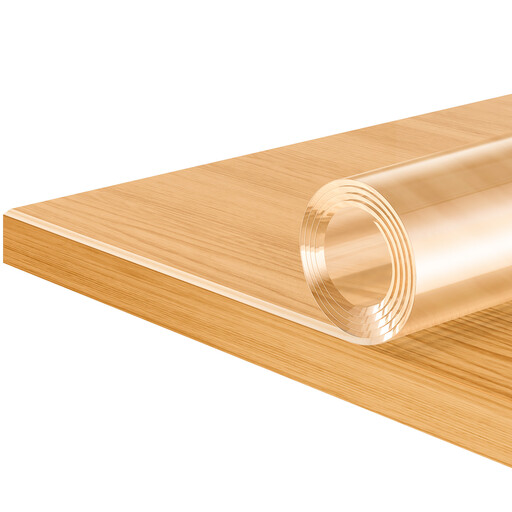
Why this product suits this need: This large rectangular cover is designed for longer dining tables or larger work surfaces. Its 45° bevelled edge is designed to make resting your arms on it more comfortable.
The product details note that shrinkage of 1 to 5 mm is possible. This helps you plan for the size more realistically, rather than expecting a millimetre-perfect fit.
2 mm PVC, waterproof and grease-resistant surface, bevelled edge and non-slip texture, according to the product description.
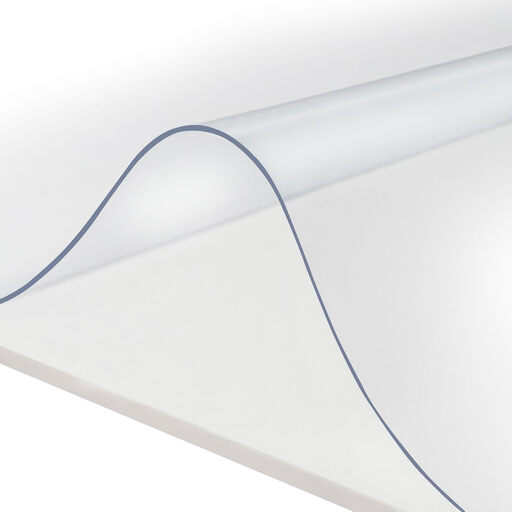
Why this product suits this need: This compact protector is designed for dining tables, kitchen worktops, desks and coffee tables. According to the product description, it is heat-resistant up to 80 °C and can be wiped clean for everyday use.
The temperature rating is more specific than a general claim of heat resistance. However, the product isn’t recommended for glass or high-gloss surfaces, as air bubbles may form.
A stated temperature limit of 80 °C, 2 mm PVC, a clear finish and cleaning with a damp cloth.
We’ve put together a complete, regularly updated list of products that meet these strict selection criteria and fully comply with the safety regulations in force in the EU.
A PVC table protector is designed to protect the surface. It won’t prevent every kind of damage, so you should also use suitable mats when dealing with intense heat, sharp tools or heavy objects.
Place the protector on a clean, dry tabletop and unroll it after delivery. Depending on the material, it may take 24 to 48 hours to settle onto the surface. Placing heavy objects along the edges can help. On glass or high-gloss surfaces, a thin layer of fabric can reduce air bubbles.
How long it lasts depends on exposure to sunlight, cleaning, temperature and wear. There’s no reliable way to give a single lifespan that applies to every protector. Regular wiping with a mild cleaner and avoiding sharp objects can help protect the surface.
That depends on the specific temperature rating. Some models are listed as suitable for temperatures up to 80 °C. Even so, very hot pans, frying pans or baking trays should be placed on a suitable heat-resistant mat. Avoid naked flames and intense heat sources.