
Lieferung heute & morgen

Qualitätsgarantie

Willkommens-Angebote freischalten: KOSTENLOSE Lieferung | Bis zu 80 % RABATT | Kostenlose 30-Tage-JoyPlus-Testphase
App herunterladen
A 2 mm transparent PVC table protector keeps the surface visible while protecting it from scratches, spills, stains and everyday wear. For families with children, delicate wooden tables or frequently used desks, a clear table protector can be more practical than a decorative tablecloth.
However, products vary in thickness, edge shape, surface grip and heat tolerance. Three common buying misconceptions can easily lead to the wrong choice:
A 2 mm-thick PVC sheet is more stable than very thin table covers. For many everyday uses, it lies flatter and can protect your table from scratches caused by crockery, writing equipment or craft materials. It’s not a substitute for a cutting mat, though: sharp knives and pointed objects can damage even a thicker sheet.
PVC is generally easy to care for. A smooth, non-porous surface can usually be wiped clean with a soft, damp cloth and mild detergent. Scouring pads, harsh bleach and sharp tools can affect its clarity.
A waterproof table cover protects the tabletop from spilled drinks, oil and damp food residue. But always look for a specific temperature rating when a product is described as “heat-resistant”. For example, the WOLTU model measuring 100 × 180 cm is stated to withstand temperatures of up to 80 °C. Other products may not specify an exact limit.
That means direct contact with frying pans, saucepans or dishes from the oven can’t automatically be considered safe. Place hot cookware on a suitable trivet. PVC table protectors should also be kept away from naked flames and strong, continuous sources of heat.
Measure the tabletop in several places before buying. For a rectangular table, length and width are what matter; edges that overhang can get in the way. Some rectangular table protectors can be cut to size with a sharp cutting tool. You’ll need a straight cutting guide and a safe working area.
Bevelled edges can be more comfortable for resting your arms on. For example, WOLTU models with 45-degree edges are designed to give the sides a more comfortable finish. Take particular care with glass and high-gloss surfaces. Depending on the manufacturer’s guidance, a thin fabric layer underneath may help prevent air bubbles. On matt wood, decorative surfaces or suitable worktops, the protector may sit more discreetly.
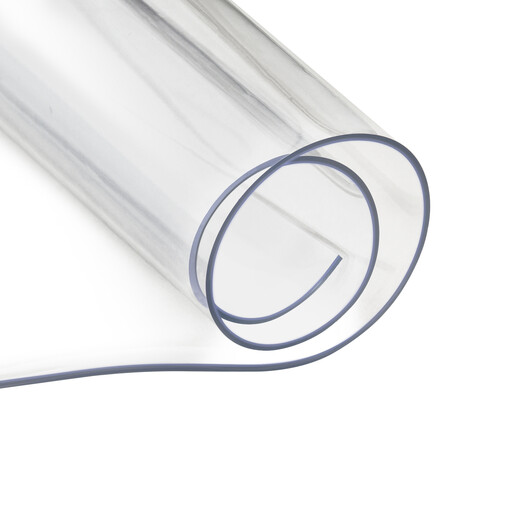
Why it suits this need: The rectangular shape fits many standard dining tables, desks and kitchen worktops. Its clear finish leaves the tabletop visible.
The stated 2 mm thickness and clearly specified dimensions make it easier to compare with other options. The smooth surface is designed to be wiped clean with a damp cloth.
2 mm PVC, waterproof design and 90 × 160 cm dimensions. The protector can be placed straight onto a clean surface, with no permanent fitting required.
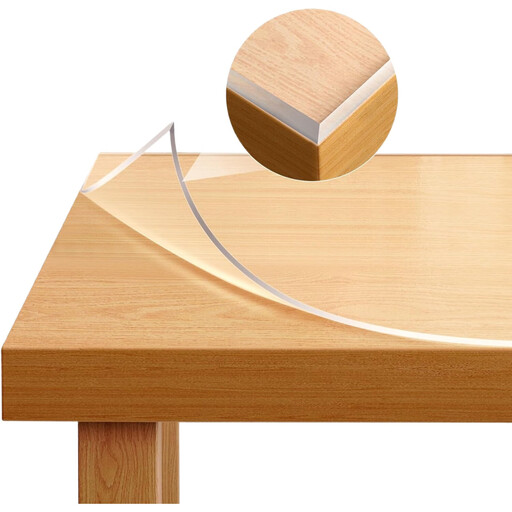
Why it suits this need: The bevelled edges are designed for long dining tables where the edge is regularly used as an armrest.
The 45-degree edge avoids the look and feel of a sharp, straight cut edge. However, follow the guidance for high-gloss and glass surfaces, as air bubbles may form.
2 mm PVC, a water- and grease-resistant surface, and rectangular dimensions of 90 × 180 cm. You can trim the protector to size if needed.
Why it suits this need: The larger size is a good fit for wide dining tables, workspaces or kitchen areas that see heavy daily use.
The product details state a thickness of 2 mm, a waterproof surface and heat resistance up to 80 °C. Even so, hot cookware from the oven or hob should be placed on a trivet.
The 100 × 180 cm size covers a larger area. The smooth surface is designed to be wiped clean with a damp cloth.
First, unroll the protector onto a clean, dry tabletop. Depending on the product, it may need to rest for 24 to 48 hours so the material can lie flat. Placing heavy, flat objects along the edges can help. Only use a hairdryer if the product instructions specifically recommend it, and always use a low heat setting.
For regular cleaning, a soft cloth with water and mild detergent is usually all you need. Wipe up spills promptly. Keep the protector away from abrasive cleaners, sharp blades and naked flames. If you have children or pets, store any packaging and offcuts safely.
We’ve put together a complete, regularly updated list of products that meet these strict selection criteria and fully comply with the safety regulations in force in the EU.
Its lifespan depends on UV exposure, friction, cleaning and whether it comes into contact with sharp or very hot objects. Regular care and a suitable surface can help it retain its appearance for longer. Expect it to age more quickly if it’s exposed to constant sunlight or used intensively in a commercial setting.
Several models can be trimmed with a sharp knife or suitable scissors. Mark out the desired size carefully before cutting. Remember to allow for any shrinkage tolerance and edge requirements stated by the manufacturer.
Not every PVC protector is suitable for these surfaces. Bubbles, sticking or changes in appearance may occur. Check the product details before laying it down. If the manufacturer recommends an underlay, use it across the entire contact area.