
Lieferung heute & morgen

Qualitätsgarantie

Willkommens-Angebote freischalten: KOSTENLOSE Lieferung | Bis zu 80 % RABATT | Kostenlose 30-Tage-JoyPlus-Testphase
App herunterladen
A 2 mm transparent PVC table protector shields the surface without completely hiding the wood effect, colour or grain. It’s suitable for dining tables, desks, kitchen worktops and tables that see heavy use in cafés, schools and nurseries. Before you buy, though, it’s worth taking a closer look at the material, edge shape and limitations.
Air bubbles can form on glass, glossy lacquered surfaces and other very smooth surfaces. Some PVC protectors may also stick more firmly to these surfaces. Check the manufacturer’s instructions before you buy. For delicate table tops, a thin cloth between the table and protector may help. However, this can change the appearance and how well the protector stays in place.
The term heat-resistant table protector doesn’t mean it can withstand any temperature. Some models are rated as heat-resistant up to 80 °C. Even so, hot pans straight from the hob, baking trays and frying pans can cause them to warp. You’ll still need to use mats for these items. Avoid naked flames and prolonged exposure to strong heat, too.
Buying a rectangular transparent table cover isn’t enough on its own. A roll of material may settle slightly or shrink a little after unpacking. Depending on the product, a tolerance of around 1 to 5 mm may be specified. Before buying, measure the table’s length and width, any overhang and any cut-outs. A transparent table protector that can be cut to size can be useful, but cutting it requires a straight edge and a suitable cutting tool.
PVC is waterproof and, if it has a smooth surface, can be cleaned with a damp cloth. At 2 mm thick, it’s more stable than very thin protectors and can reduce the noise of cutlery on the table top. However, it won’t provide complete protection against deep cuts. Don’t use sharp knives or pointed objects directly on the material.
Look for clear details about:
This makes a transparent PVC table cover a practical clear table protector for everyday use.
Measure the table top in several places. For rectangular tables with sides of different lengths, use the smaller measurement if you don’t want the protector to overhang. A bevelled edge may feel more comfortable at the front than a square edge. Even with a table protector with a bevelled edge, check that the dimensions suit the shape of your table.
Trimming can be useful for desks, craft tables and work tables. Make sure the protector is completely flat before cutting. Keep children away while you’re trimming it.
A wipe-clean table protector can usually be cleaned with a soft cloth and mild soapy water. Abrasive cleaners, rough sponges and highly concentrated bleach can make the transparent surface look cloudy. Most models are intended to be cleaned by hand; they aren’t automatically machine-washable.
Pay particular attention to the warnings for glass and glossy surfaces. A textured underside often sits more securely on wood, matt-finish boards and many worktops. Make sure the table is clean and dry before laying the protector down, so crumbs and dust don’t cause indentations.
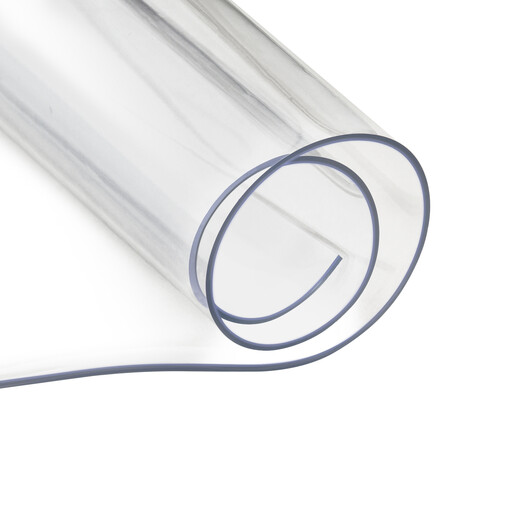
Why this product suits this profile: Its rectangular shape is a good fit for smaller dining tables, side tables or desks. The 2 mm PVC combines a compact size with a waterproof, wipe-clean surface.
The product details give specific measurements and a thickness of 2 mm, rather than making vague claims about durability. The protector is designed to be placed directly on the table top.
Transparent finish, 2 mm PVC and a rectangular shape; according to the product details, it can be cleaned with a damp cloth.

Why this product suits this profile: If you want a comfortable edge and a subtle look, this protector has a 45° edge, a crystal-clear surface and an anti-slip texture.
The bevelled edge gives it a less sharp-looking profile. The product details also clearly warn against naked flames and high temperatures.
45° V-shaped edge, 2 mm thick, waterproof and grease-resistant surface, and wipe-clean care.
Why this product suits this profile: Its larger size is designed for long dining tables, buffet areas, offices or workspaces that see frequent use. According to the product description, the protector is heat-resistant up to 80 °C.
The stated temperature limit helps you understand how to use it: warm plates are fine, but very hot cookware isn’t. The surface underneath should not be glass or a glossy material.
100x180 cm, 2 mm PVC, waterproof and wipe-clean; according to the product details, heat-resistant up to 80 °C.
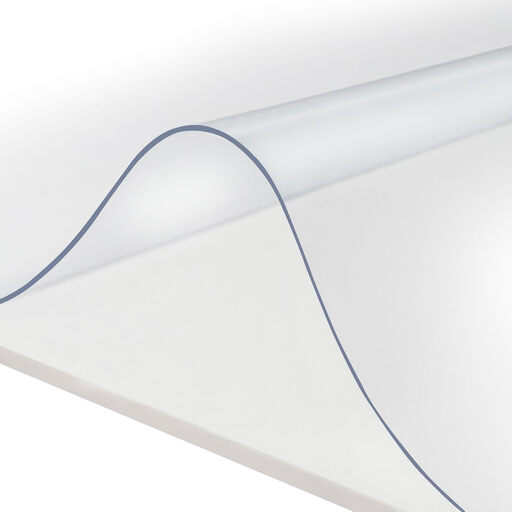
Why this product suits this profile: Its size works well for smaller dining tables, children’s craft tables and desks. The product details state that it can withstand temperatures up to 80 °C and can be cut to size.
The product details distinguish between warm use and high temperatures. They also warn that glass and glossy surfaces aren’t suitable because air bubbles may form.
Waterproof, wipe-clean surface, 2 mm thickness, rectangular shape and the option to cut it to size.
We’ve put together a complete, regularly updated list of products that meet these strict selection criteria and fully comply with the safety regulations in force in the EU.
Yes, a waterproof table protector can help keep liquids, oil, stains and everyday wear away from the table top. The key is to check the details for the specific product and make sure the surface underneath is suitable. If you plan to use it with food, check the manufacturer’s information about its intended use.
Its lifespan depends on how you use and clean it, how much sunlight it gets and whether it comes into contact with sharp or hot objects. A scratch-resistant table protector can guard against everyday scuffs, but it isn’t a substitute for a chopping board. Regular cleaning with mild products and avoiding heat can help it last longer.
This isn’t recommended for every type. Air bubbles can form on glass or glossy surfaces, and some protectors may stick to them. Check the warnings for the specific model before use. If the manufacturer allows it, a thin fabric layer between the glass and protector may reduce bubbles, but it could affect how securely the protector sits.