
Lieferung heute & morgen

Qualitätsgarantie

Willkommens-Angebote freischalten: KOSTENLOSE Lieferung | Bis zu 80 % RABATT | Kostenlose 30-Tage-JoyPlus-Testphase
App herunterladen
An electric car for kids, big enough for two siblings to share adventures, is at the top of many wish lists. But the selection is vast, and not every model delivers on its promise. As a Joybuy Product Recommendation Officer, I see daily which features truly matter and where the most common disappointments lie. Many well-intentioned gifts turn into a source of frustration when the performance is lacking or the space for two children exists only on paper.
This guide will show you what to look for to make an informed decision and find a vehicle that provides long-lasting joy.
Before we dive into the important features, let's look at the three most common problems that can lead to a bad purchase. If you know what they are, you can specifically look for models that avoid these weaknesses.
To avoid the problems mentioned above, you should focus on three core parameters in your selection. These significantly define the quality and real-world usability of a 2-seater electric car for kids.
The performance of a kids' electric car is determined by the combination of battery voltage and motors.
Safety is the top priority. Modern vehicles offer features that give parents control and make the ride safer for children.
Durability and comfort are directly dependent on the construction.
Instead of making a one-size-fits-all recommendation, we have selected models that suit different needs and family situations.
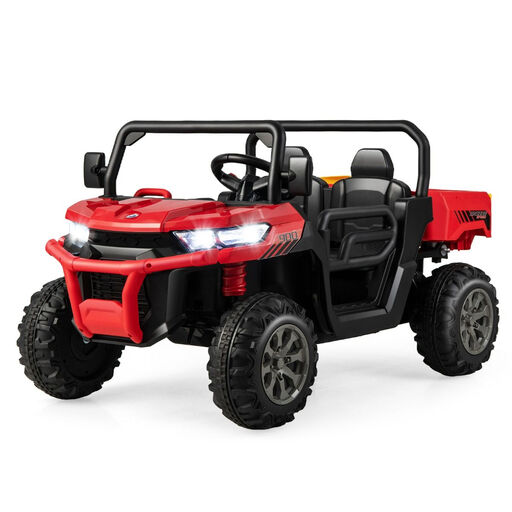
Why This Fits Their Persona: This model is consistently designed for use by two children. The wide bench seat and high load capacity of 50 kg offer ample space and reserves for siblings. The design as an electric kids' dump truck adds extra fun.
With a 12V system and two motors, it avoids the trap of insufficient power. The 50 kg load capacity is realistically matched to a sufficiently large seating area, so two children can actually fit comfortably.
The combination of a two-seater design, 2.4 GHz remote control, soft start, and suspension offers a well-rounded package for safety and shared driving fun.
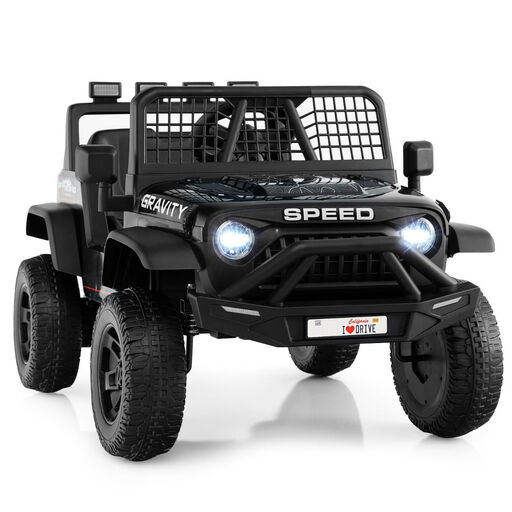
Why This Fits Their Persona: For families with one child where performance is a priority. The 24V system offers noticeably more power for driving on grass or uneven ground and ensures a more consistent speed.
This model is clearly positioned as a single-seater. It avoids the compromise of trying to design a vehicle for two children and instead focuses its power on a superior driving experience for one person.
The 24V voltage combined with two 35W motors provides confident performance that is often lacking in 12V models. Suspension and soft start are also included.
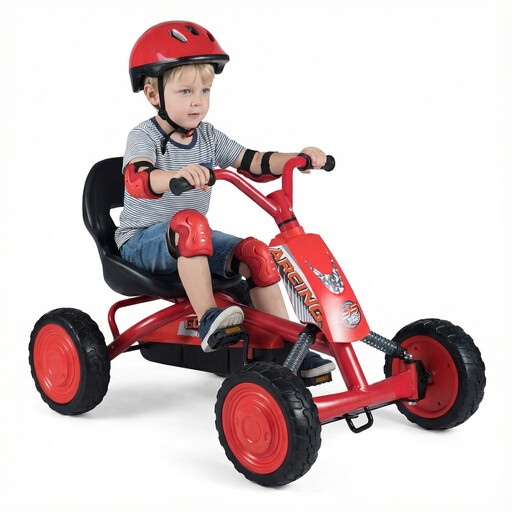
Why This Fits Their Persona: An excellent alternative for parents who value physical activity and don't want to deal with charging times and battery maintenance. Robust, simple, and always ready to go.
This go-kart bypasses all the typical problems of electric vehicles. There are no dead batteries or overwhelmed motors. The performance depends solely on the child's strength, making it a transparent and reliable toy.
The sturdy metal frame and adjustable seat ensure long-term use. It promotes children's coordination and endurance and is low-maintenance.
We've compiled a complete, up-to-date list of products that meet these strict selection criteria and current safety regulations.
1. How long does the battery on a 2-seater kids' electric car really last? The actual runtime heavily depends on the load (one or two children), the terrain (asphalt vs. grass), and the driving style. For a 12V model with a 7Ah (amp-hour) battery capacity, you can expect a continuous runtime of about 45 to 75 minutes under realistic conditions with two children. Models with a higher Ah rating offer a longer runtime.
2. Is a 12V kids' vehicle powerful enough for two children and uneven terrain? For flat, solid surfaces like asphalt or paving stones, a 12V vehicle with two motors is generally sufficient. However, on grass or slight inclines, the speed can drop noticeably. If the vehicle will be used mainly in the garden or on uneven terrain, a 24V model (if available as a two-seater) would be the more powerful choice.
3. From what age is an electric kids' car with a remote control recommended? Most manufacturers recommend their vehicles for ages 3 and up. The remote control is an especially valuable safety feature for children aged 3 to 5. At this age, they often still lack the coordination to safely control direction and speed. With the remote, parents can supervise the ride, intervene to make corrections, and gradually introduce the child to independent driving.