
Lieferung heute & morgen

Qualitätsgarantie

Willkommens-Angebote freischalten: KOSTENLOSE Lieferung | Bis zu 80 % RABATT | Kostenlose 30-Tage-JoyPlus-Testphase
App herunterladen
A 2-seater sofa can work well in many homes: in a small living room, guest room, home office or separate seating area. But a compact width doesn’t automatically mean that every two-seater is comfortable, sturdy and practical for everyday use. The key things to consider are its dimensions, cushioning, upholstery, weight capacity and how much effort is needed to assemble it.
A sofa might look like a space-saver on paper, but wide armrests can leave you with very little usable seating space. So, as well as checking the width, depth and height, look at:
For smaller homes, sofas delivered in compressed packaging or without a frame are also worth considering if access to your home is difficult.
The term cloud sofa usually describes a soft, rounded look. On its own, though, it tells you little about what’s inside. Check for specific details about the cushioning, such as the foam density. A density of 32D, for example, is a clear technical specification, while general claims such as “extra comfortable” are difficult to compare.
For a frameless sofa, it should also be clear whether its stability comes from a shaped foam core or loose filling. A single-piece foam core may feel different to a traditional wooden or metal frame with separate cushions.
Chenille and velvet feel different and need different care. A chenille sofa can offer a textured surface and a practical fabric finish for everyday use. A velvet sofa has a smooth, soft surface, but depending on the colour and lighting, it may show pressure marks or shading.
For vacuum-packed sofas, it’s also important to check how long they need to expand. Depending on the model, it may take around 24 to 72 hours for the cushions to reach their intended shape. A sofa that requires no assembly won’t need any tools, but it may still need time to fully expand.
Don’t just measure the available wall space: mark out the sofa’s footprint on the floor, too. The shape of the armrests and the seat depth also matter when choosing a compact sofa for the living room. For example, a model with an overall width of 180 cm may have a seat width of 140 cm, while a wider frameless design may distribute the space differently.
A sofa with high-density foam should come with a specific density rating. The URBAN MEUBLE model, for example, has a single-piece 32D foam core. Traditional models may combine wood, metal, plywood, foam and fibres. The construction affects how the sofa feels to sit on, its weight and any maintenance it may need.
Compare details such as the polyester content, type of upholstery and cleaning instructions. The stated weight capacity is just as important. It should be clear whether this applies to the whole sofa or, as with the URBAN MEUBLE model, to an individual seat. Always follow the manufacturer’s specifications; they shouldn’t be assumed to apply to other products.
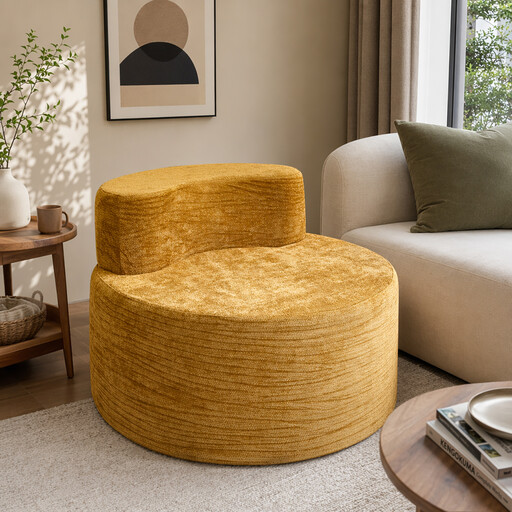
Why this product suits this profile: This frameless sofa arrives ready to use, with no assembly or tools required. According to the product description, it can take up to 72 hours to expand after unpacking, making it a practical choice for smaller homes with difficult access.
The delivery condition is clearly explained: unpack it, put it in place and wait for the stated expansion time. That means you can skip the often-overlooked task of planning for assembly.
High-density foam and compact packaging; no assembly or tools needed.
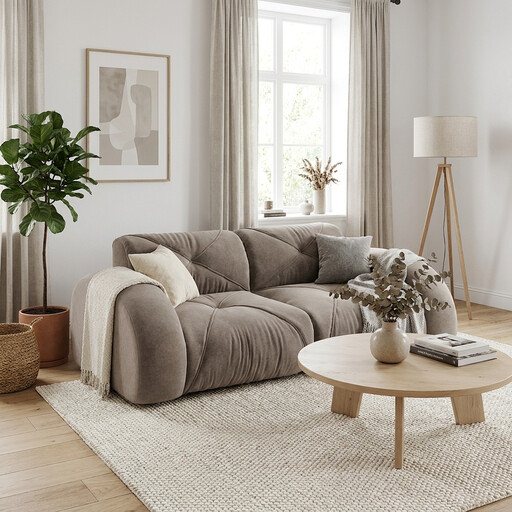
Why this product suits this profile: Measuring 204 × 95 × 76 cm, this two-seater combines chenille upholstery, a modular design and a single-piece 32D foam core. It’s suited to buyers who prefer clear details about materials and weight capacity.
Instead of relying on vague claims about comfort, the product specifies its foam density, overall dimensions and weight capacity of up to 200 kg per seat.
32D foam core with no internal frame; chenille upholstery and modular design.
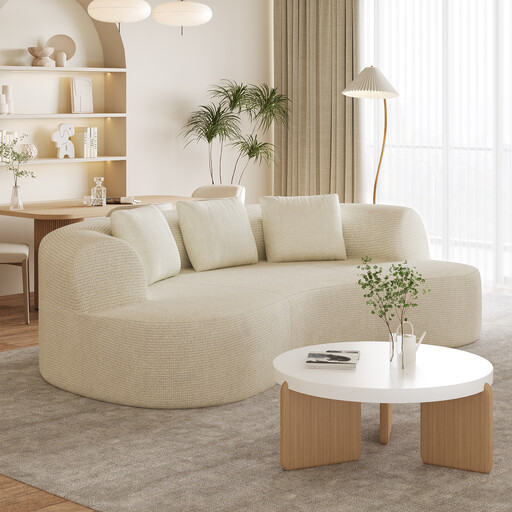
Why this product suits this profile: Measuring 168 × 90 × 67 cm, this modular sofa is designed for smaller spaces. Its curved chenille-covered shape arrives ready to use, with no assembly required, and comes with three decorative cushions.
The product details include its overall dimensions, static weight capacity of 270 kg, upholstery type and an expansion time of around 24 to 72 hours.
Compact dimensions; chenille upholstery, a modular design and delivery with no assembly required.
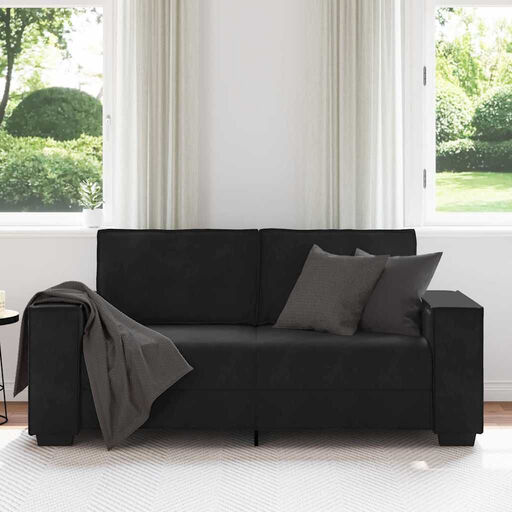
Why this product suits this profile: Measuring 180 × 78 × 84 cm, this sofa has a stated seat width of 140 cm, wide armrests and a wooden and metal frame. It’s a good fit for a living room, office or guest room.
The usable seat width and foam and PP fibre cushion fillings are clearly specified. For care, regular vacuuming and spot cleaning are recommended.
140 cm seat width; metal, plywood and solid wood frame with padded velvet upholstery.
We’ve put together a complete, regularly updated list of products that meet these strict selection criteria and fully comply with the safety regulations in force in the EU.
It depends on your room and how much seating space you want. Compact models are often around 168 to 204 cm wide overall. Check the seat width as well, since wide armrests can reduce the usable space.
There’s no reliable one-size-fits-all answer. Its lifespan depends on factors including how often it’s used, the weight it supports, its cushioning, upholstery and care. Specific details about foam density, frame materials and weight capacity make it easier to compare models.
Most day-to-day costs are for cleaning and, if needed, replacement or care products. Fabric sofas are usually vacuumed and spot-cleaned. Follow the manufacturer’s instructions for velvet and chenille, and avoid harsh cleaning products.